Attuned motivator data runs inside 300+ companies, including manufacturers Hitachi and Autoliv



You have 30 or 300 people across shifts and a full head. Attuned shows what intrinsically motivates each of them, so your limited time goes on the right conversation. You hired good people. Let them get on with it.
Keep posting daily output on the board. They read it.
Explain the new rota in person before Friday.
Give them the problem and leave the procedure to them.
Two lower pulses since the line merger. Walk the floor with the lead.
Attuned motivator data runs inside 300+ companies, including manufacturers Hitachi and Autoliv
Manufacturing leadership is getting safety, quality, delivery and cost out of a plant through the people who run it, shift after shift. It happens at three levels, and the people side gets harder at each one. It is also the scarce side: Deloitte and The Manufacturing Institute estimate that 1.9 million of the 3.8 million manufacturing jobs needed by 2033 could go unfilled.
| Level | What They Own | Where People Problems Show Up | What Helps |
|---|---|---|---|
| Team lead | One line or cell, one shift | A good operator goes quiet after a change | Knowing what each person needs from the job |
| Production supervisor | Several lines and crews | Night shift drifts, and day shift never hears about it | A line on people in every shift handover |
| Plant manager | The whole site’s numbers | Turnover and absence that surface a quarter late | A team-level pulse that moves before the numbers do |
At least 70% of the variance in team engagement comes down to the manager. On a plant floor, that’s the supervisor.
Gallup, managers account for 70% of variance in employee engagement.
Lean tools, OEE and safety systems are table stakes. These are the people habits that separate the plants that keep good crews from the ones that keep rehiring.
You can quote every machine’s cycle time. Can you say why each operator stays? What intrinsically motivates someone decides how they take a new rota, a new target or a word of criticism. An intrinsic motivation assessment gets you there faster than ten years of guessing.
Most handovers cover downtime, scrap and open work orders. Add one line on people: who is new, who is struggling, who did something worth a word. Night-shift problems rarely reach the day-shift manager any other way.
The gemba walk finds waste. Use the same walk to ask one operator one real question, and stay for the answer. Over a month, that is twenty conversations nobody had to schedule.
Problems reach you early only when raising them costs nothing. Thank the person who stops the line, every time, even when the stop turns out to be unnecessary. Our guide to psychological safety in high-pressure teams goes further.
A Rationality-driven operator wants the numbers first. One who runs on Social Relationships wants to know the crew is still with them. Same feedback, different first sentence. More in giving difficult feedback.
“We hired you for the right reasons. You’re an adult. I’ll help when you need it, but I’m not going to stand over your shoulder.” Strong plant leaders clear the path, check in, and step in when it matters.
A new rota, a line merger or a new target hits every crew differently.
Each person takes one 10-minute assessment that ranks 11 intrinsic motivators. Roll those up and every crew has a profile. A crew high in Security wants to hear what stays the same. A crew that runs on Autonomy wants the target and the room to hit it.
Attuned tells the supervisor which brief each crew needs, before the change goes live.
Illustrative crew profile
A short recurring pulse shows which crew, and which motivator, took the hit.
Every two weeks, each person answers a few questions on how satisfied they are on their own top motivators. Attuned’s pulse shows each crew’s trend, so a dip on night shift reaches you while a conversation can still fix it.
Results show at team level once three people answer, so nobody is singled out and people tell the truth.
Illustrative data
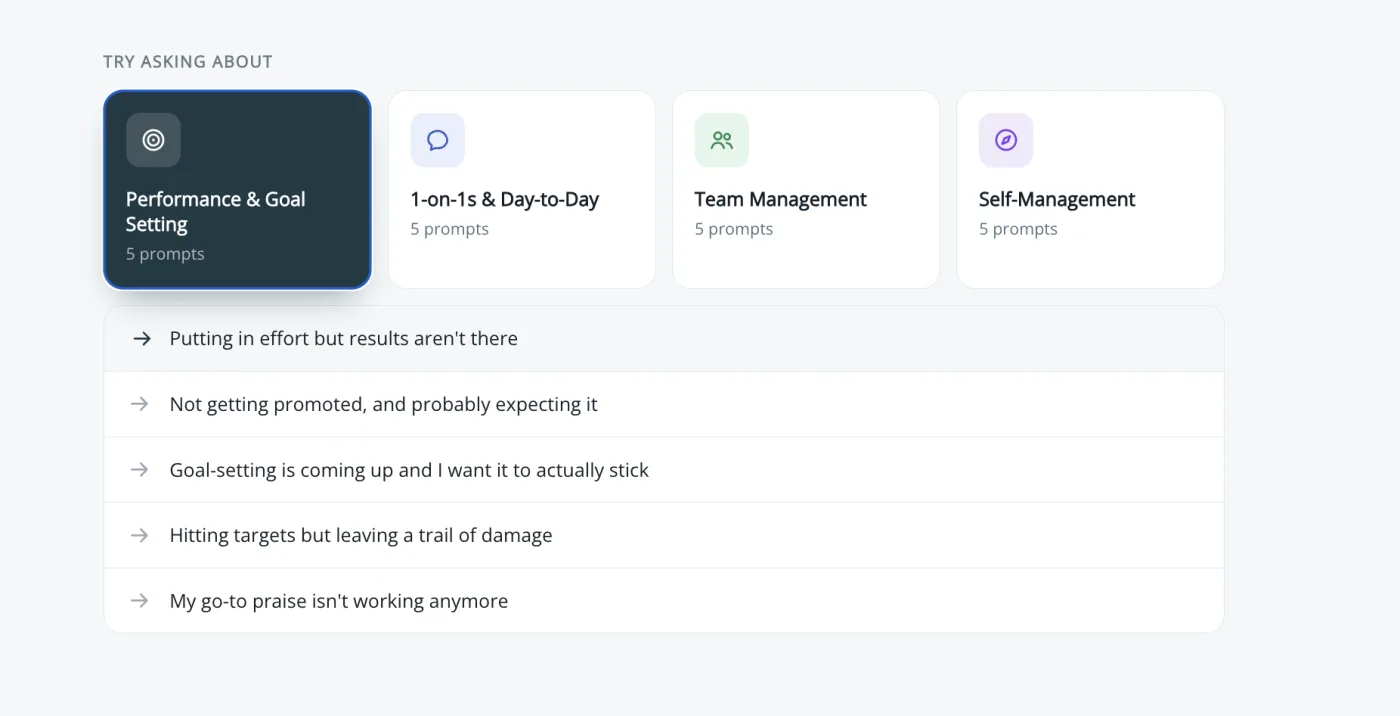
An AI coach that knows your people, way beyond a general chatbot.
TalkCoach (early access) uses each person’s profile and latest pulse to prep the next one-on-one or crew brief.
“New hires have never had a company care about their individuality in this way before.”
Josh MoogDirector of HR, Barnett Plumbing & Water Heaters, a hands-on trades workforce · Read the storyMore on leading frontline crews: employee engagement in manufacturing.
Bring one line or one shift. We’ll show you what intrinsically motivates that crew, and what the first pulse would flag.
Book A Demo