Attuned · Pulse survey software

Pulse Survey Software That Tells Managers What to Do Next

Most pulse tools send five questions and draw a line. Attuned also knows what motivates each person on the team, so when the line dips you see which motivator moved and what to ask about it.

Or see how Attuned compares, from US$99 a seat a year ↓
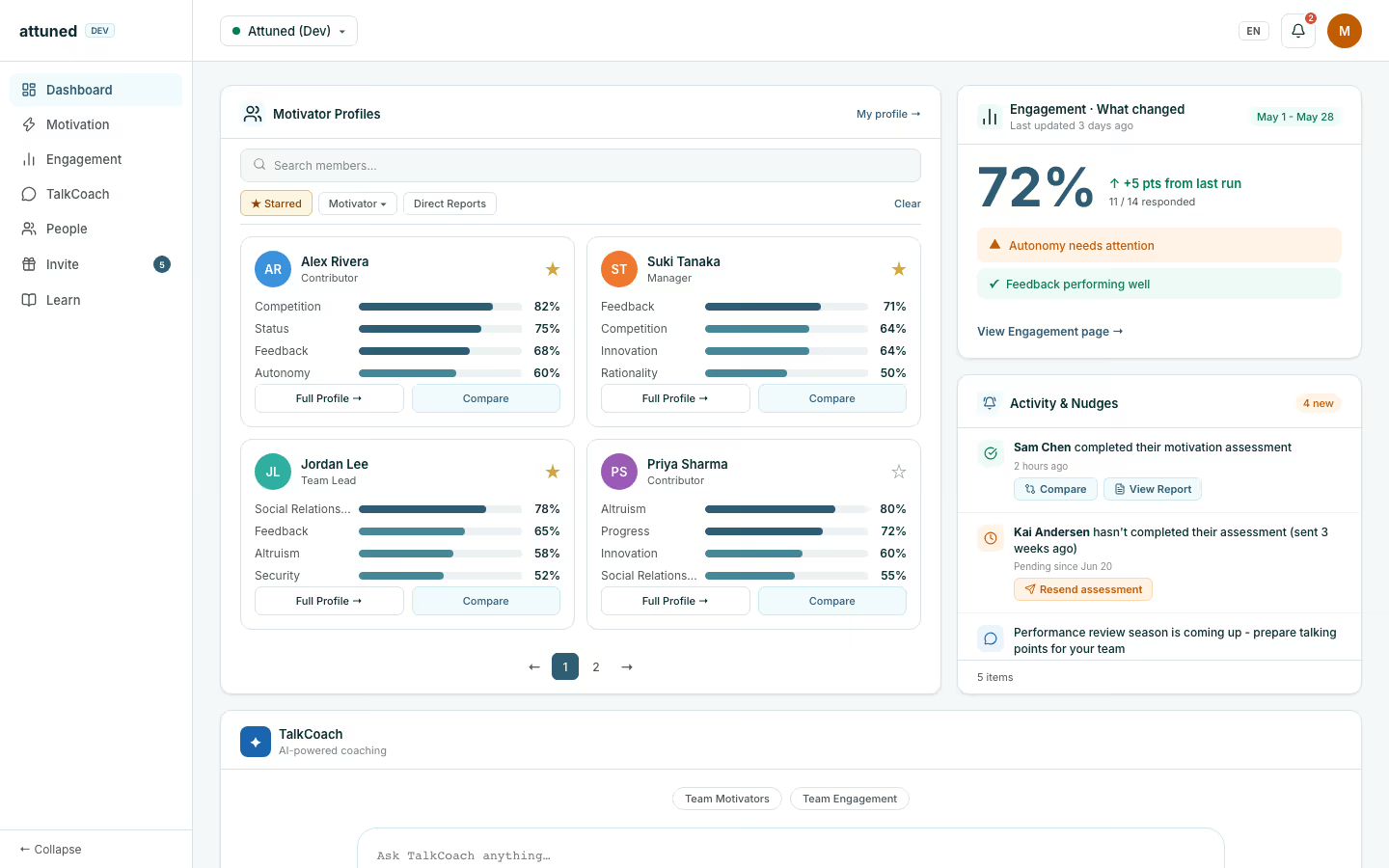
Attuned dashboard with team engagement at 72 percent, up five points from the last run, 11 of 14 people responded, and a flag that Autonomy needs attention
After a pulse closes: 11 of 14 answered, and the score is up five points.

The Week After the Pulse Is Where Most Programs Stall

Any form tool can ask eight people how they feel every other Friday. The hard part is Monday.

The score is down six points and the dashboard can't say why. The manager mentions it in the team meeting and waits. People notice: only 8% of employees strongly agree their employer acts on survey results (Gallup). Answers get thinner, then stop.

So judge pulse survey software by what it hands the manager the week after.

Pulse Survey Tools, Form Builders and Attuned

What each option gives you the week after the pulse.

Capability Attuned Typical pulse survey tools Google or Microsoft Forms
Sends a short recurring survey ✓ ✓ Manual
Minimum answers before a team result shows ✓ 3 Varies, ask ✗
Questions tuned to each person's motivators ✓ ✗ Same for all ✗
Names which motivator moved on the team ✓ Partial (topic categories) ✗
Response rate on the same chart as the result ✓ Usually ✗
Coaching for the manager's next 1-on-1 ✓ TalkCoach (early access) Rare ✗
Setup ~10 min assessment per person Question design and rollout An afternoon

Comparing named vendors? See our engagement platforms compared, the Lattice competitors rundown, or the TINYpulse alternative comparison.

What to Look for in Pulse Survey Software

Slack delivery, question banks and eNPS come standard in employee pulse survey software. These seven decide whether you still get honest answers in month six.

1

Short Enough to Finish Before the Coffee Cools

Five to ten questions, under two minutes, on a phone. Any longer and people treat it like the annual survey.

2

A Cadence Your Managers Can Keep Up With

Pick the fastest rhythm your managers can respond to before the next round arrives. See the cadence table.

3

An Anonymity Floor, Stated Up Front

Ask how many answers a team needs before results show. Without a floor, a four-person team's "anonymous" pulse can be read one person at a time.

4

Questions Tied to What Drives People

"How was your week, 1 to 5?" trends nicely and explains nothing. Each question should point at something you can change. Attuned's point at the 11 intrinsic motivators.

5

It Shows Which Motivator Moved

A team at 3.8 out of 5 can be five people who are fine and one who has checked out. Results by motivator turn "engagement fell" into "Autonomy fell after the new approval process."

6

It Hands the Manager the Next Conversation

A dashboard says there's a problem. Look for a tool that suggests what to ask, like an AI coach for managers that reads the result for you.

7

Response Rate Sits Next to the Result

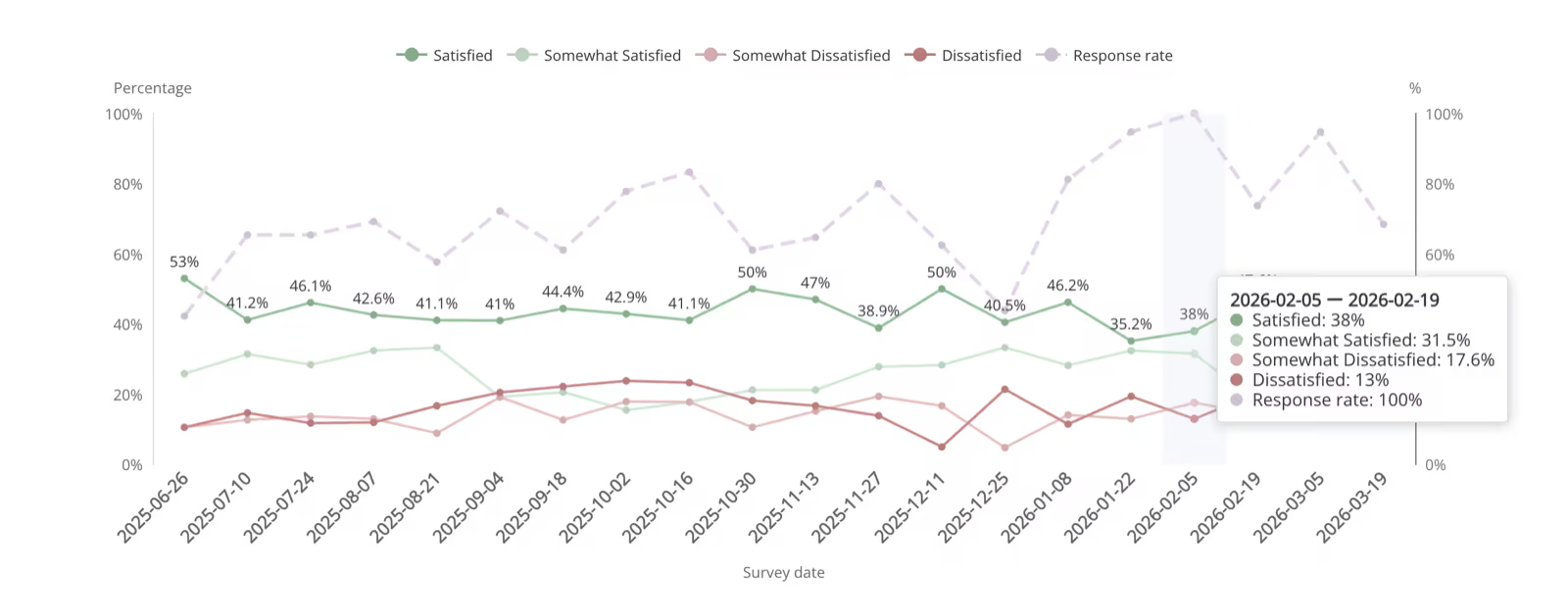
"38% satisfied" means one thing when 14 of 14 answered and another when 4 did. A falling response rate is often the first warning, weeks before the score moves.

Pulse survey software trend chart from Attuned showing the share of a team satisfied, somewhat satisfied, somewhat dissatisfied and dissatisfied at each two-week survey date, with the response rate plotted on the same chart
What criterion 7 looks like in Attuned: nine months of pulses for one team. The dashed line is the response rate, on the same chart so a quiet week doesn't read as a dip.

How Attuned's Pulse Turns a Score Into a Conversation

Gallup puts 70% of the variance in team engagement on the manager. So the result has to reach the manager as a task with a name on it.

01
Map the motivators

A 10-Minute Assessment per Person

Each person maps across 11 intrinsic motivators, such as Autonomy, Progress and Feedback. That's the baseline every pulse is read against.

02
Pulse every two weeks

A Short Pulse on Their Top Motivators

A couple of minutes on a phone: how satisfied each person is on their own top motivators.

03
See what moved

The Motivator That Slipped, Named

Once enough people have answered, the team result flags it by name: "Autonomy needs attention."

04
Act on it

A Plan for the Next 1-on-1

Ask TalkCoach (early access) how to raise the dip with one person. It reads their motivator profile and the team's latest pulse result, then drafts an opening question and what to steer around.

Doctors have a name for blood pressure that runs high only in the clinic: white coat hypertension. The reading is accurate. It is partly a reading of the doctor. A pulse that people suspect their manager reads line by line has the same condition, and the cure is the same: make the measuring feel less like being watched. On why the anonymity floor matters

8 Pulse Survey Questions Mapped to What Drives People

Use these in any tool. Each points at a motivator, so a low score tells you where to look. Use a 1 to 5 scale, ask five or six per round, and rotate the rest.

  1. AutonomyI have enough say in how I do my work.
  2. ProgressIn the last two weeks I finished something I'm proud of.
  3. FeedbackI know how my manager thinks my work is going.
  4. Social RelationshipsI have people on this team I'd go to with a problem.
  5. InnovationI've had a chance to try a new idea recently.
  6. SecurityI understand what is changing around here and how it affects me.
  7. AltruismI can see who my work helps.
  8. Open textWhat is one thing that would make the next two weeks better?

Managers read the open-text answers first, and people stop writing them first when nothing comes back. Reply to one theme in the team channel within a week.

How Often Should You Run a Pulse Survey?

Every two to four weeks for most teams. That's fast enough to catch a dip while a conversation can still fix it, and slow enough to act before the next round.

Cadence Works well for Watch out for
Weekly A reorg, merger or launch crunch Managers rarely act within a week
Every two weeks Teams with regular 1-on-1s Needs a very short survey
Monthly Large or distributed teams with a monthly leadership review A dip can sit unseen for weeks
Quarterly A light check between annual surveys Too slow to catch one person drifting

Whatever the cadence, tell the team the result and one thing you'll do, every round. Building the whole program? See how to measure employee engagement.

Pulse Survey Software FAQ

What is pulse survey software?
Pulse survey software sends short, recurring surveys every few weeks and tracks how a team is doing between annual engagement surveys. The useful ones also tell a manager what to do with the result.
How often should you run a pulse survey?
Every two to four weeks suits most teams. Weekly works during fast change, such as a reorg. Quarterly is too slow to catch one person drifting. Attuned runs every two weeks by default.
How many questions should a pulse survey have?
Five to ten, answerable in under two minutes on a phone. Longer than that and completion drops. See the 8 sample questions on this page.
Are pulse surveys anonymous?
They should be. Check the anonymity floor: the minimum number of answers before a team result shows. Without one, a small team's answers can be traced to individuals. Attuned shows no team result with fewer than three respondents.
What is the difference between a pulse survey and an engagement survey?
An engagement survey is long and usually annual, a detailed benchmark. A pulse is short and frequent, and shows how things move between benchmarks. Most organizations run both. Our guide to how to measure employee engagement shows how they fit.
How do you avoid survey fatigue with frequent pulses?
Keep the pulse short and respond after every round. Gallup found only 8% of employees strongly agree their employer acts on survey results. Sharing the result and one action each time does more for response rates than asking less often.
How much does pulse survey software cost?
Most tools charge per employee, monthly or yearly. Attuned Basic is US$99 per seat per year (about US$8 a month) for teams of three or more, and Premium is US$189. Both include the pulse, the motivator assessment and TalkCoach, which is in early access. See the plans page.
Attuned · Pulse Survey Software

A Pulse Is Only as Good as the Monday After It

Bring a team whose numbers have been drifting. We'll show you what their motivators say and what the first two pulses would flag.

Book a demo
30 minutes with the founder, on one real team.
Book a demo →
Not ready? Read the State of Motivation Report, or see plans and pricing.
A pulse that says what moved. Book a demo with Attuned.
Book →