People Science · A Guide for Managers & HR

What Is Continuous Performance Management?

Continuous performance management replaces the once-a-year review with an ongoing rhythm of check-ins, real-time feedback, and living goals, so people improve while there is still time to act. This guide covers the definition, the core elements, and how to roll it out. Then it covers the piece most rollouts miss: a cadence of conversations only works if the manager knows what actually drives the person across the table.

Read the Definition ↓ Book a Call Directly →
Trusted by
Azon Recruitment Group
Growing Firms & Startups
Managers in 4+ Generations
attuned.ai · Continuous Check-in & Motivator Dashboard
Attuned dashboard showing a team member's motivator profile and the drift alerts that make continuous performance management check-ins land on what drives each person

Case Study · Azon Recruitment Group · Ireland

"Being able to get to the nub of people's underlying motivations has been very helpful."

Kevin Halligan, Associate Director, Azon Recruitment Group

A fast-growing firm that runs on its people

Azon grew from a handful of people into an award-winning talent business. Its managers wanted a live read on how each specialist was doing, not a snapshot taken once a year when it was already too late to change anything.

Regular check-ins that stayed on the surface

"If an employee was engaged and looked happy, the assumption was they were fine, until you got the resignation," their HR team noted. The cadence was there; what was missing was knowing what to actually talk about with each person.

Every check-in aimed at what drove the person

Attuned mapped each member across 11 intrinsic motivators, so managers walked into every one-on-one knowing what mattered to that individual and could coach on it continuously, rather than guessing between annual reviews.

Honest conversations. Retention followed.

"A dramatic increase in the numbers of people we hire that we feel we've gotten right," reports Kevin Halligan, Associate Director. "We have really seen that benefit translating to earnings for our business."

From annual verdict to ongoing dialogue: Azon's managers stopped saving up feedback for a yearly review and started acting on what each person needed in the moment. Read the full story →

The Annual Review Is Familiar. It Is Also Barely Working.

Most organizations still run performance through one high-stakes conversation a year, and most people can feel that it does not help them get better. Here is what the research says about why the traditional cycle falls flat, and what a continuous approach is trying to fix.

14%
Of employees strongly agree their performance reviews inspire them to improve, the clearest sign that the once-a-year verdict is not doing the job it was designed for.
Gallup
2 in 10
Employees strongly agree the way their performance is managed motivates them to do outstanding work. Continuous performance management exists to move that number.
Gallup
70%
Of the variance in team engagement traces back to the manager, which is why the frequency and quality of manager conversations matters more than the review form.
Gallup, State of the American Manager
1.7M
Possible combinations of the 11 intrinsic motivators. It is why the same check-in, goal, or piece of feedback lands so differently person to person, and why a generic cadence underdelivers.
Attuned motivator model

Sound familiar?

Adopting continuous performance management is easy to announce and hard to make real. The cadence goes on the calendar, and then the conversations inside it quietly turn into status updates. Here is how it usually stalls, from two very different chairs.

The HR Leader Who Rolled It Out

"We killed the annual review. Six months on, nothing feels different."

You did the hard part: retired the yearly rating, set a check-in cadence, and briefed the managers. But adoption is patchy, the one-on-ones drift back into project updates, and you cannot tell whether performance is actually being managed or just discussed. The process changed; the conversations did not.

  • A cadence on the calendar that managers treat as optional
  • Check-ins that become status meetings, not development
  • No visibility into whether the new rhythm is working
  • Managers who were never taught how to coach, only to rate
  • Goals set once and never revisited
"I have a beautiful continuous performance management framework. What I do not have is any evidence that a single person is being managed better because of it."

The Manager Doing All the Check-ins

"I meet everyone weekly. I still do not know what half of them want."

You are disciplined about one-on-ones. You ask "how's it going?" and you get "all good." The feedback you give lands well with some people and bounces off others, and you have no idea why. You have mastered the cadence. What no one handed you is what to say inside it, tuned to the person.

  • Weekly meetings that never get past the surface
  • The same feedback motivating one person and deflating the next
  • Goals that look fine on paper but do not energize anyone
  • A quiet high performer you sense is drifting but cannot reach
  • No way to prepare a conversation for who the person actually is
"I do everything the continuous performance management playbook says. It still feels like I am running the same generic meeting eight times a week."

What Continuous Performance Management Actually Means

Continuous performance management is an ongoing approach to managing and developing people through frequent check-ins, real-time feedback, and goals that get revisited as priorities change, rather than a single annual review. Instead of compressing a year of judgment into one high-stakes conversation, it turns performance into a running dialogue that helps people improve while it still counts. Most organizations keep a light annual or twice-yearly checkpoint for calibration and pay, and move the real coaching into a steady rhythm. Five elements carry most of the weight.

1. Frequent, structured check-ins

Usually a weekly or biweekly one-on-one that is protected, not cancelled when things get busy. The point is regular contact about the work and the person, so nothing has to wait eleven months to be said. Our guide to running better one-on-one meetings covers the mechanics.

2. Real-time feedback

Feedback given close to the moment it matters, in both directions, while everyone still remembers the specifics. Immediate feedback beats a recalled highlight reel every time, which is why employee feedback software and a habit of small, frequent notes outperform the annual write-up.

3. Living goals and OKRs

Goals that are set together and revisited as the business shifts, rather than written in January and rediscovered in December. Short cycles keep goals honest and let people see progress, which is itself one of the strongest intrinsic drivers.

4. Ongoing coaching and development

The manager coaches and develops people week to week, spotting skill gaps and closing them in real time, instead of sitting in judgment once a year to hand down a rating. That is a different skill, and most managers were never trained in it. Our 1-on-1 coaching software is built to close that gap.

5. Lightweight, frequent recognition

Recognition given often and specifically, rather than saved for a review or a bonus cycle. For many people, being seen for good work in the moment does more for performance than a delayed reward ever will.

The element most rollouts miss

Underneath all five sits one thing: individual context. The same check-in, goal, or piece of feedback lands very differently depending on what drives the person. Continuous performance management works when it is tuned to the individual, which is exactly what mapping each person's intrinsic motivators makes possible.

What it improves

Done well, the shift pays off in four places most leaders care about:

  • Engagement: people who get regular, relevant feedback stay more connected to the work than those waiting on an annual verdict.
  • Retention: a stalled motivator gets caught in this month's check-in rather than read back in an exit interview.
  • Faster course-correction: goals and priorities adjust as the business moves, so effort stays pointed at what matters now.
  • Manager capability: managers build the coaching habit in weekly reps instead of a once-a-year performance.
The 5 stages, run continuously

The classic performance management cycle has five stages: planning, monitoring, developing, rating, and rewarding. A traditional model runs that cycle once a year. Continuous performance management runs the same five stages constantly: planning and monitoring happen in regular check-ins, developing happens through ongoing coaching, and rating becomes a lightweight rolling summary instead of a single annual verdict. Nothing about the stages is new. What changes is the clock. For a version that drops the annual event almost entirely, see how we think about headless performance reviews.

A cadence of check-ins is a container.
What you put inside it is the whole game.

Plenty of teams adopt the mechanics of continuous performance management, the weekly one-on-one, the feedback tool, the OKR tracker, and still feel like nothing improved. The frequency was never the hard part. A conversation is only as good as how well the manager understands the person in it, and that understanding is the thing no cadence supplies on its own.

14%
of employees strongly agree their reviews inspire them to improve. More meetings alone do not fix that; better-aimed conversations do. Gallup
A Precise Analogy

Control engineers have a name for a system that checks its own output once, sets a course, and then assumes nothing drifts until the next check: open-loop. It works beautifully right up until reality moves, which reality always does. The annual review is open-loop management. Continuous performance management closes the loop by sampling often. The quiet catch is that a feedback loop is only as smart as the signal it reads, and "how's it going?" is a very noisy signal.

Attuned People Science Team

Aim every conversation at what actually drives the person

Two people on the same team can need opposite things. A Progress-driven engineer is energized by a stretch goal and stalls without one; a Security-driven teammate hears the same stretch goal as a threat. Run the identical cadence over both and you help one and slowly lose the other, without ever knowing why. More meetings will not close that gap. What does: knowing, before you walk in, what each person values.

Attuned puts each person's motivators in front of the manager with specific prompts, so a check-in, a goal, or a piece of difficult feedback is framed for who they actually are. It pairs naturally with the one-on-one meetings and coaching that a continuous approach already runs on.

  • See which motivators each person leads with, and which are going unmet
  • Walk into every check-in knowing what to ask and what to steer around
  • Set goals that energize the individual rather than the average
  • Catch a drifting motivator in this month's one-on-one, not next year's review

Buying a weekly-meeting habit and calling it continuous performance management is a bit like buying a metronome and calling it music. Necessary, keeps good time, and on its own accounts for none of the melody.

How Attuned turns a profile into the right continuous conversation
The person's motivator profile
SP
Sam P.
Senior Engineer · on the team 2 years
Progress 90
Autonomy 81
Feedback 74
Security 22
Status 18
The prompt, ready for this week's one-on-one
“Sam's Progress motivator has flattened for two check-ins. Open with a stretch project and a clear next milestone. Do not lead with process changes.”

High Progress and Autonomy mean Sam needs momentum and room to run. In an annual cycle this stall would surface at the December review, ten months late. A continuous cadence with motivator context surfaces it in this month's one-on-one, while you can still act.

With Security low, do not frame the stretch project as a reorg or "big changes coming." Sam will hear that as instability rather than opportunity, and it pushes toward the door you are trying to keep shut.

4 Reasons Continuous Performance Management Stalls

Moving off the annual review is the right call, but the switch rarely delivers on its own. It usually breaks in one of these four places, and every one is fixable once the conversations are aimed at the individual rather than run on autopilot.

01

The cadence becomes a status meeting

Without a reason to go deeper, a weekly one-on-one collapses into a project update. The cadence is on the calendar; the conversation still says "any blockers?" The frequency is there and the development is missing.

02

Managers were trained to rate, not coach

The continuous model asks managers to develop people in real time, a genuinely different skill from filling in a year-end form. Handed the new cadence with none of the coaching ability, most default to the habits they know.

03

Every conversation is the same conversation

One generic check-in format, run over everyone, ignores that people are driven by different things. The result feels like admin to the employee and guesswork to the manager, and the meeting that was meant to motivate does neither.

04

No signal on whether it is working

Teams track that check-ins happened, not whether anyone is more engaged because of them. Without a read on each person's motivators over time, a quietly disengaging high performer stays invisible until they resign.

How to Implement Continuous Performance Management

The mechanics are not complicated. Whether the switch actually improves performance depends on leadership backing, manager skill, and giving each conversation something to aim at. First, how the continuous model compares to the annual review, then six steps to roll it out.

Annual review vs. continuous performance management
The difference Annual review Continuous performance management
Cadence Once a year, one high-stakes event Ongoing check-ins, weekly or biweekly
Feedback timing Recalled months after the fact Given close to the moment it happens
Goals Set once, rediscovered at review time Living, revisited as priorities shift
Manager's role Judge who rates once a year Coach who develops people continuously
What you can act on Last year, already gone This week, while it still matters

1. Get leadership buy-in and name the why

Continuous performance management changes how managers spend their week, so it needs visible backing from the top and a clear reason. Lead with the goal, better development and retention, not "we are killing the review," so the change reads as an upgrade rather than a loss.

2. Demote the annual review

Keep a light annual or twice-yearly checkpoint for calibration and pay, but move the real coaching into the ongoing rhythm. If the yearly rating stays the main event, everything else gets treated as optional and the old habits win.

3. Set a simple, protected cadence

Start with a recurring one-on-one, monthly if weekly feels heavy, and defend it from being cancelled. Consistency matters more than frequency at the start. A predictable rhythm is what turns feedback from an event into a habit.

4. Train managers to coach

The skill that makes or breaks the switch is coaching, not rating. Give managers a repeatable structure for a developmental conversation and the confidence to give feedback in the moment. Our take on giving difficult feedback covers the hardest part.

5. Give each conversation an aim

This is the step most playbooks skip. Hand managers a read on what drives each person, so a check-in is tuned to the individual rather than run from a generic template. It is the difference between a cadence people tolerate and one that moves performance.

6. Measure the right things and iterate

Track engagement and motivator satisfaction over time, not just whether meetings happened. Watch the turnover metrics that actually matter, then adjust the cadence and coaching based on what the data shows.

A Simple Way to Start

If a full rollout feels heavy, start with one team and one habit. Put a recurring one-on-one on the calendar, agree that it is for development rather than status, and open each one with a single question tuned to what that person values most. Capture one piece of feedback and one goal update each time. Do that for a quarter and you will have a working continuous loop, plus real evidence of what it changes, before you ask the whole organization to adopt it. The teams that succeed almost always begin smaller than they expect to.

Attuned People Science Team

From a generic check-in cadence to a conversation aimed at each person, in under a week

Here is how a manager goes from running the same meeting eight times a week to walking into each one knowing what drives the person, what to ask, and who on the team is quietly drifting, without adding hours of prep.

Step 0 · Start Here

Everyone completes a ~10-minute assessment. That's the whole setup.

No rollout plan. No IT project. Each member answers a simple set of questions, and Attuned automatically calculates their profile across 11 intrinsic motivators. Most teams are up and running within a week of signing up.

Slider-based questions, ~10 min
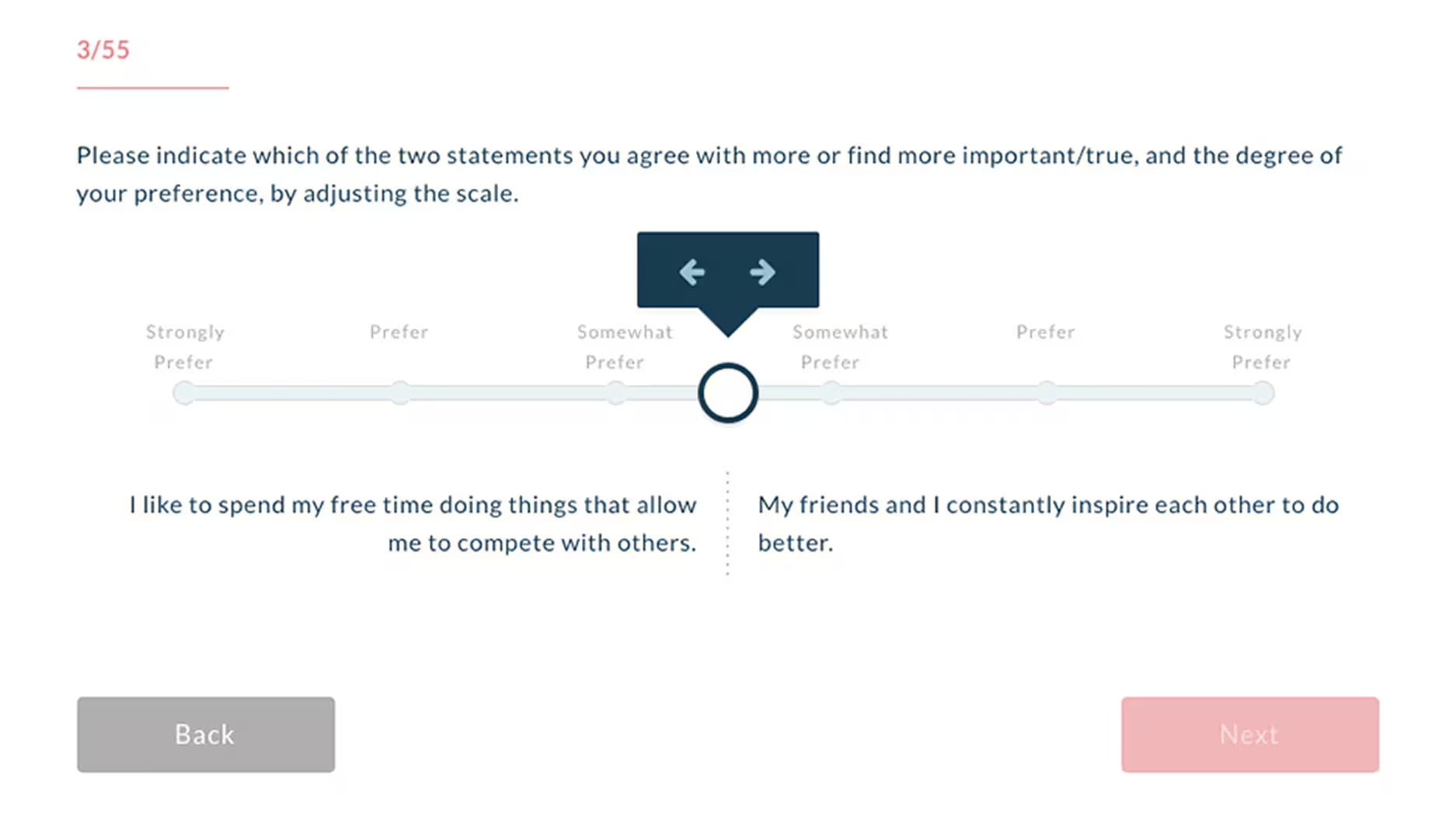
Attuned motivator assessment screen with slider-based questions
~10 minper member
11motivators mapped
1.7Mpossible profiles
Week 1ready to go
01
See What Drives Each Person

Turn a hunch into a map

Every person gets a profile across 11 motivators. You can see whether they lead with Progress, Autonomy, Security or Feedback, so a continuous cadence stops being one generic meeting and starts being tuned to the individual in front of you.
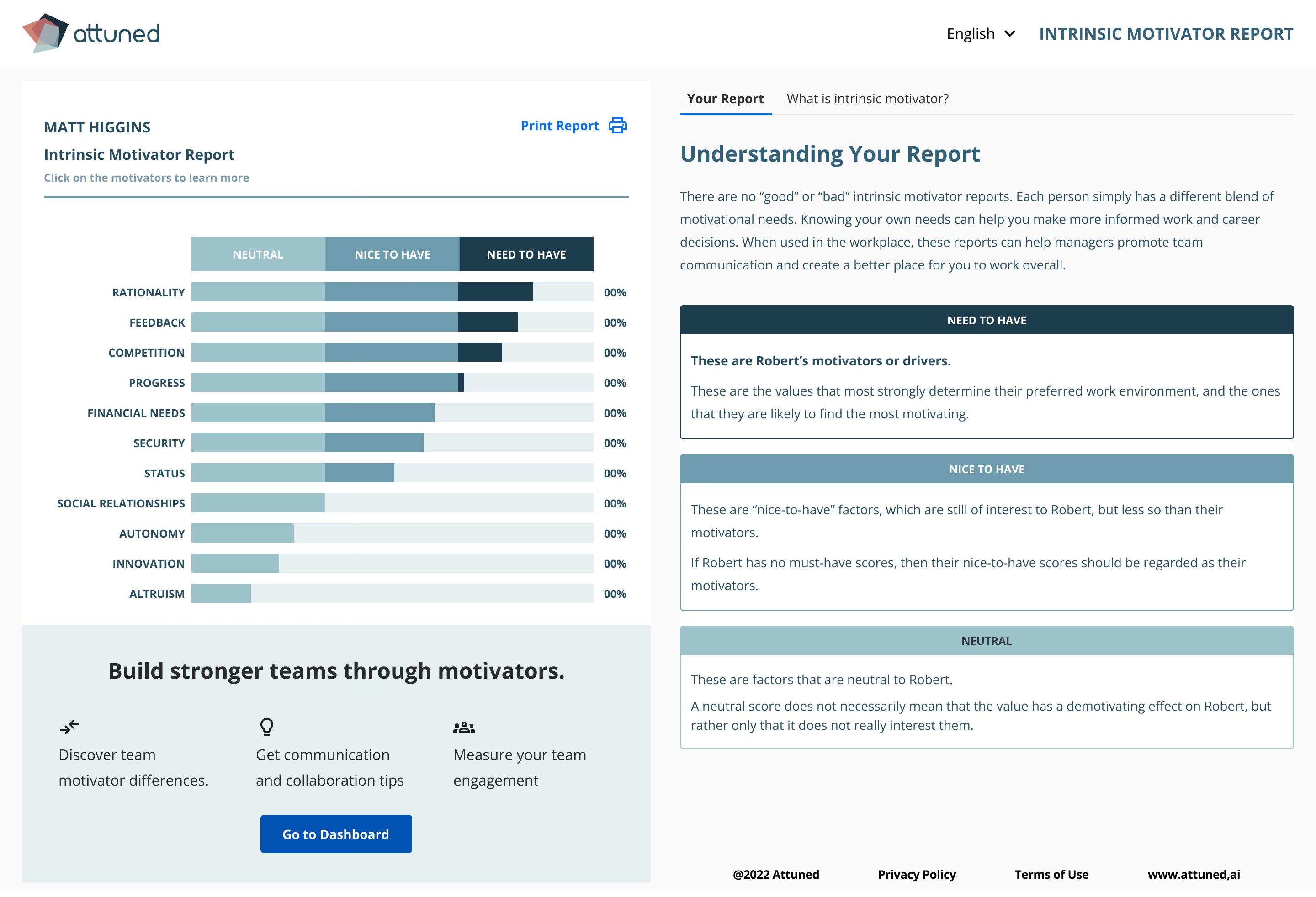
11 motivator dimensions One profile per person
Motivator profile generated immediately
Attuned motivator breakdown showing a team member's intrinsic motivator profile and which drivers are going unmet
02
Coach Your Managers

Give whoever leads the right conversation

The AI TalkCoach turns each profile into what to ask, how to frame it, and what to steer around, so a weekly check-in becomes a real coaching conversation. A first-time manager gets the instincts a seasoned coach would give, every time.

AI coaching per person Ready-to-use conversation prompts
AI TalkCoach · suggested conversation prompts
Attuned AI TalkCoach turning a team member's motivator profile into a suggested prompt for a manager's continuous performance management check-in
03
Close the Gaps

See where the role and the person don't line up

Performance risk is the gap between what a member values and what their role currently gives them. Attuned makes that gap visible per motivator, so a leader knows what to change and what goal to set instead of guessing.

Value-vs-role gap map Guidance on what to change
04
Better Conversations

Make each check-in count

A continuous cadence lives or dies on the quality of the conversations. Attuned turns a vague "everything okay?" into a question aimed at what the person actually cares about, and pairs with our approach to giving difficult feedback when the honest answer needs to go deeper.

Prepped check-ins Harder conversations, handled
05
Keep Your Members

Catch the drift before it becomes a resignation

Attuned tracks motivator satisfaction over time and flags the gap between what someone values and what their role delivers, before it shows up in the work. In a continuous model that alert lands in this month's one-on-one, while there is still time to act.
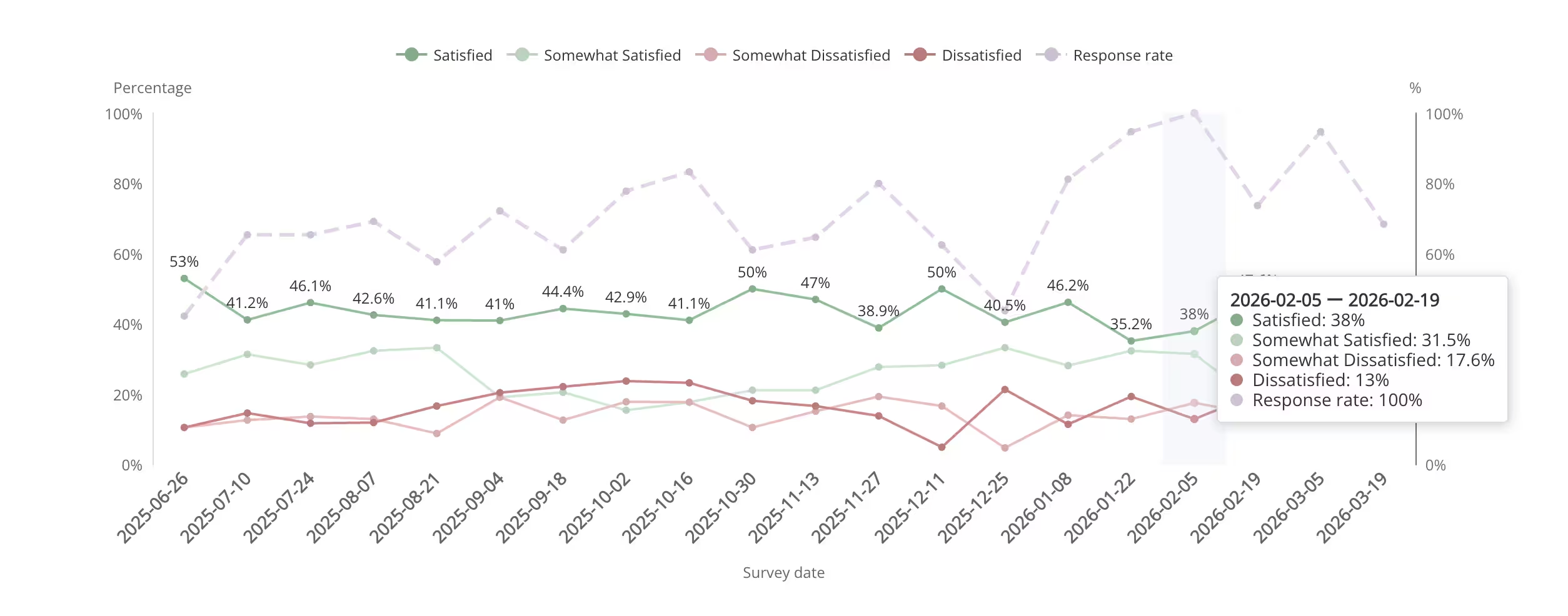
Early-warning drift alerts Continuous tracking
Motivator satisfaction tracked over time
Attuned dashboard tracking motivator satisfaction over time and flagging the member whose motivators are going unmet
Ready to make the cadence actually work?
Give every manager a check-in aimed at what drives the person, in under a week.
No IT project. Your team is profiled and your managers walk into their next one-on-one knowing what to ask, before Friday.
Book a Call Directly →
Book a time that works for you · No callback queue

How a Growing Firm Made Its Check-ins Actually Count

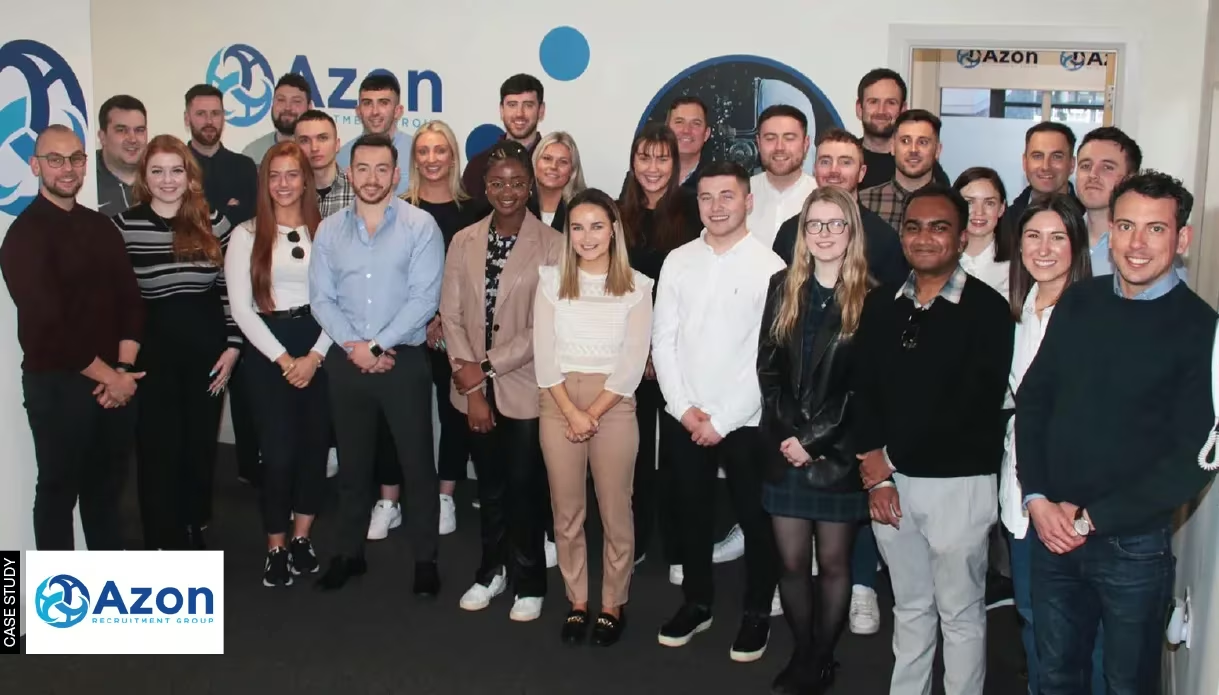
Azon Recruitment Group grew from a small team into an award-winning business by reading what drives its people, so managers could coach on it continuously instead of waiting for a yearly review. The conversations got honest, retention improved, and earnings followed.

Azon Recruitment Group team, a fast-growing firm that improved retention by coaching each member on what drove them, with Attuned

Reading to Make Continuous Performance Management Real

Practical pieces from the Attuned team, starting with the State of Motivation Report most leaders open first, plus writing on feedback, coaching, top performers, and psychological safety, so the cadence you build actually changes how people perform.

Any team can put a check-in on the calendar. Making it land is the hard part.

You can adopt the mechanics of continuous performance management for free: a recurring one-on-one, a feedback habit, a goal tracker. What you cannot download is a read on what drives each person, or an early signal that a quiet high performer is starting to disengage. That is the part Attuned does, and it is the difference between a cadence people tolerate and one that improves how they work.

Up and running in a week

A ~10-minute assessment. No IT project, no heavy rollout. Your whole team can be profiled within days of signing up.

Personalized to each person

11 intrinsic motivators mapped per person. Managers stop running one generic meeting and start tuning each check-in to the individual.

AI coaching for every manager

The AI TalkCoach preps the conversation with what to ask, so a first-time manager gets guidance a seasoned coach would give, every week.

GDPR-compliant by design

Lawful basis, data minimization, individual access rights, and the right to be forgotten. Your people own their motivator data.

Continuous Performance Management: Common Questions

What is continuous performance management?
Continuous performance management is an ongoing approach to managing and developing employees through frequent check-ins, real-time feedback, and living goals, rather than a single annual review. Instead of saving up a year of judgment for one high-stakes conversation, managers and employees talk regularly, adjust goals as priorities change, and give feedback close to the moment it matters. The aim is to make performance a continuous dialogue that helps people improve while there is still time to act, and to remove the recency bias and dread that come with the traditional yearly rating.
What are the 5 C's of performance management?
Frameworks vary, but a common version of the 5 C's of performance management is Clarity (everyone knows what good looks like and how it is measured), Communication (frequent, two-way conversation rather than one annual verdict), Coaching (managers develop people rather than just rate them), Collaboration (goals are set and revisited together), and Continuous feedback (given close to the work, in both directions). Continuous performance management is essentially the 5 C's run as a habit all year instead of a single event, so clarity and coaching happen in weekly rhythm rather than once in December.
What are the 5 stages of performance management?
The classic performance management cycle has five stages: planning (setting goals and expectations), monitoring (tracking progress and staying close to the work), developing (coaching, feedback, and building capability), rating or reviewing (assessing how things went), and rewarding (recognition, pay, or growth tied to results). In a traditional model those stages happen once a year. In continuous performance management the same five stages still exist, but they cycle constantly: planning and monitoring happen in regular check-ins, developing happens through ongoing coaching, and rating becomes a lightweight rolling summary rather than a single annual verdict.
What are the key elements of continuous performance management?
Five elements carry most of the weight: frequent structured check-ins (usually weekly or biweekly one-on-ones), real-time feedback given close to the work in both directions, living goals or OKRs that are revisited and adjusted as priorities shift, ongoing coaching and development rather than once-a-year judgment, and lightweight, regular recognition. The element most rollouts underestimate is the individual context underneath all of it: the same check-in, feedback, or goal lands very differently depending on what drives that person, which is where understanding each employee's intrinsic motivators makes the difference.
How is continuous performance management different from annual reviews?
An annual review compresses a year of performance into one backward-looking conversation, usually tied to pay, and it arrives too late to change anything about the period being judged. Continuous performance management spreads that work across the year: frequent check-ins, feedback given close to the moment, and goals adjusted as the business changes. The practical difference is timing. Annual reviews tell an employee how last year went; continuous performance management helps them improve this week. Most organizations keep a light annual or twice-yearly checkpoint for calibration and pay, but move the real coaching into an ongoing rhythm.
Does continuous performance management work for small teams?
Yes, and small teams often find it easier to adopt because there is less process to unwind. A continuous cadence can be as simple as a recurring one-on-one, a shared note of goals, and a habit of giving feedback close to the work. Small teams do not need heavy software to start; they need consistency and managers who know how to coach. The risk at small scale is that check-ins become status updates instead of real conversations, which is where a shared understanding of what drives each person keeps the meeting focused on the human rather than the task list.
How does Attuned support continuous performance management?
A continuous cadence is only as good as the conversations inside it, and a conversation is only as good as how well the manager understands the person across the table. Attuned maps each team member across 11 intrinsic motivators, then gives managers AI coaching that turns each profile into what to ask in a check-in, how to frame feedback, and which goals will actually motivate that individual. It also tracks how satisfied each motivator is over time and flags drift early, so the ongoing rhythm surfaces a stalled motivator in this month's one-on-one rather than in an exit interview.
Is Attuned GDPR-compliant?
Yes. Attuned operates under GDPR principles for any EU or UK data subject: lawful basis, data minimization, individual access rights, and the right to be forgotten. Users own their motivator data and choose what is shared with their organization. This landing page itself uses consent-gated cookies, so analytics and marketing scripts only load after you accept them. See our Privacy Policy for full details.
People Science for Managers

The cadence is the easy part.
Aiming it is the edge.

We have spent years studying what drives people at work, and helping the managers who lead them turn a check-in cadence into conversations that actually develop people. It fits into your week rather than adding to it.

Our expertise is people science: what motivates each person, why the same feedback lands differently across a team, and what a manager needs to see before a one-on-one to make it count. We have brought it to fast-growing firms like Azon, and we would like to bring it to yours.

No pitch deck
No callback queue
Real conversation
Proven with Azon Recruitment Group
A fast-growing firm whose managers had better conversations, lifted retention, and saw it translate to earnings.
Book a Call Directly
Pick a time that works for you. No waiting for a callback. No sales queue.
Book a Time → Read the State of Motivation Report Or read the full Azon case study →
Book a time that works for you. No callback queue.
Make the cadence count. Give every check-in an aim tuned to the person.
Book a Call →