Copy the agenda below into whatever you already use, steal the question bank, and run a 1:1 that does not read like a status update. Then let Attuned tune each meeting to what actually drives the person, so one agenda produces a real conversation with everyone on your team.
The Short Version
Same agenda, four different conversations. Here is the arc this page walks through.
A six-part, time-boxed template you can copy today: check-in, their topics first, progress, growth and motivation, feedback both ways, and clear next steps.
Thirty-plus questions sorted by section, so you always have a better opener than "so, how's it going?" and never run a 1:1 on autopilot.
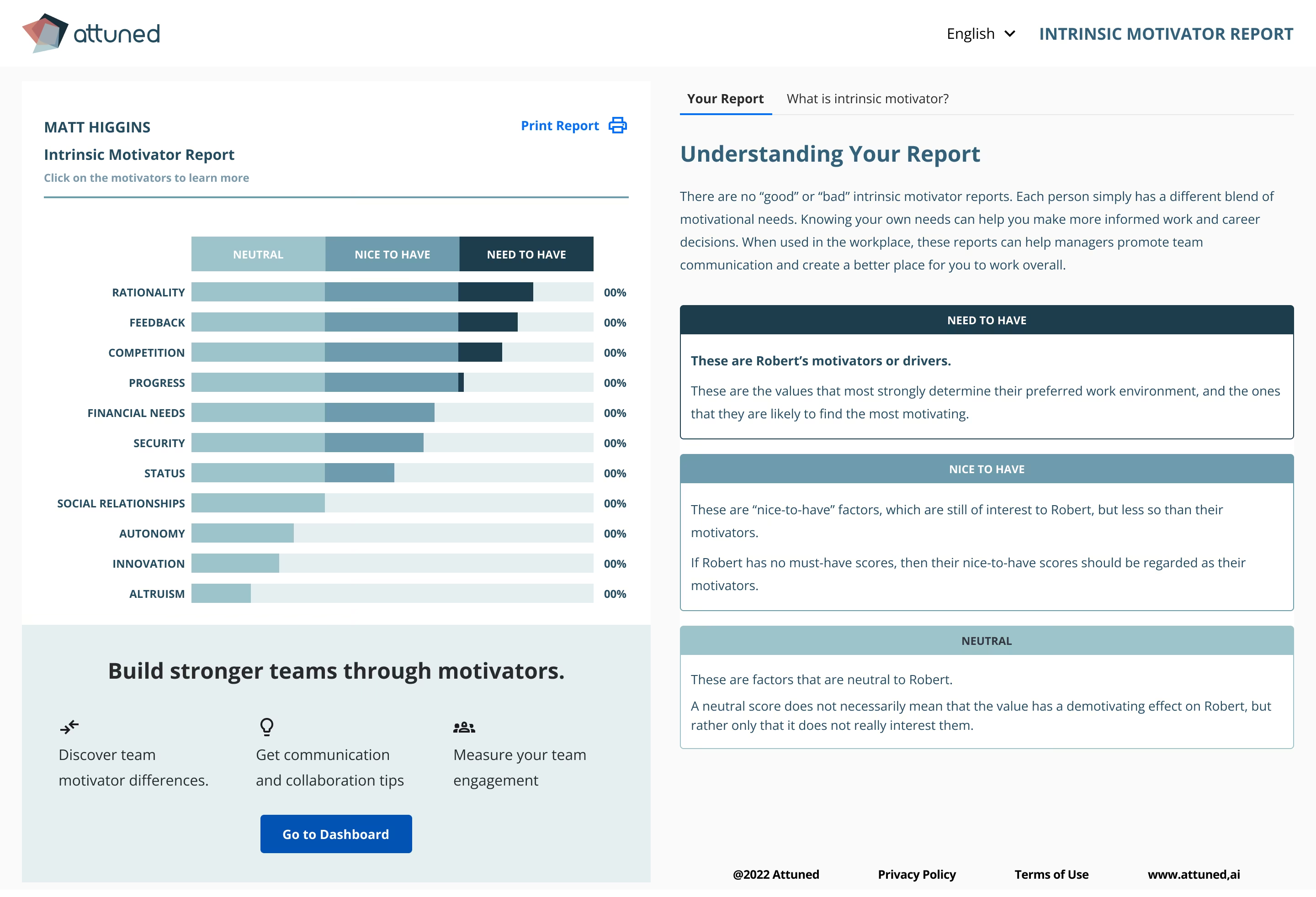
The growth and motivation segment lands only when it matches what drives the individual. Attuned maps each report across 11 motivators and tells you which conversation to have.
When the meeting fits the person, it stops feeling like a status check and starts doing the one thing a 1:1 is for: keeping good people engaged and honest with you.
The template is free and below. Most managers nail the structure and still miss the part that matters: knowing what to put inside it for each person. Jump to the template →
A one-on-one meeting template is a reusable agenda a manager and a direct report follow in their regular 1:1. This one is time-boxed for a 30 to 45 minute meeting, weekly or every other week. Keep it in a shared document both of you can add to during the week. The report adds their topics; you follow up on last time's action items and protect the growth conversation. Copy the block below as your starting point.
1:1 with [Name] / [Date] Since last time - Action items from last 1:1 (owner, status) - Anything urgent before we start 1. Check-in (2 min) - How are you actually doing, in and out of work? 2. Your agenda first (10 min) - What is on your mind? You drive this part. 3. Progress & blockers (10 min) - What moved forward? What is stuck, and what do you need from me? 4. Growth & motivation (10 min) - Where do you want to be growing? What has felt energizing, and what has felt draining? 5. Feedback both ways (5 min) - Feedback for you / feedback for me. Specific and recent. 6. Action items & close (3 min) - Who does what by when. Recap out loud.
Here is what each part is for, and the trap that quietly kills it. Sections three and four are where most 1:1s go wrong: the meeting collapses into a status update and never reaches the conversation a dashboard cannot have.
Open as a human, not a project manager. Two minutes on how the person is actually doing sets whether the next forty are honest or performed. Skip it and the whole meeting stays on the surface.
This is the report's meeting more than yours. Let them raise their topics before you raise yours. Managers who go first turn the 1:1 into a download and never hear what the person actually came to say.
What moved, what is stuck, what they need from you. Your job here is to remove obstacles, not to collect a status report you could have read in a tool. Ask what would help, then actually do it before next time.
The segment everyone skips when the week gets busy, and the one that keeps people. Protect it. What lands here depends entirely on the person: autonomy, progress, recognition, or belonging are not interchangeable.
Give one specific, recent piece of feedback and ask for one in return. Two-way feedback normalizes the hard version later. Our guide to giving difficult feedback covers the times this part needs to go deeper.
Recap who does what by when, out loud, and write it in the shared doc. Unwritten action items are the reason next week's 1:1 opens with "wait, what did we decide?" Close on time, every time.
Rotate through these so no two 1:1s feel identical. Pick one or two per section, not all of them. The best question is the one that gets the person talking about something they would not have raised on their own.
| Section | Questions to ask |
|---|---|
| Check-in | How are you, really? · What is your energy like this week? · Anything outside work I should know about? |
| Their agenda | What is most on your mind right now? · What do you want to get out of this 1:1? · What have I not asked about that I should? |
| Progress & blockers | What are you proud of since we last met? · What is stuck? · What is one thing I could do to make your week easier? · Where are you waiting on someone else? |
| Growth & motivation | What part of your work has felt energizing lately? What has felt draining? · What do you want to be doing more of in six months? · When did you last feel genuinely recognized here? · What would make this role a clear yes for you a year from now? |
| Feedback | Is there feedback you have been sitting on for me? · How do you prefer to receive feedback? · What is one thing I could do differently as your manager? |
| Close | What are we each committing to before next time? · Did we cover what mattered to you today? |
The six-part agenda is the default. Adjust the emphasis for the situation. The frequency question matters less than the consistency one: a 1:1 that actually happens biweekly beats a weekly one that keeps getting cancelled.
The default for most reports. Trim progress to a quick pass and keep the growth segment sacred. Best for new hires and anyone in a hard stretch.
For steady senior reports. Spend more time on growth and career, less on the week's tasks, which they are already handling without you.
Replace progress with a manager user-guide swap: how you each like to work, communicate, and receive feedback. See how to run great one-on-one meetings for the full first-meeting playbook.
Drop the status entirely. Ask what they would change, what is working, and whether their own manager has what they need. Listen far more than you talk.
The template is done. The hard part starts now: section four, growth and motivation, only works when it fits the person. Keep reading for how to aim it, or book a call to see it in Attuned →
Hand the same agenda to two managers and you can still get a great 1:1 and a stilted one, because the growth conversation only lands when it matches what drives the person. Praise a report high in Status in front of the team and they light up. Do the same to a report high in Autonomy and they wish the floor would open. The template cannot tell you which is which. Their motivators can.
Psychologist Adam Mastroianni has written that "How are you?" is a ritual question that expects a ritual answer. Both parties understand: what is being exchanged is a performance of connection, not connection itself. A 1:1 run purely on a status template works the same way. The report answers the ritual questions, both of you tick the box, and nobody leaves knowing anything they did not know going in.
Adam Mastroianni, Experimental HistoryThe growth and motivation segment is where a 1:1 earns its place on the calendar. What belongs there is different for everyone: the person high in Progress wants to see the through-line of what they are building, the one high in Social Relationships wants to feel the team and not just the tasks, the one high in Autonomy wants to hear where they can own more.
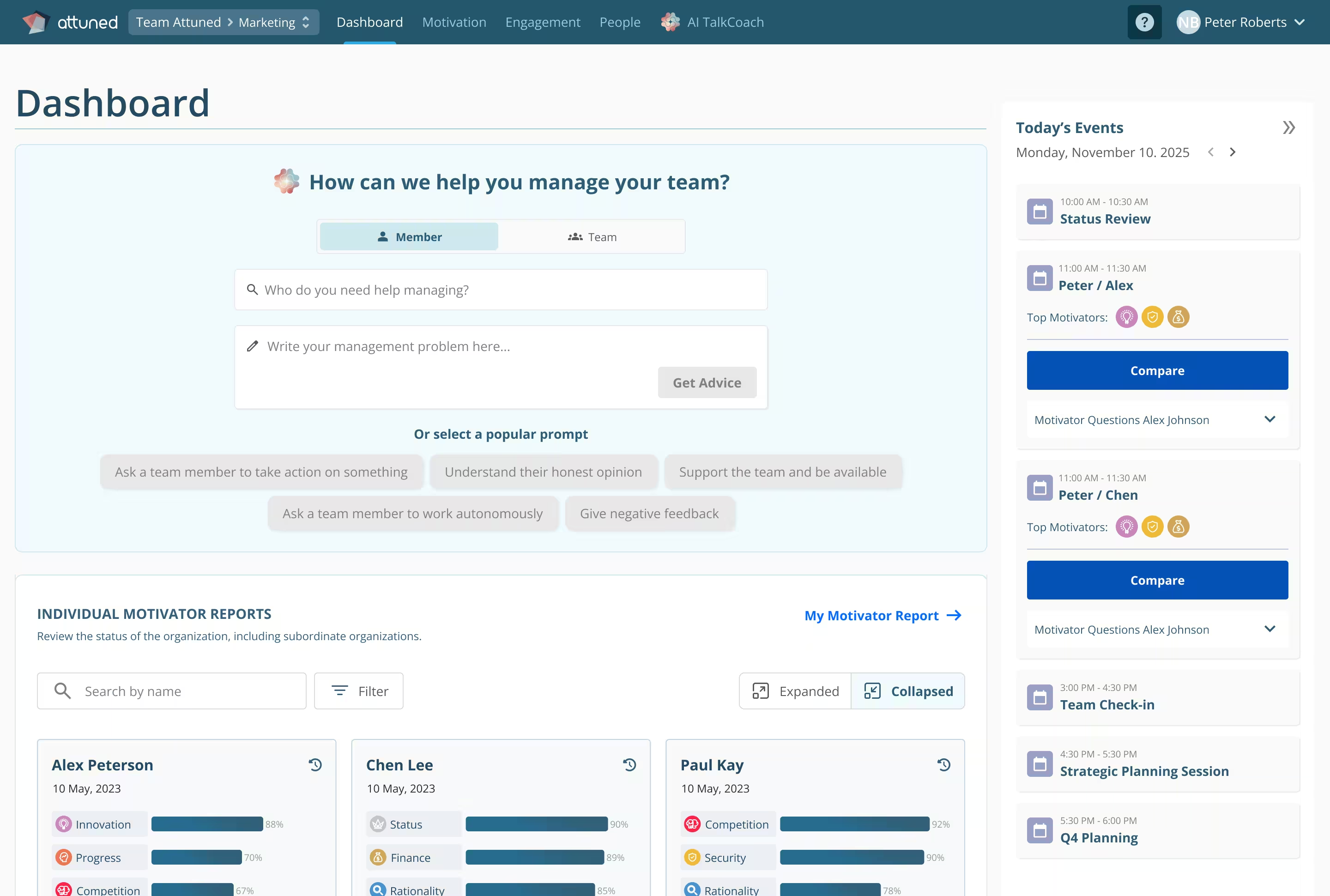
Attuned maps each report across 11 intrinsic motivators and tells the manager which conversation to have, then prepares it. It pairs naturally with our 1-on-1 coaching software and the wider practice of running effective one-on-one meetings, so a solid template becomes a genuinely good conversation.
There is a particular fate reserved for the recurring meeting that outlives its purpose: it keeps its slot on the calendar long after anyone remembers what it was for, attended out of habit like a gym membership. A 1:1 template can slow that decay. Only the right conversation stops it.
The structure is rarely the problem. These four are, and every one of them is about the content of the conversation, not its shape.
Progress crowds out everything else, and the meeting turns into a report you could have read in a tool. The growth conversation gets a rushed thirty seconds at the end, if it survives at all.
The manager runs the identical agenda with every report. It fits the two people most like them and quietly misses the rest, who answer the ritual questions and keep the real ones to themselves.
Whenever the week gets busy, the 1:1 is the first thing to go. Cancelling a report's meeting to make room for something else is the clearest signal that their time comes last, and they hear it.
A 1:1 is the report's meeting. When the manager fills the silence, the person never surfaces the thing they came to say, and the drift that a good question would have caught goes unspoken.
No other recurring meeting sits this close to whether a person stays, grows, or quietly starts looking. Here is what the research says about the conversation and the person running it.
A structure alone does not fix a 1:1. It usually goes sideways in one of these two ways.
You run the agenda faithfully. You cover the work, agree the next steps, end on time. And you have a quiet feeling that the meeting is a container with nothing in it, that you are managing tasks and missing the person.
You have the agenda open in a tab. But the growth section is a blank you fill differently for each person, and badly: praising loudly the one who wanted quiet trust, leaving alone the one who was starving for a word.
Here is how managers go from running the same template with everyone to walking into each 1:1 already knowing which conversation this person needs, without a rollout or a training course.
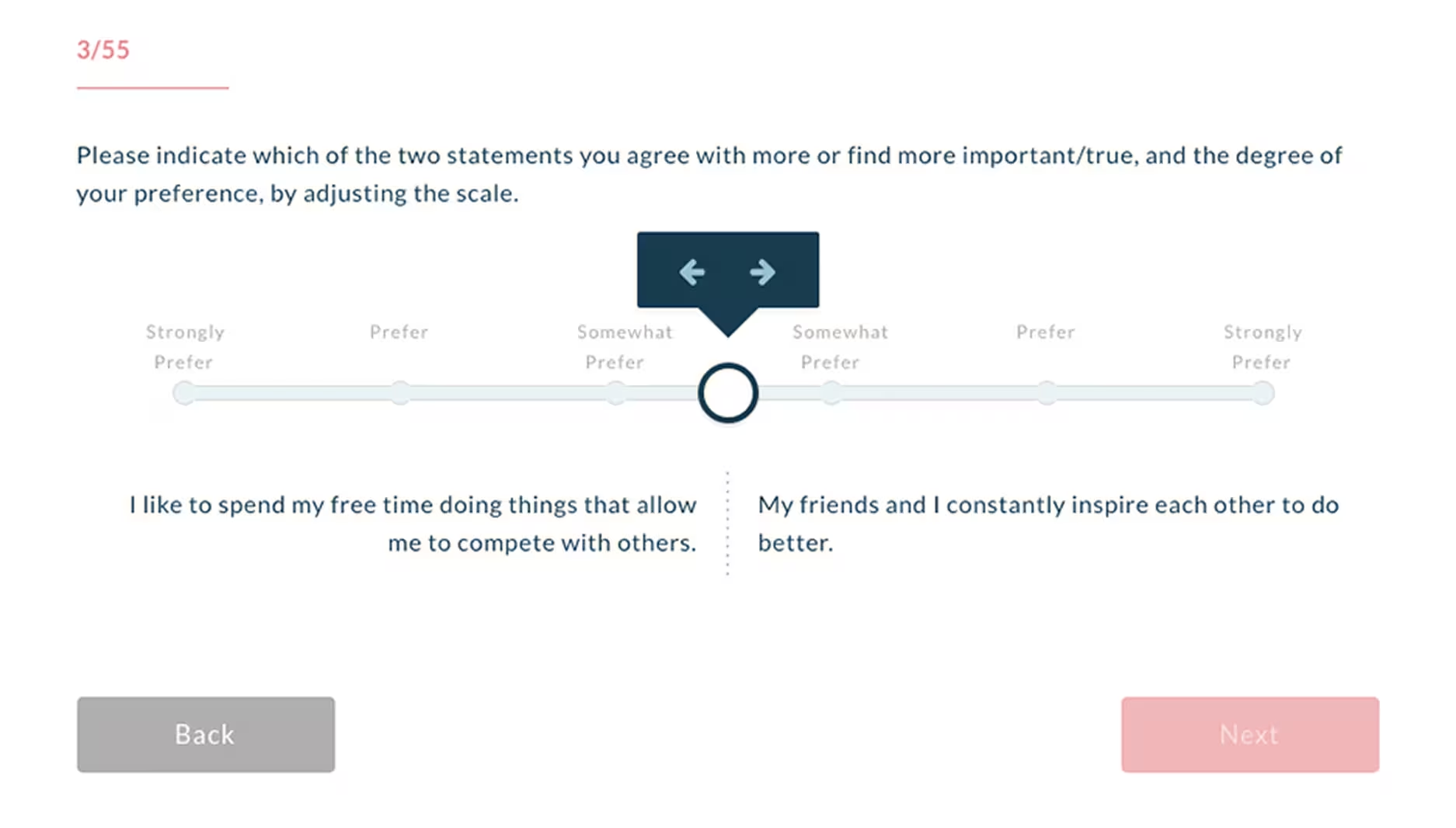
No rollout plan. No IT project. Each person answers a simple set of questions, and Attuned automatically calculates their profile across 11 intrinsic motivators. Most teams are up and running within a week of signing up, and every manager gets 1:1 guidance the moment the profiles are ready.
Slider-based questions, ~10 min
Motivator profile generated immediately
Every report gets a profile across 11 motivators. You stop guessing whether someone wants public praise or quiet trust, a stretch project or steadier ground, and open each 1:1 with the answer in front of you.
The AI TalkCoach turns each profile into what to raise in this person's growth segment, how to say it, and what to avoid. A first-time manager gets the instincts a seasoned coach would bring, before the meeting starts.
A blindspot is the gap between how you like to give feedback and recognition and how your report likes to receive it. Attuned makes both visible, so you adapt the 1:1 instead of accidentally demotivating the person you meant to support.
Some check-ins are not routine. Attuned pairs with our approach to giving difficult feedback, so the hard conversation is framed in terms the specific person can actually hear instead of shut down.
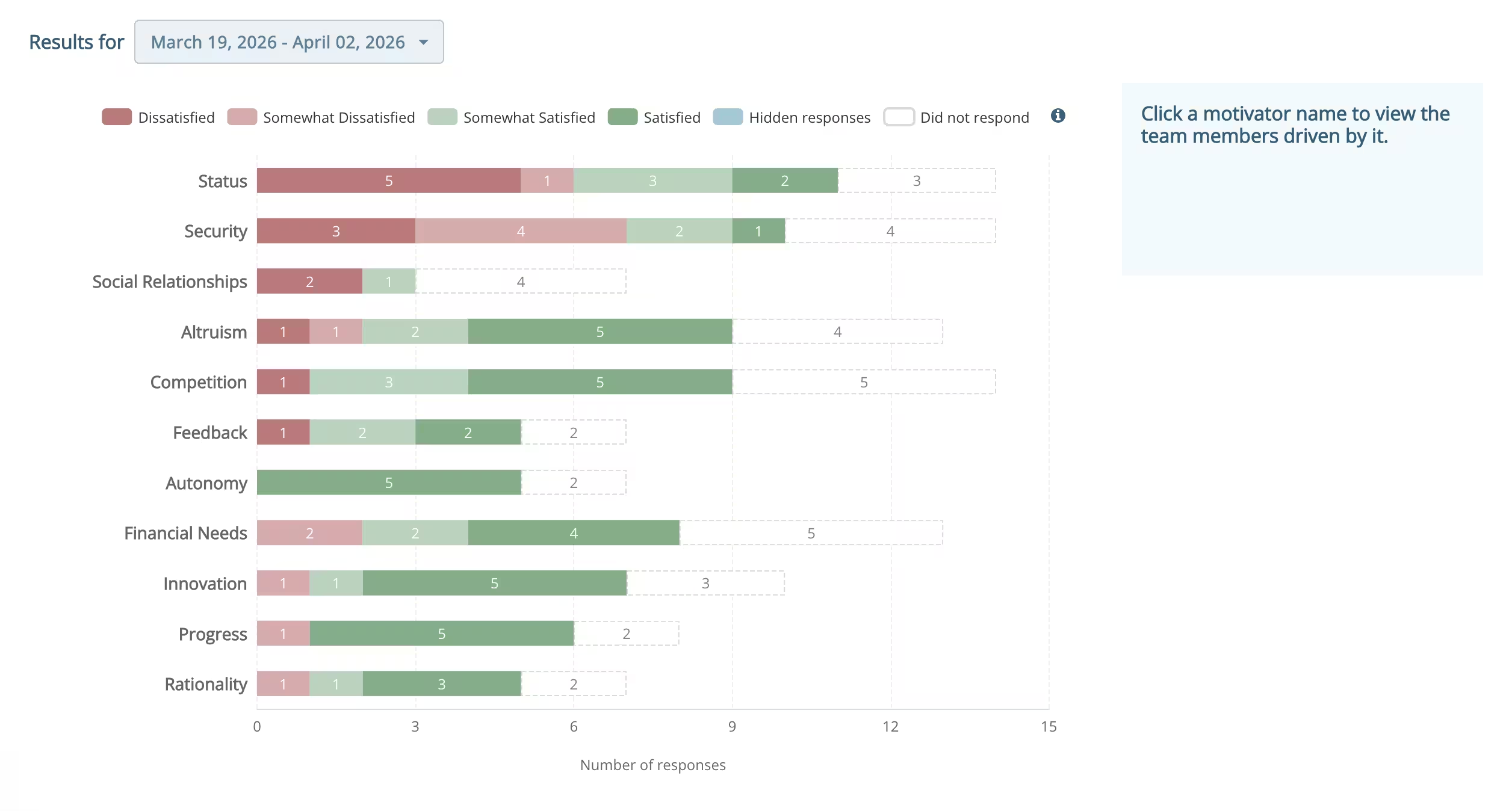
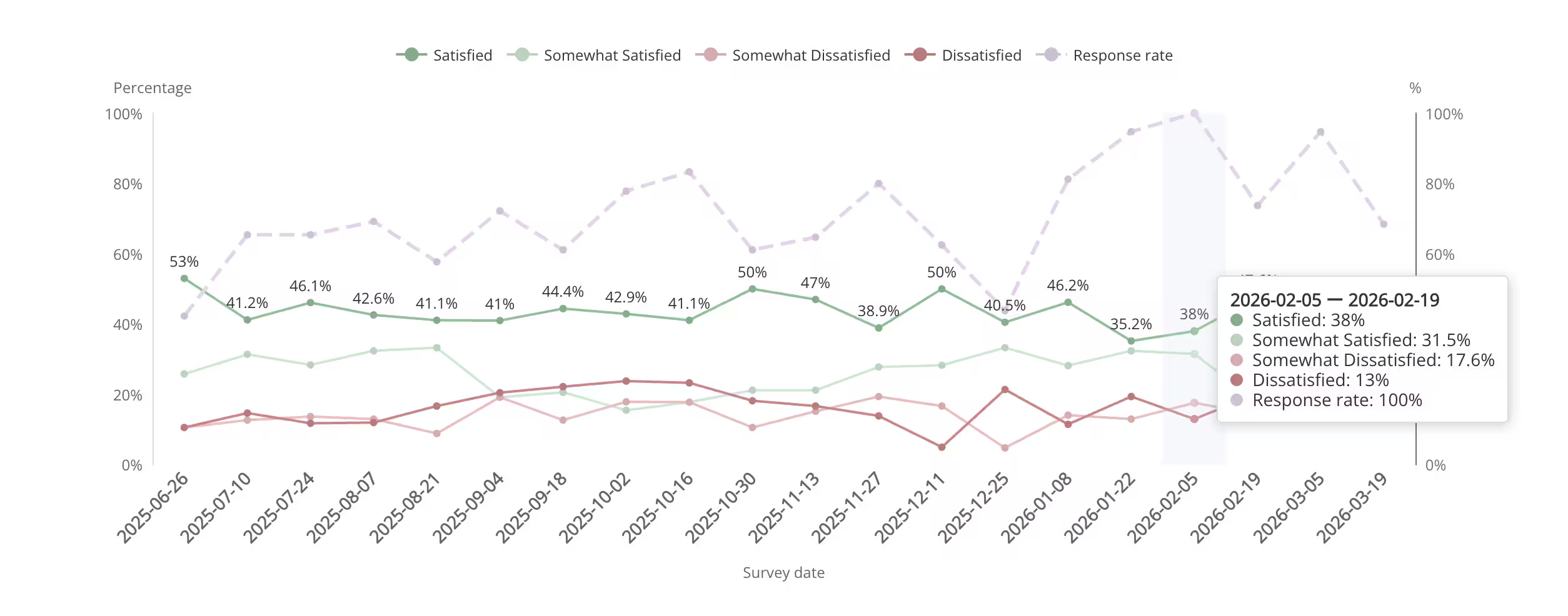
Attuned tracks motivator satisfaction over time and flags the gap between what a report values and what their role currently delivers, before the symptoms reach their work. Most departures start as a conversation a 1:1 could have had two months earlier.
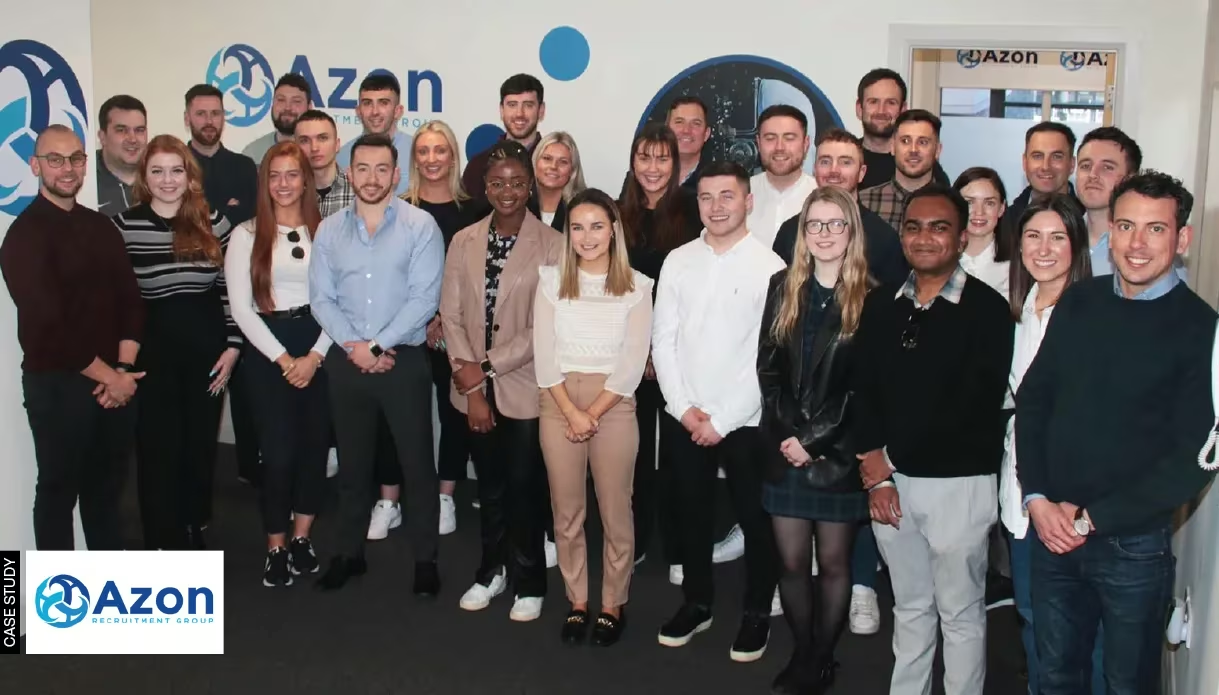
Azon Recruitment Group grew from a small team into an award-winning business by reading what actually drives its people, instead of guessing what to say. The manager conversations got specific, retention improved, and earnings followed.
An award-winning Irish firm that scaled from a handful of people to multiple specialist teams.
Azon hit the problem every manager eventually hits: how do you make sure a good person feels understood once you are too busy to just read the mood of the room? Conversations relied on instinct, until a resignation proved the instinct wrong. Attuned gave their managers a shared, individual view of what each person actually needed to hear in the meetings that mattered.
"Being able to get to the nub of people's underlying motivations at the start of a process and see what really drives and motivates people in the workplace has been very helpful, and we've seen a dramatic increase in the numbers of people we hire that we feel we've gotten right, and that are a right fit for the business." Kevin Halligan, Associate Director, Azon
"Since beginning to use the software, we have really seen that benefit translating to earnings for our business." Kevin Halligan, Azon
"I would recommend Attuned to any company that is fast-growing, wants to make the right decisions from the outset, wants a harmonious work environment, and is bringing in the best talent, as well as retaining and developing their existing team." Ronan Colleran, CEO, Azon Recruitment Group
Reading from the Attuned team, starting with the State of Motivation Report most leaders open first, plus practical pieces on 1:1s, feedback, and the motivation that keeps a good report from drifting.
What actually drives people at work right now, drawn from more than 10,000 assessments across four generations. The data behind everything on this page.
Read the report Blog · 1-on-1sThe failure modes a template alone will not solve, and the concrete fix for each, from the people who study manager conversations for a living.
Read the post Blog · Psychological SafetyThe check-in and feedback parts of your template only work if the person feels safe being honest. Here is how to build that in the room.
Read the post Blog · CoachingThe shift from managing tasks to coaching people, and how knowing someone's motivators changes the questions you ask in a 1:1.
Read the post Blog · FeedbackThe feedback segment of a 1:1 is where good intentions most often misfire. How to give feedback the specific person can actually use.
Read the post Blog · ManagementGallup says 70% of engagement variance is the manager. This is what the good ones do differently, in 1:1s and everywhere else.
Read the postAttuned runs quietly under your recurring meetings: continuous, individual, and light enough to prep a 1:1 in a couple of minutes. More useful than a blank template you fill the same way for everyone, or a training course you sat through once and forgot.
A ~10-minute assessment. No IT project, no training required. Your whole team can be profiled within days of signing up.
11 intrinsic motivators mapped per report. You stop running the same script and start having the conversation each person needs.
The AI TalkCoach turns each profile into what to raise this week, so a first-time manager walks in with a seasoned coach's instincts.
Lawful basis, data minimization, individual access rights, and the right to be forgotten. Your people own their motivator data.
We have spent years studying what drives people at work, and helping the managers who lead them turn the 1:1 from a status update into the conversation that keeps good people. The agenda is free. The part that matters is knowing what to put inside it, for each person.
Our expertise is people science: what drives individuals, how a well-meant question can miss the person entirely, and what a manager needs to hear before walking into a 1:1. We have brought it to fast-growing firms like Azon, and we would like to bring it to your team.