Most boards see one turnover number a quarter, long after the damage is done. Here are the turnover metrics a CEO should actually track, what each one tells you, and how to act on them before churn reaches the income statement.
A single turnover percentage is a vanity number. These eight turnover metrics, read together, tell a CEO not just how many members left, but which departures actually hurt, where they are concentrated, and what they cost. The two most decision-grade of them, regretted attrition and turnover by manager, are the two most dashboards leave out.
| Metric | What it tells the CEO | Watch when | The Attuned lever |
|---|---|---|---|
| Overall turnover rate | The headline: leavers ÷ average headcount. Useful only as a trend line, not a snapshot. | Trend rises two quarters running. | Motivator drift flags the rise early. |
| Voluntary vs. involuntary | Splits churn you chose from churn that chose you. A flat rate can hide rising resignations. | Voluntary share climbs. | See who is disengaging before they resign. |
| Regretted attrition | The share of leavers you wanted to keep. The single most important turnover metric for a CEO. | Any upward move at all. | Early-warning per high-value member. |
| First-year & 90-day turnover | How well hiring and onboarding actually stick. Early exits are the most expensive kind. | Above ~20% first-year. | Match role to motivators from day one. |
| Turnover by manager | Where churn concentrates. Roughly 70% of engagement variance traces to the manager. | One team churns 2x the mean. | Coach the manager, not just the metric. |
| Cost of turnover | Fully loaded replacement cost: hiring, ramp, lost output. Often 0.5x to 2x salary per exit. | Every board deck. | Prevention is cents on that dollar. |
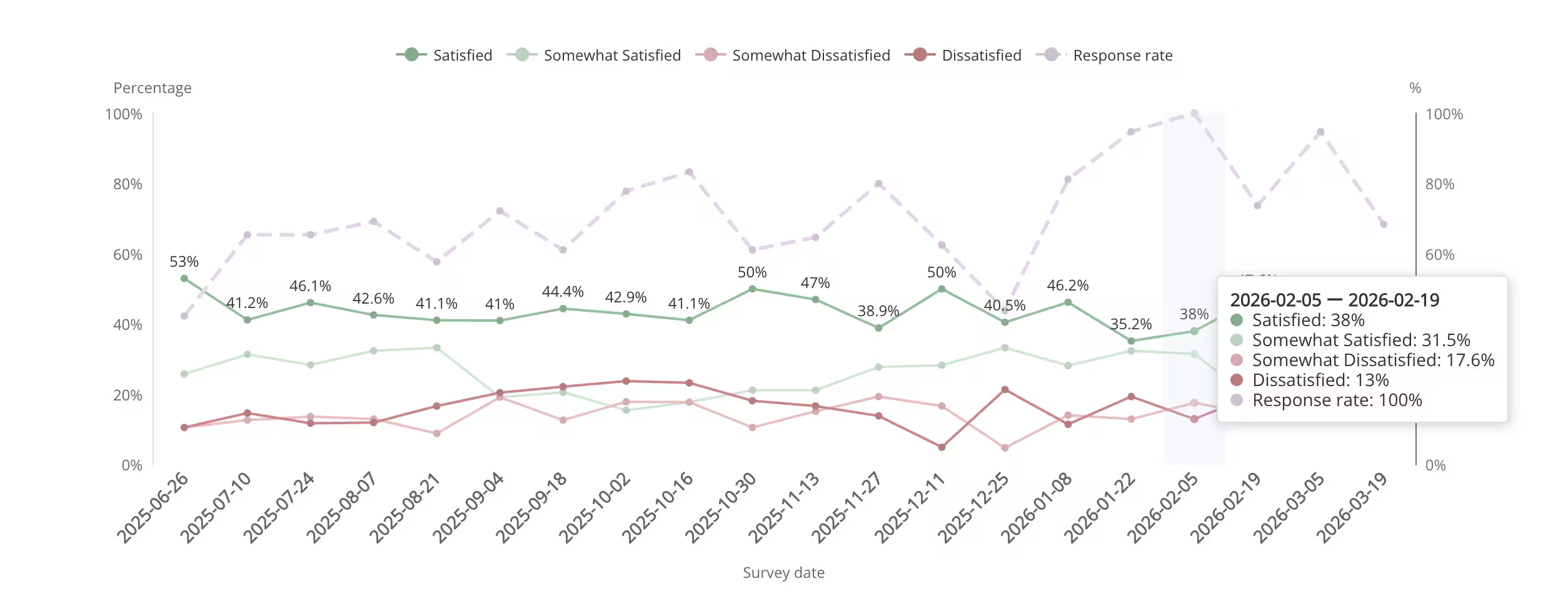
| Engagement / eNPS | A leading signal that moves before turnover does. Directional, not diagnostic on its own. | Score drops without a cause. | Explains the why, per motivator. |
| Time-to-fill & vacancy cost | What each empty seat costs while open. Turns turnover into a number the CFO already respects. | Backfills stretch past plan. | Fewer regretted exits to backfill. |
For the executive team itself, layer three more on top: leadership turnover, succession and bench strength (how many critical roles have a ready successor), and compensation competitiveness, or compa-ratio. Each is an early flight-risk signal at the top of the org, where a single departure is the most expensive of all.
Turnover is a lagging indicator. It records a choice each member made weeks or months earlier, for reasons a CEO could have acted on. Here is what the research says about the gap between the metric and the moment.
A turnover figure on the board deck is the oil light on a dashboard: by the time it glows red, the wear that caused it happened thousands of miles back. The number is real, but it reports history. What a CEO needs is the gauge that moves first.
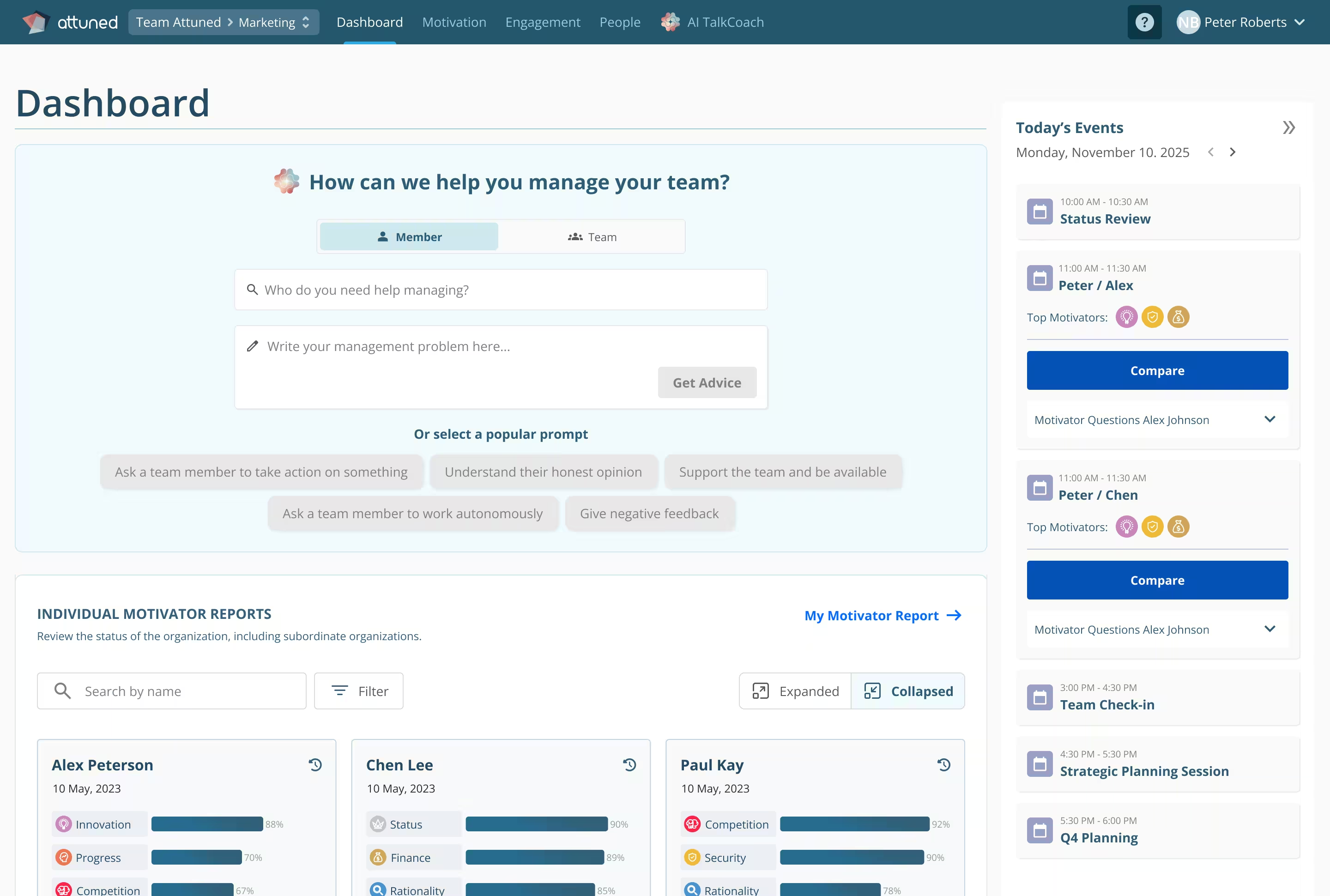
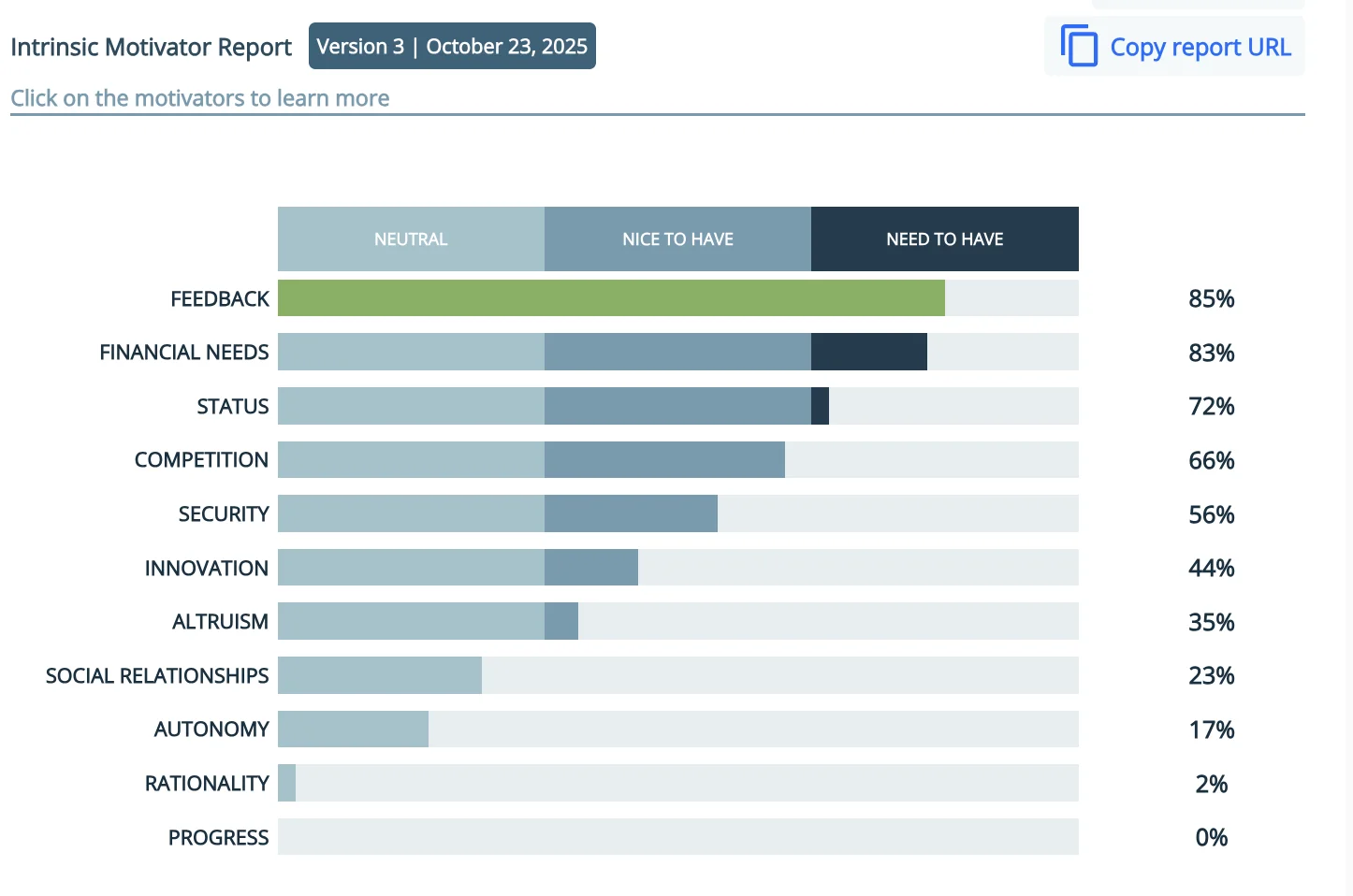
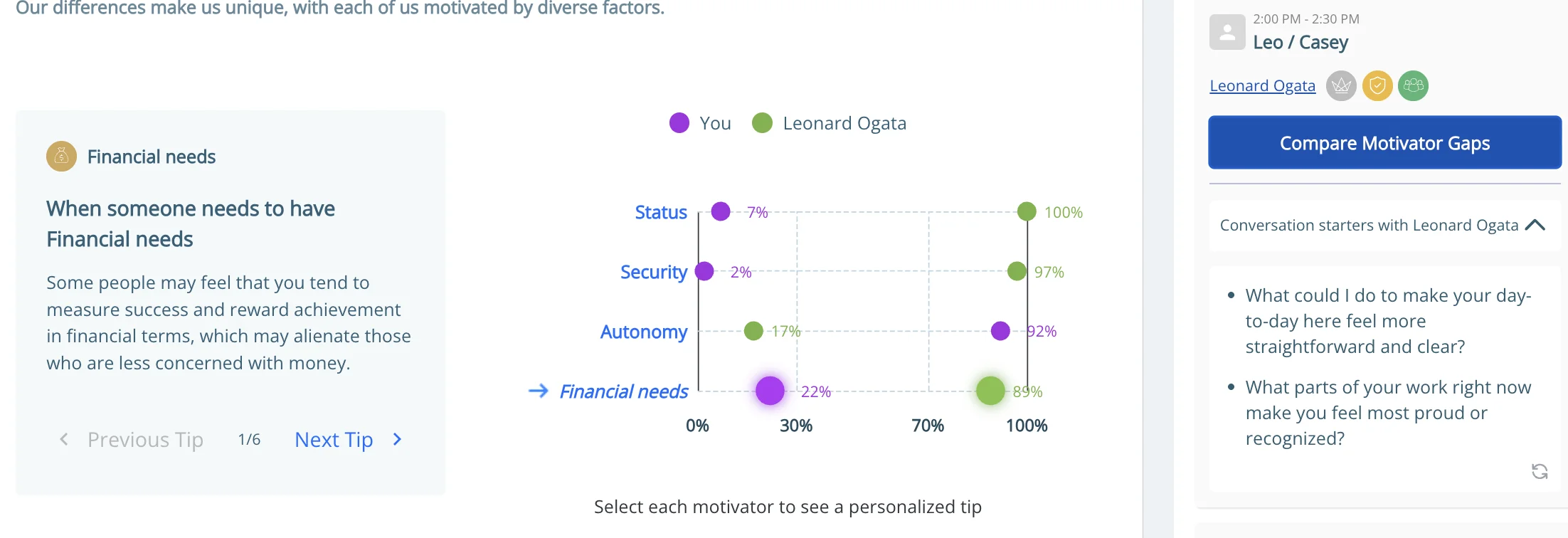
That gauge is intrinsic motivation. People rarely leave over one bad week; they leave when the gap between what they value and what the role delivers stays open too long. Attuned measures that gap continuously across 11 motivators, so the signal shows up while you can still change the outcome. It pairs with stay interview questions for the at-risk conversation, employee feedback software to keep the loop open, and better one-on-one meetings to act on it.
No IT project and no rollout plan. Attuned turns the turnover metrics on your board deck into an early-warning system your managers can actually use.
Each member takes a roughly 10-minute assessment across 11 intrinsic motivators. Your whole team is baselined within days, so the signal has something to measure against.
Attuned tracks motivator satisfaction over time and flags where what a member values and what their role delivers drift apart, rolled up by team and manager.
Managers get specific prompts for the at-risk conversation and coaching to close the gap, so regretted attrition falls before it ever reaches your quarterly numbers.
Azon Recruitment Group grew from a handful of people into an award-winning firm by learning what kept each member instead of judging retention by who looked happy in the hallway. The conversations got honest, retention improved, and the benefit showed up in earnings.
"Being able to get to the nub of people's underlying motivations has been very helpful, and we've seen a dramatic increase in the numbers of people we hire that we feel we've gotten right."
"Since beginning to use the software, we have really seen that benefit translating to earnings for our business."
See how Attuned turns the turnover metrics on your board deck into an early-warning signal your managers can act on, before your best members decide to leave.