People Science · For Managers Who Want to Keep Their Best Members

Stay Interview Questions That Keep Your Best Members

An exit interview tells you why someone left. A stay interview tells you who is about to, while you can still do something about it. Below are 30 stay interview questions, grouped by what each one reveals, plus a free template you can copy. Then see how Attuned tells you which questions matter for whom, and flags the members worth sitting down with first.

Jump to the 30 Questions ↓ Book a Call Directly →
Trusted by
Azon Recruitment Group
Growing Firms & Startups
Managers in 4+ Generations
attuned.ai · Stay Interview Prep & Retention-Risk Dashboard
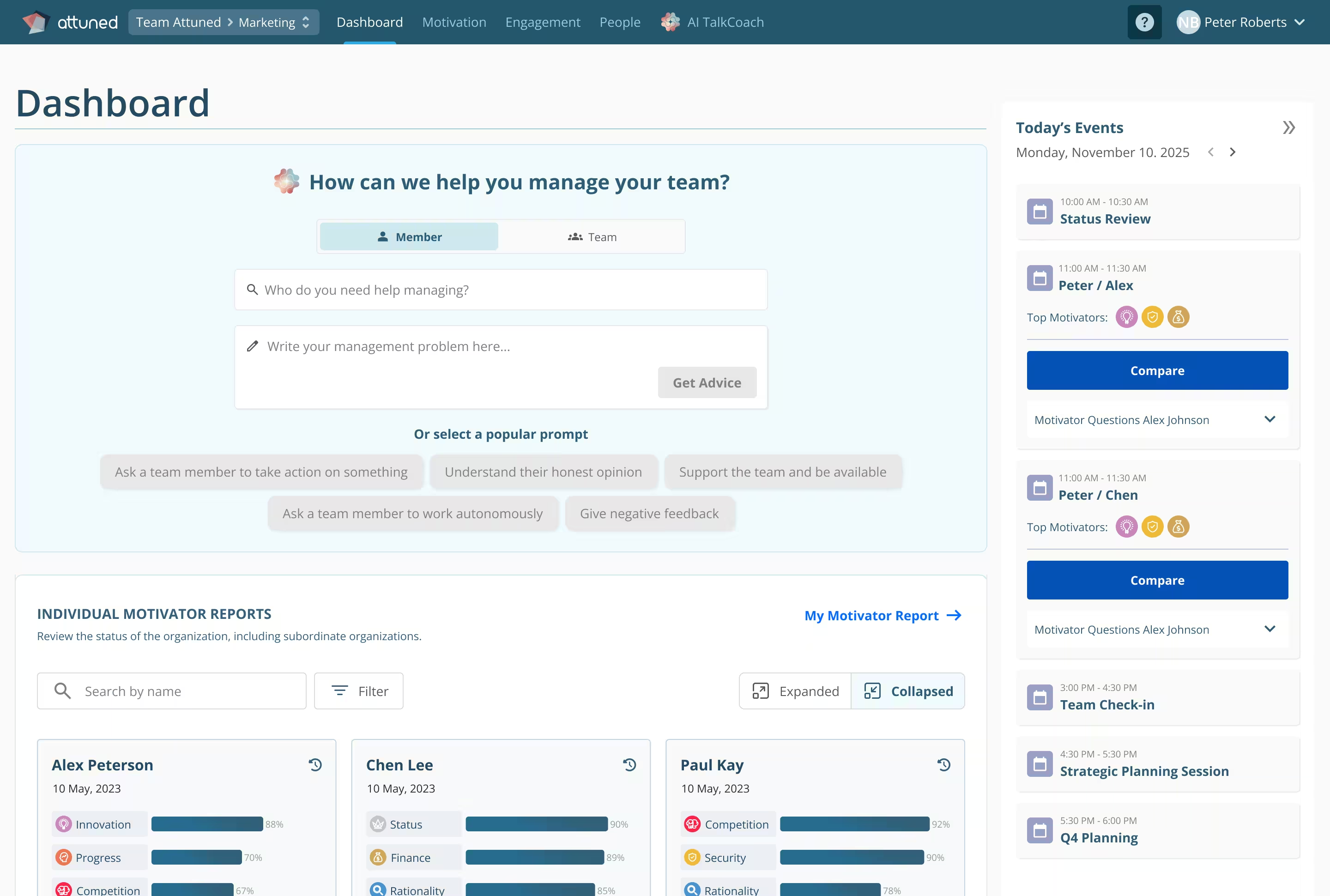
Attuned dashboard showing a member's motivator profile, suggested stay interview questions, and a retention-risk flag

Case Study · Azon Recruitment Group · Ireland

"Being able to get to the nub of people's underlying motivations has been very helpful."

Kevin Halligan, Associate Director, Azon Recruitment Group

A fast-growing firm that lives on its people

Azon grew from a handful of people into an award-winning talent business. Keeping the specialists it had worked hard to hire mattered as much as landing the next one, and its managers wanted to know who was happy well before anyone thought about leaving.

Everyone looked fine, until they resigned

"If an employee was engaged and looked happy, the assumption was they were fine, until you got the resignation," their HR team noted. Judging retention by how content someone seems in the hallway is how good members slip away quietly.

Learned what actually kept each member

Attuned mapped each member across 11 intrinsic motivators, so managers knew what mattered to each member and could ask the stay-interview questions that surfaced a problem while there was still time to fix it.

Honest conversations. Retention followed.

"A dramatic increase in the numbers of people we hire that we feel we've gotten right," reports Kevin Halligan, Associate Director. "We have really seen that benefit translating to earnings for our business."

From guessing to knowing: Azon's managers learned what kept each member, and heard the honest answer before it turned into a resignation letter. Read the full story →

Most Resignations Were Preventable. Someone Just Asked Too Late.

A stay interview is the cheapest retention tool you have, and the one most teams skip until it becomes an exit interview. Here is what the research says about the conversation you are not having yet.

52%
Of voluntarily departing employees say their manager or organization could have done something to keep them. The stay interview is where that something gets said in time.
Gallup
70%
Of the variance in team engagement traces back to the manager, and most of that influence is spent one conversation at a time.
Gallup, State of the American Manager
2×
As much as twice an employee's annual salary is what it costs to replace them. A half-hour stay interview is the cheaper end of that math by a wide margin.
Gallup
1.7M
Possible combinations of the 11 intrinsic motivators. It is the reason one fixed question list cannot tell you what keeps every member on your team.
Attuned motivator model

Sound familiar?

Anyone can find a list of stay interview questions. The hard part is knowing who to ask, when, and what the answer really means. Here is how it usually goes sideways, from two very different chairs.

The Manager Blindsided by a Resignation

"She was one of my best members. I genuinely did not see it coming."

You thought things were fine, because they looked fine. The work kept shipping and the check-ins were pleasant. Then the notice landed, and the exit interview surfaced three things you could have fixed months earlier if anyone had asked. Now you are backfilling a role you never wanted to lose.

  • Good performers who resign with no visible warning
  • Exit interviews full of problems you could have solved
  • No structured way to ask "what would make you leave?" in advance
  • Counteroffers that arrive a month too late to matter
  • A team that reads "content" as "not at risk"
"I asked my most reliable engineer 'anything on your mind?' every week for a year. He said no every week. Then he resigned, and it turned out there was quite a lot on his mind."

The HR Leader Watching Regretted Attrition

"We run stay interviews. They still feel like a form we fill in and file."

You rolled out stay interviews to get ahead of turnover. But managers read the same list to everyone, log a few notes, and nothing changes, so the honest answers never come. The regretted-attrition number will not move because the conversation is going through the motions.

  • A stay interview template that gets treated as a checkbox
  • Managers unsure which questions matter for which member
  • Notes captured, but no follow-through anyone can see
  • The same generic questions producing the same safe answers
  • No early signal on who is actually at risk right now
"We had a beautiful stay-interview form. What we did not have was any idea which of the twenty questions actually mattered to the member sitting across the desk."

30 Stay Interview Questions, Grouped by What They Reveal

You don't need to ask all thirty. Pick five or six across these groups, leave real room for the answers, and treat the list itself as your stay interview template: copy the groups that fit the member into your notes. Each group flags the intrinsic motivator it tends to surface, so you can steer toward what actually keeps the member in front of you instead of reading a script top to bottom.

What keeps you here

The opener · reveals their top motivators

  • What is it that keeps you working here?
  • What did you enjoy most about your work this past month?
  • On a recent day that felt genuinely good, what were you doing?
  • Would you recommend us to a friend looking for a job? Why, or why not?
  • If you could wave a wand and change one thing about your role, what would it be?

The role, workload & balance

Reveals Progress, Rationality, Security

  • Which parts of your role do you look forward to, and which do you dread?
  • Where does your time go that does not feel worth it?
  • Does the balance between work and the rest of your life feel sustainable right now?
  • Do you have the tools, information, and support you need to do your job well?
  • What one change would make your day-to-day noticeably better?

Growth & the future

Reveals Progress, Autonomy

  • What are you learning here that you want more of?
  • Where do you want to be in two years, and are we helping you get there?
  • Is there a skill or project you wish you had a shot at?
  • What would growth look like for you that is not simply a promotion?
  • Does your career feel like it is moving at a pace that suits you?

Recognition & feeling valued

Reveals Status, Feedback, Altruism

  • When you do great work, how do you like it noticed?
  • Is there a recent win you do not think got enough credit?
  • Do you feel your contribution here is genuinely valued? What would make that clearer?
  • What kind of feedback do you wish you got more of from me?
  • Whose work on the team do you think deserves more recognition?

You & how we work together

Reveals Social Relationships, Autonomy

  • What could I do more of, or less of, that would help you?
  • Where do you want more room to run, and where would you welcome more direction?
  • Is there anything about how we work together you would change?
  • What is something a past manager did that you want me to keep doing, or never do?
  • Do you feel you can be honest with me? What would make that easier?

Risk & red flags

Reveals Security, Financial Needs

  • What would make you seriously consider leaving, if anything?
  • Have you thought about leaving recently? What prompted it?
  • Is there a change or an offer that would be hard to turn down right now?
  • Does anything about your role or your future here worry you?
  • If you were writing your own reasons to stay, what would be on the list?
How to use this list

Group six is where the quiet resignations get caught. Ask "what would make you consider leaving?" of the member who values Security and you will hear a careful, honest answer about their footing. Ask the same question of the member who values Autonomy and you may hear about the process that is boxing them in. The words are identical; what they unlock depends entirely on the member. That is the whole game of a stay interview, and it is the part a fixed template cannot do for you.

The Science Behind Why People Really Stay

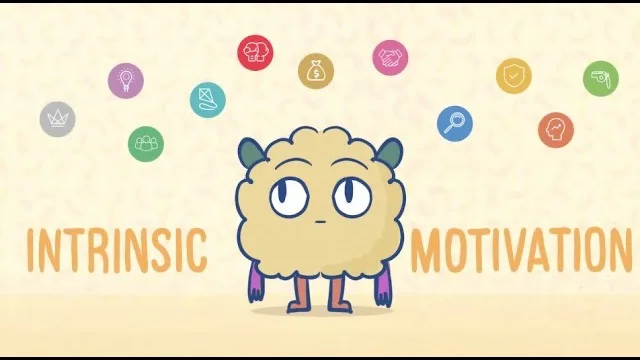
A stay interview works when it touches what the member is genuinely driven by, and what keeps them is rarely just the paycheck. This 5-minute video explains the difference between intrinsic and extrinsic motivation, and why knowing which is which changes the answers you get across the table.

Attuned explainer: intrinsic vs extrinsic motivation, with the 11 motivator icons around the Attuned mascot
Attuned · YouTube
Intrinsic vs. Extrinsic Motivation, and Why It Changes the Answers You Get
Click to play, loads YouTube only after you click

A stay interview only works if you know
what you're listening for.

There is no shortage of stay interview templates on the internet, and yet regretted attrition keeps happening. The reason is that a question only surfaces the truth when it touches something the member genuinely cares about. Ask everyone the same twenty questions and you get everyone's safest answer, filed and forgotten.

How someone drifts toward the exit, and where a stay interview intervenes
Diagram showing how an employee drifts toward leaving when their motivators go unmet, and where a stay interview and Attuned intervene
77%
of the reasons people quit are things an employer could have prevented, if someone had asked in time. The stay interview is that ask. Work Institute Retention Report
Research Insight

Psychologist Adam Mastroianni has written that "How are you?" is a ritual question that expects a ritual answer. Both parties understand: what is being exchanged is a performance of connection, not connection itself. Half the questions on a standard stay interview form work exactly the same way. The member answers on autopilot, you tick the box, and the real reason they are updating their CV never comes up.

Adam Mastroianni, Experimental History

Aim the question at the member, not the average

A question surfaces the truth when it matches what someone is driven by. Ask the member high in Progress "where do you want to be in two years?" and they will talk for ten minutes. Ask the member high in Security the same thing and they may hear a warning that their role is about to change. Attuned shows you which is which, so you ask the question that opens the member up instead of the one that makes them close ranks.

It puts each member's motivators in front of the manager with specific prompts, and pairs naturally with our 1-on-1 coaching software, our employee feedback software, and our guide to running better one-on-one meetings, so the stay interview becomes a real conversation rather than a form you file together.

  • See which motivators each member leads with, before you sit down
  • Get stay interview questions aimed at what that member cares about
  • Know which topics to tread carefully around for that member
  • Catch the member who has quietly started looking before they hand in notice

There is a grim joke in HR that the exit interview is an autopsy: thorough, well documented, and performed on someone already gone. The stay interview is the check-up you book while the patient is still in the building, and still glad to be asked.

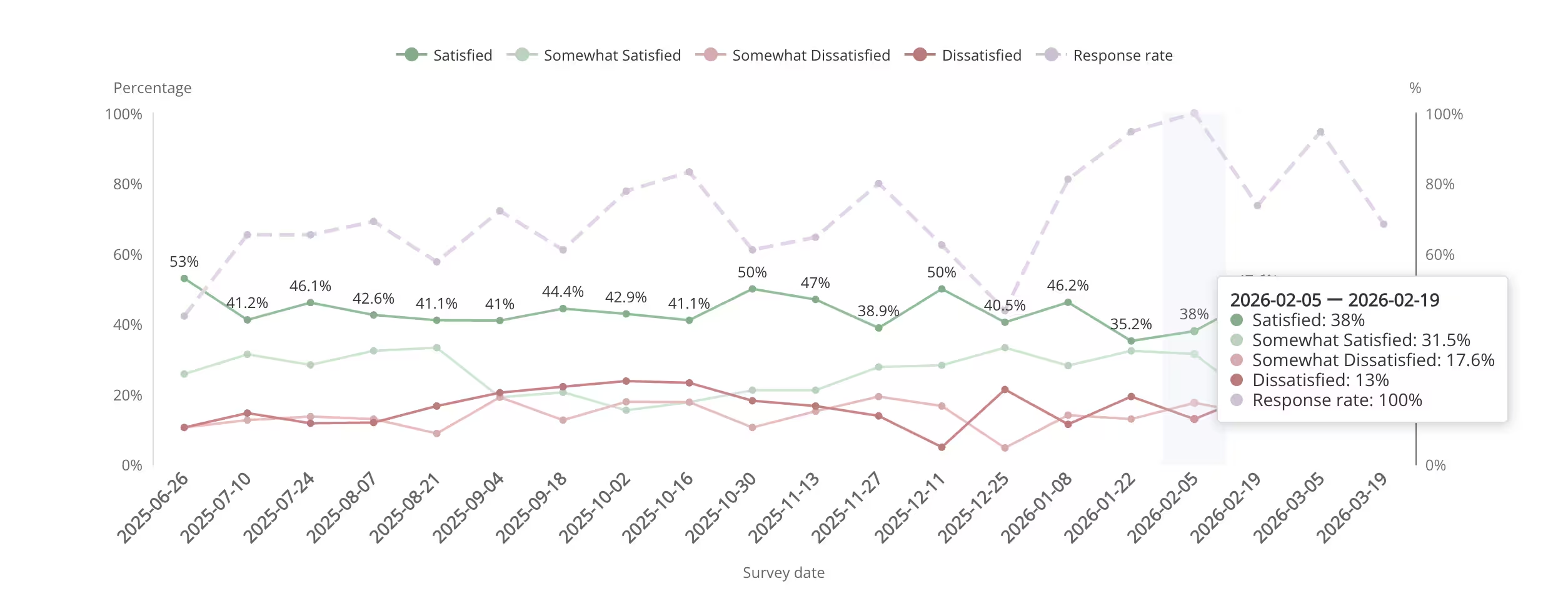
Motivator satisfaction over time, how Attuned flags the member a stay interview should reach next
Motivator satisfaction trend dashboard showing how Attuned flags a team member whose motivators are going unmet and who is at risk of leaving

4 Reasons Stay Interviews Don't Prevent the Resignation

A stay interview that changes nothing is worse than none at all: it spends the member's honesty and gives back a filed note. It usually breaks in one of these four places, and every one is fixable once you know the member.

01

The same template for everyone

One fixed script cannot fit a Progress-driven member and a Security-driven member equally. Read to the whole team, it reaches a couple of members and glances off the rest, who quietly give you the safe answer and keep their real reasons to themselves.

02

It happened too late

By the time a manager schedules a stay interview because someone "seems off," the member has often already interviewed elsewhere. The conversation that could have kept them needed to happen a quarter earlier, before the drift became a decision.

03

Not enough safety to answer honestly

A good question aimed at a member who does not feel safe still gets the careful answer. Without psychological safety, "what would make you leave?" gets a shrug and a "nothing, I'm happy" right up until the notice period.

04

Nothing changed afterward

If someone tells you what would keep them and then watches nothing happen, you have taught them that honesty is pointless. The next stay interview gets the short version. Follow-through is what turns the answers into retention.

How to Run a Stay Interview That Works

The best question in the world falls flat if it is asked the wrong way, at the wrong moment, of the wrong member. The questions are only the opening move; how you ask and what you do with the answer is the rest of it. First, a quick reminder of why a stay interview beats waiting for the exit interview, then six habits that turn a template into retention.

Stay interview vs. exit interview
The difference Exit interview Stay interview
When it happens After the member has already resigned While your best members are still on the team
What it measures Why people left last year Who is at risk this quarter, and why
What you can do with it Improve things for the next hire Keep the member sitting in front of you
Who to focus on Whoever happens to be leaving The members you most want to keep, flagged early
The outcome A backfill and a lesson A retained employee and a stronger relationship

1. Keep it away from the review

Run the stay interview well clear of performance ratings and compensation cycles. The moment it feels tied to a score or a raise, the answers turn strategic. Held on its own, it signals that you want the truth, not a negotiation.

2. Ask fewer, go deeper

Five or six questions with room to breathe beat twenty fired off in sequence. A long template turns the conversation into an audit and teaches people to give short answers. Choose the groups that fit the member and follow the threads that open up.

3. Aim at what drives the member

The same question means different things to different people. Match it to the member's motivators and the honest answer arrives on its own. This is exactly what Attuned's intrinsic motivation assessment is built to tell you.

4. Build the safety first

No stay interview works without psychological safety. Respond to a hard answer with curiosity, not defense, and never punish candor. The first time someone regrets being honest with you, every future answer gets shorter.

5. Act on what you hear

A stay interview is a promise that something might change. Pick one or two things the member raised, do them visibly, and refer back next time. Follow-through is the entire difference between a retained employee and a filed note.

6. Know when it needs to go deeper

Sometimes a stay interview surfaces a harder conversation than any single question invites. When that moment comes, our guide to giving difficult feedback covers how to have it without breaking the trust you just earned.

A Simple Structure to Steal

If you want a container for these questions, set aside 30 to 45 minutes and run it in four parts. Open by naming why you are asking: you want them to stay, and you want to know how to make that easy. Spend the next stretch on what is going well and what keeps them, so the tone is not an interrogation. Then turn to the friction and what would tempt them away. Close by agreeing on one or two things you will actually change, and put a date on the follow-up. Weight the conversation toward what is working before you get to what is not; people open up faster when they are not there only to complain.

Attuned People Science Team

From guessing who is at risk to knowing, in under a week

Here is how a manager goes from finding out someone was unhappy in the exit interview to knowing what keeps each member, which stay interview questions to ask them, and who to sit down with first, without adding hours of prep.

Step 0 · Start Here

Everyone completes a ~10-minute assessment. That's the whole setup.

No rollout plan. No IT project. Each member answers a simple set of questions, and Attuned automatically calculates their profile across 11 intrinsic motivators. Most teams are up and running within a week of signing up.

~10 minper member
11motivators mapped
1.7Mpossible profiles
Week 1ready to go

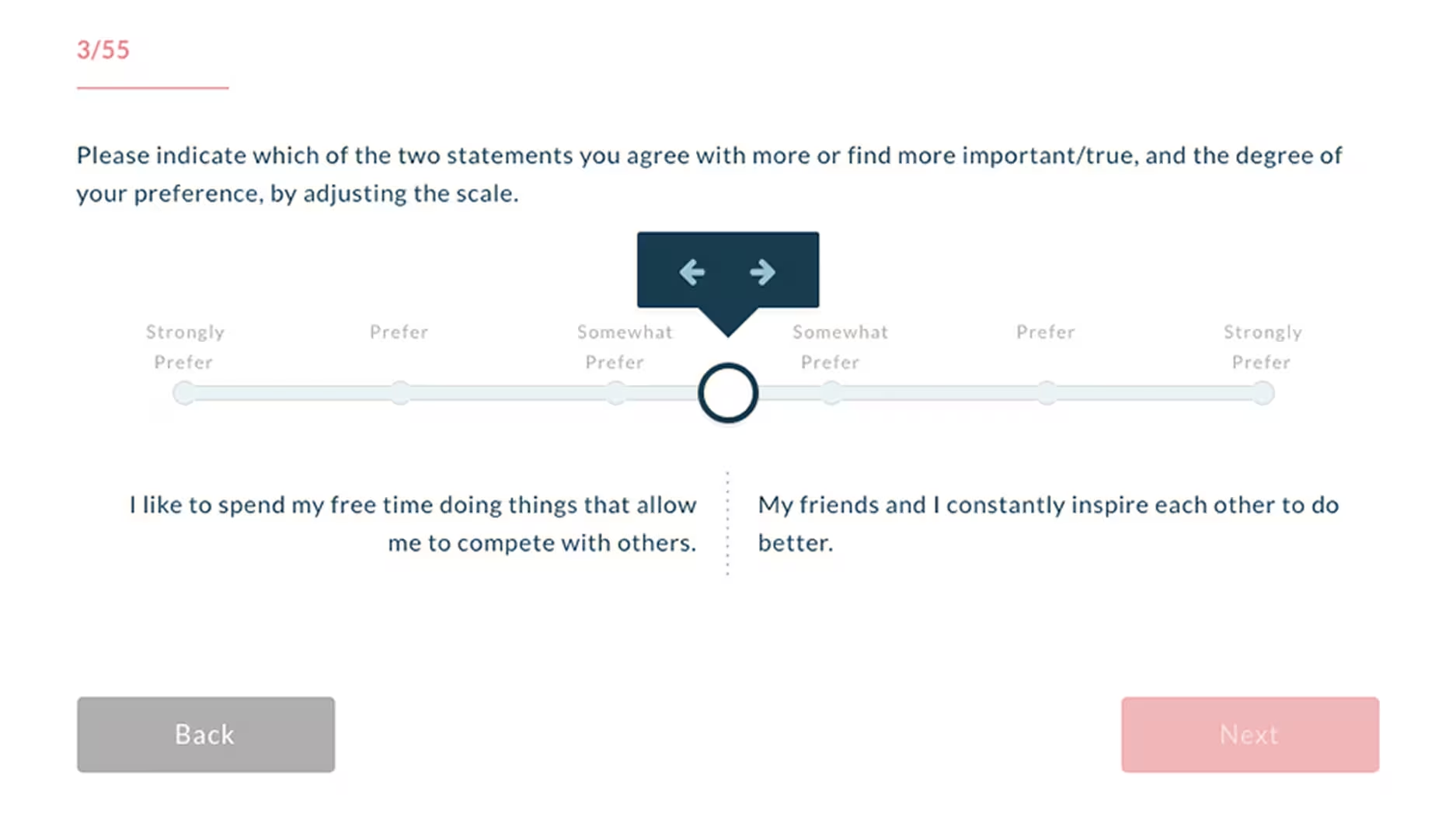
Slider-based questions, ~10 min

Attuned motivator assessment screen with slider-based questions

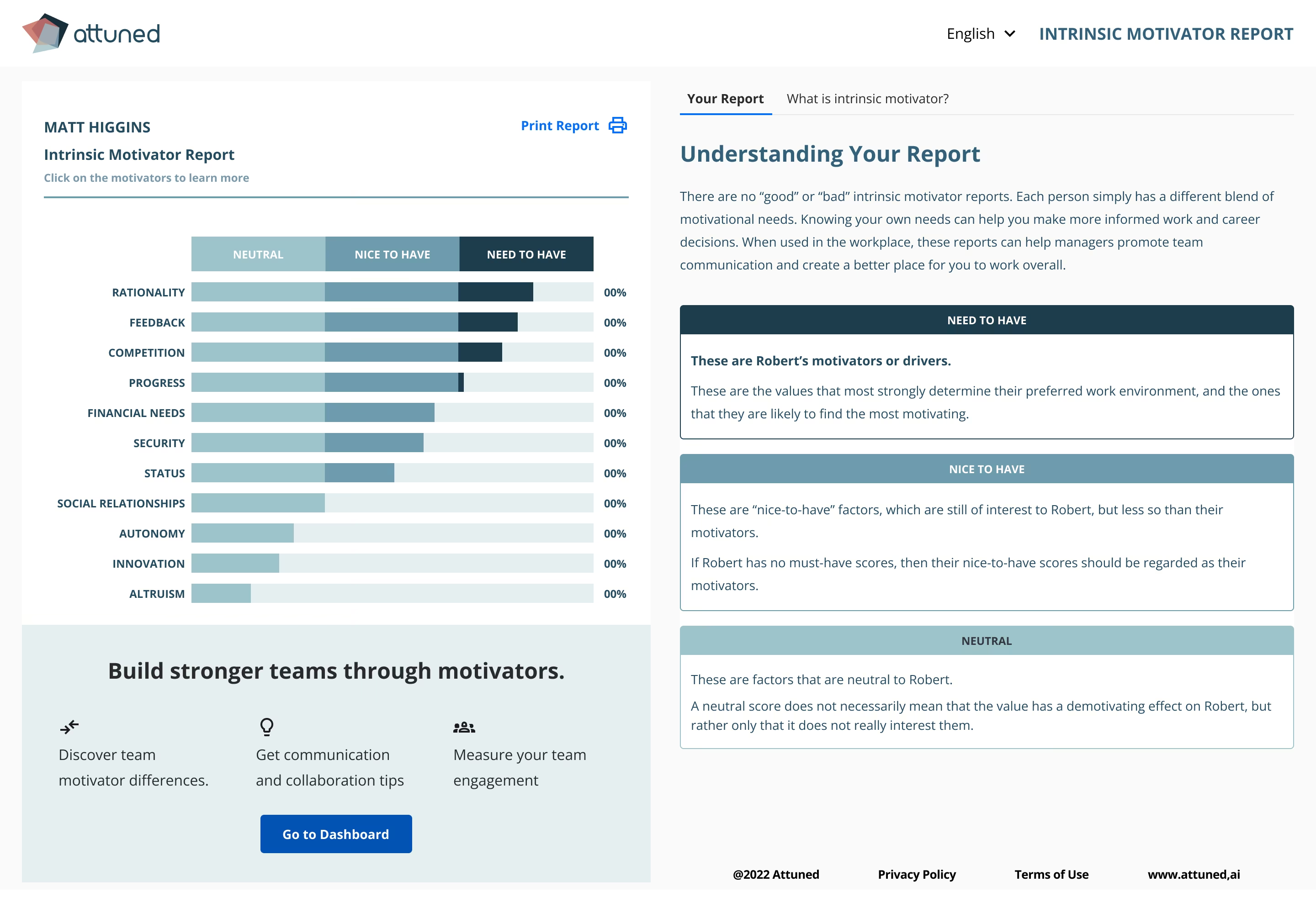
Motivator profile generated immediately

Attuned motivator breakdown showing a member's intrinsic motivator profile and which stay interview questions will land for them
01
See What Keeps Each Member

Turn a hunch into a map

Every member gets a profile across 11 motivators. Before a stay interview you can see whether they lead with Progress, Autonomy, Security or Feedback, so you already know which questions will open them up and which will get a shrug.

11 motivator dimensions One profile per member
02
Coach Your Managers

Give whoever leads the right questions

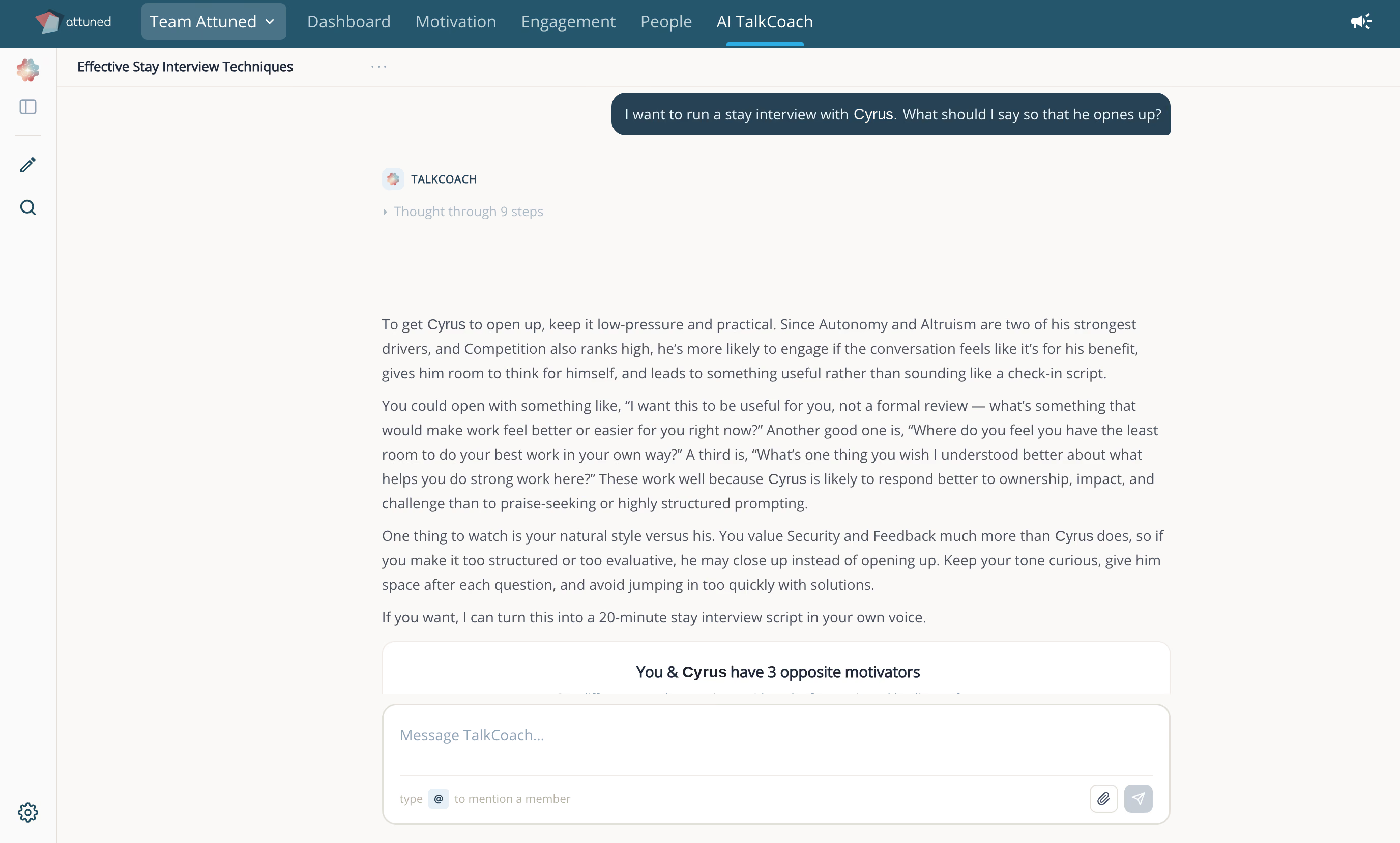
The AI TalkCoach turns each profile into which stay interview questions to ask, how to frame them, and what to steer around. A first-time manager walks into the conversation with the instincts a seasoned coach would give, without the seasoned coach.

AI coaching per member Ready-to-use stay interview prompts
03
Close the Gaps

See where the role and the member don't line up

A retention risk is the gap between what a member values and what their role currently gives them. Attuned makes that gap visible per motivator, so a leader knows what to change for that member instead of guessing after the resignation.

Value-vs-role gap map Guidance on what to change
04
Better Conversations

Make every stay interview actually count

Retention lives or dies on a handful of conversations. Attuned turns a vague "everything okay?" into a question aimed at what the member cares about, and pairs with our approach to giving difficult feedback when a stay interview needs to go deeper.

Prepped stay interviews Harder conversations, handled
05
Keep Your Members

Catch the overlooked before they leave

Attuned tracks motivator satisfaction over time and flags the gap between what someone values and what their role currently delivers, before the symptoms show up in the work. Most departures start as a bit of recognition you could have given two months earlier.

Early-warning drift alerts Continuous tracking
Ready to stop losing members you could have kept?
Know what keeps each member, and who to sit down with first, in under a week.
No IT project. Your team is profiled and your managers have AI-suggested stay interview prompts for each member before Friday.
Book a Call Directly →
Book a time that works for you · No callback queue

How a Growing Firm Learned What Kept Its People, Before They Left

Azon Recruitment Group grew from a small team into an award-winning business by reading what drives its people, so managers could ask what kept each member instead of guessing from the surface. The conversations got honest, retention improved, and earnings followed.

Azon Recruitment Group team, a fast-growing firm that improved retention by learning what kept each member, with Attuned

More on Keeping the Members You Want to Keep

Reading from the Attuned team, starting with the State of Motivation Report most leaders open first, plus practical pieces on turnover, psychological safety, feedback, and what actually makes people stay.

A stay interview template any manager can find. The aim is the hard part.

You can bookmark a hundred stay interview questions for free. What you can't Google is which of them will land with the member you're meeting on Tuesday, or who on your team you should be sitting down with first. That is the part Attuned does, quietly, before you sit down.

Up and running in a week

A ~10-minute assessment. No IT project, no manager training required. Your whole team can be profiled within days of signing up.

Personalized to each member

11 intrinsic motivators mapped per member. Managers stop reading the same template and start asking each member what actually keeps them.

AI coaching for every manager

The AI TalkCoach preps every stay interview with what to ask, so a first-time manager gets guidance a seasoned coach would give.

GDPR-compliant by design

Lawful basis, data minimization, individual access rights, and the right to be forgotten. Your members own their motivator data.

Stay Interview Questions: Common Questions

What is a stay interview?
A stay interview is a short, structured conversation between a manager and a current employee about what keeps them at the company and what might make them leave. Where an exit interview asks a departing member why they quit, a stay interview asks a valued member the same questions while there is still time to act on the answers. The goal is to surface what someone genuinely cares about, their intrinsic motivators, and to close the gap between what they want from the role and what it gives them today, before that gap turns into a resignation.
What questions should I ask in a stay interview?
Ask a small number of open questions that fit the member in front of you, not a script read top to bottom. A useful stay interview covers four things: what keeps them here, what would tempt them away, how they want to grow, and what you as their manager could do differently. Pick two or three questions across those areas and go deep rather than wide. Someone driven by Progress will light up talking about what is next; someone driven by Security wants to know their footing is stable. The list on this page is grouped by what each question reveals so you can choose the ones that matter to that member.
What is the difference between a stay interview and an exit interview?
An exit interview happens after someone has already decided to leave, so whatever you learn arrives too late to keep that member. A stay interview happens while your best members are still on the team, which means the answers are still actionable. Exit interviews tell you why people left last year; stay interviews tell you who is at risk this quarter and what would change their mind. Run well, a stay interview turns the same honesty an exit interview captures into retention you can still influence.
How often should managers hold stay interviews?
For most teams, twice a year is a sensible rhythm for a dedicated stay interview, with a lighter check on what keeps someone woven into regular one-on-ones. Time them away from performance reviews and compensation cycles so the conversation is about the member rather than a rating or a raise. Consistency matters more than frequency: a predictable, genuine conversation every six months beats an anxious scramble the moment someone hands in their notice.
Who should conduct a stay interview?
The member's direct manager is usually the right one to run a stay interview, because trust and follow-through both live in that relationship. Gallup found that 52% of employees who leave say their manager or organization could have done something to prevent it, which is exactly the gap a manager-led stay interview is meant to close. Where the manager relationship is part of the problem, a skip-level leader or an HR partner can run it instead. Whoever conducts it needs the authority to actually act on what they hear.
How do I get honest answers in a stay interview?
Honest answers depend on two things: psychological safety and good aim. First, make it safe by responding to hard answers with curiosity rather than defensiveness, and never punishing candor. Second, aim the questions at what the member actually cares about and the answers get longer on their own. A question about growth lands very differently for someone driven by Progress than for someone driven by Security. Attuned shows a manager what each report values, so stay interview questions land on live wires rather than dead ones.
How does Attuned help with stay interviews?
Each member completes a roughly 10-minute assessment that maps them across 11 intrinsic motivators. Attuned turns that profile into specific stay interview prompts: what to ask, what to acknowledge, and what to steer around for that member. It also tracks motivator satisfaction over time and flags the gap between what someone values and what their role currently delivers, so you know who to sit down with before the resignation rather than after. In effect it runs a continuous stay interview in the background and tells you when to have the real one.
Is Attuned GDPR-compliant?
Yes. Attuned operates under GDPR principles for any EU or UK data subject: lawful basis, data minimization, individual access rights, and the right to be forgotten. Users own their motivator data and choose what is shared with their organization. This landing page itself uses consent-gated cookies, so analytics and marketing scripts only load after you accept them. See our Privacy Policy for full details.
People Science for Managers

A stay interview template is a start.
Knowing who is at risk is the edge.

We have spent years studying what drives people at work, and helping the managers who lead them turn the stay interview from a filed form into the conversation that keeps their best members. It fits into your week rather than adding to it.

Our expertise is people science: what keeps members, how the wrong question quietly shuts a conversation down, and what a manager needs to ask to reach the members they want to keep, before the resignation. We have brought it to fast-growing firms like Azon, and we would like to bring it to yours.

No pitch deck
No callback queue
Real conversation
Proven with Azon Recruitment Group
A fast-growing firm whose managers had better conversations, lifted retention, and saw it translate to earnings.
Book a Call Directly
Pick a time that works for you. No waiting for a callback. No sales queue.
Book a Time → Read the State of Motivation Report Or read the full Azon case study →
Book a time that works for you. No callback queue.
Keep your best members. See which stay interview questions matter for whom.
Book a Call →