Attuned seemed like a fast, deep way for the board to build empathy across our differences.
In an office, motivation leaks out for free: the sigh at the next desk, the person who goes quiet in standup, the one who lingers after the meeting. Remote and hybrid work close that hallway, and remote team motivation goes quiet with it. Attuned gives distributed managers the one read that survives the distance: a ranked profile of what drives each person, across 11 intrinsic motivators.
Three identical "I'm good" faces. Three completely different people to lead.
On video, the whole team answers "I'm good." The ambient read you used to get for free, who's energized and who's running on fumes, is gone.
When you can't observe motivation, the first real signal is often a calendar invite you didn't want to accept. By then the decision is made.
You still have to understand what drives each person. Remote work just took away the hallway where you used to pick it up without trying.
Acoustic engineers build anechoic chambers: rooms lined to kill every echo, so quiet that people can hear their own heartbeat and start to lose their balance. A distributed team can feel like that. Everyone is composed, nothing bounces back, and the silence reads as "fine" right up until someone walks out. Attuned is how you read the room, without the room: a ranked profile that gives you back the signal the walls used to carry.
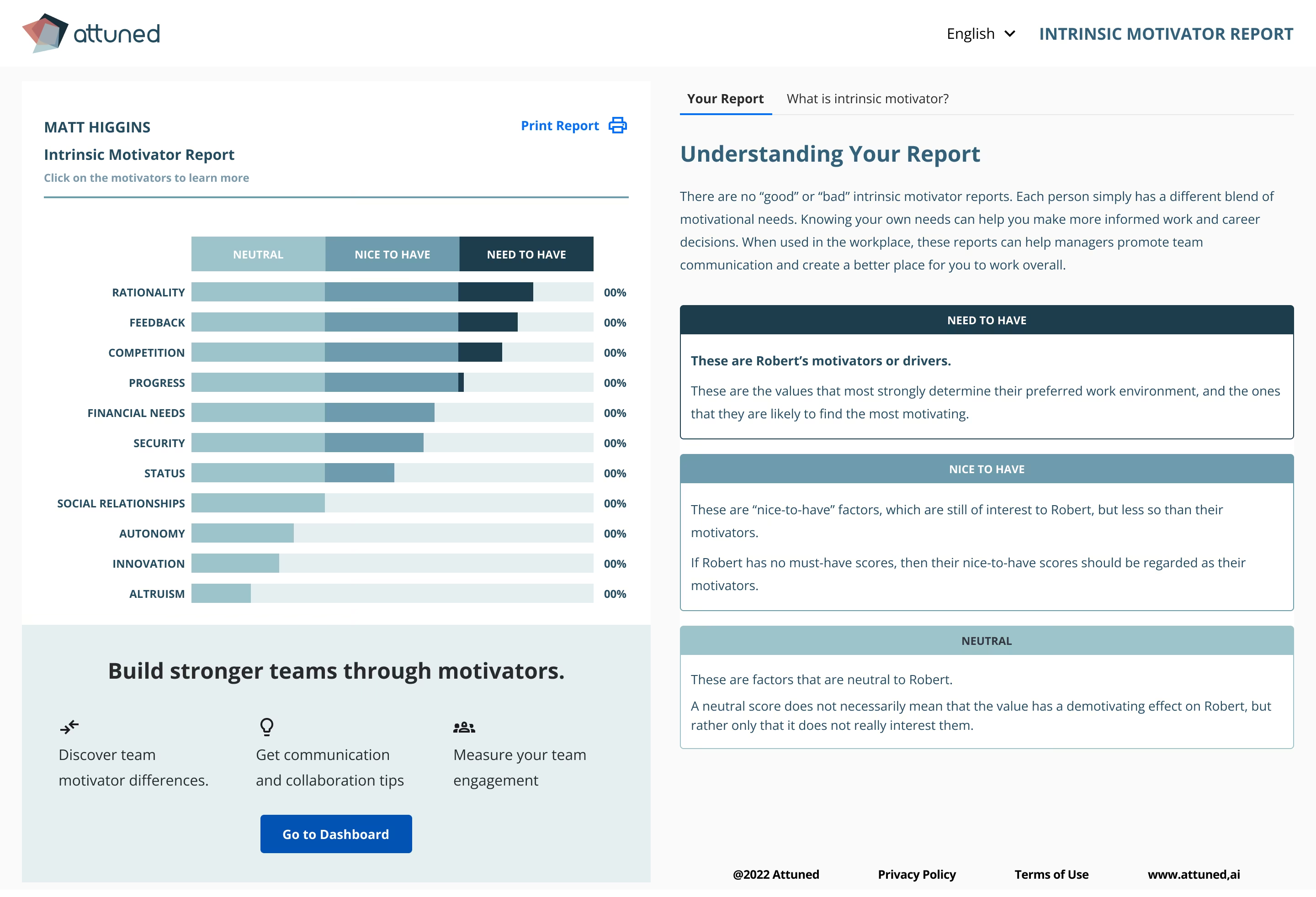
Attuned maps every person across 11 intrinsic motivators and ranks them by percentage, from what matters most to that individual to what matters least. In plain numbers, you see that one report is driven hardest by Social Relationships and Feedback, while another runs on Autonomy and Progress.
That ranking is the read you used to get from sharing a room, made explicit. Attuned supplies the ranked profile. You supply the judgment about whether the role is currently meeting what sits at the top of it.
Remote work doesn't flatten everyone equally. Which motivators get strained depends on where they rank for each person, and that is exactly why one remote culture reaches some people and quietly loses others.
They thrive on frequent, informal contact. For someone who ranks this motivator highly, a distributed team can feel thin, and the gap rarely shows up in their output until much later.
It relies on quick, regular signals. Remote loops are longer and more formal, so a high-Feedback person can go weeks without the confirmation they're wired to need.
By contrast, Autonomy often has room to grow remotely. Someone who ranks it highly may be more engaged working distributed than they ever were in the office.
It depends on visible recognition. When the informal, in-person cues vanish, a high-Status person can feel their contributions have gone unseen.
Once each person's ranked profile is in front of you, this becomes a read you can act on rather than a guess from a grid of video tiles. For the harder conversations that follow, see giving difficult feedback and giving negative feedback positively.
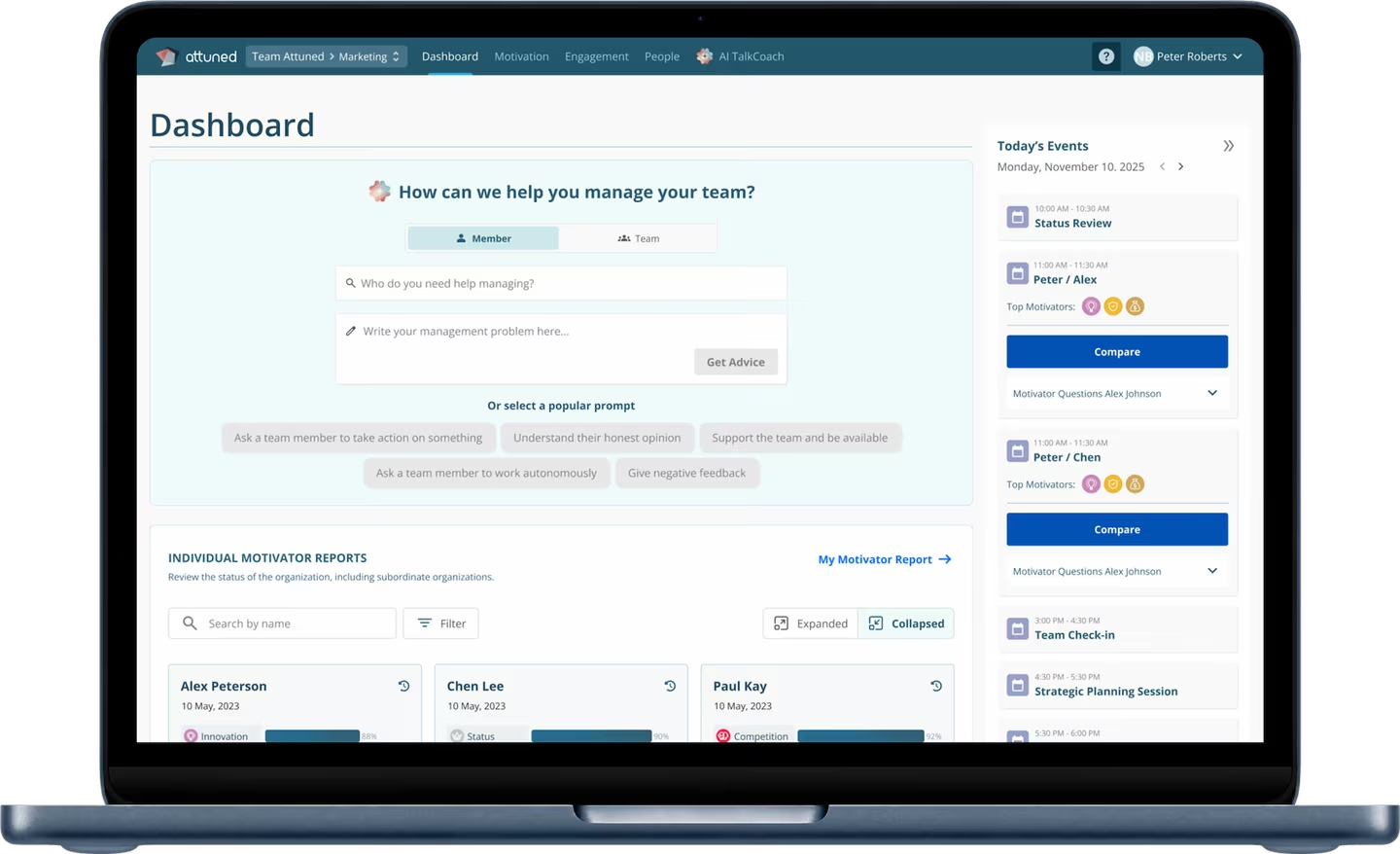
Attuned connects to Google Calendar and Microsoft Outlook, recognizes each 1-on-1 on your schedule, and surfaces the relevant motivator context for the person you're about to meet. When you have ninety seconds between remote calls, you open the meeting already knowing what matters most to whoever is on the other end.
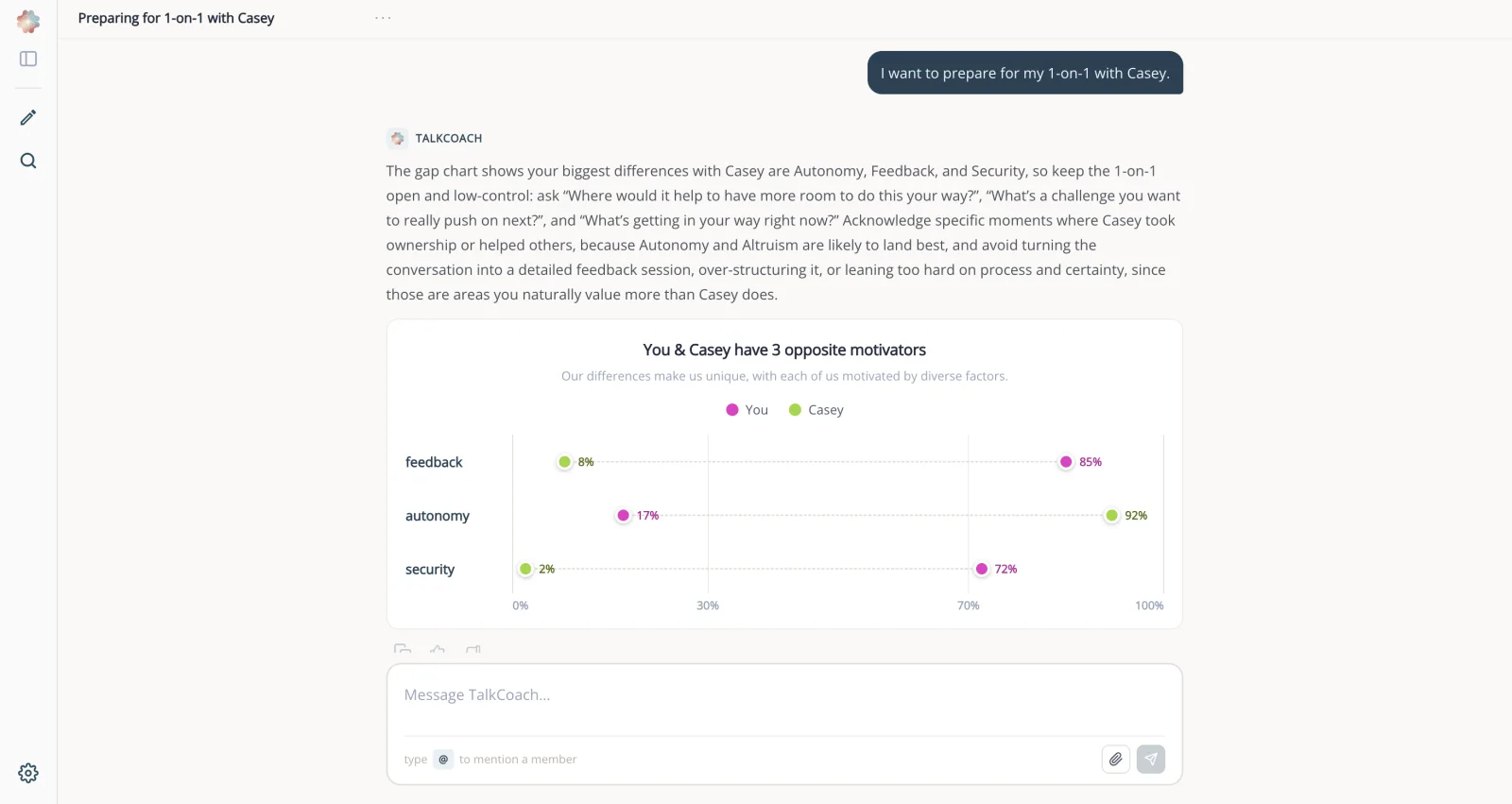
It's the closest thing a distributed manager has to reading the room, and the profile is the same whether that person is one desk away or eight time zones away. See how the 1-on-1 coaching works.
Two distributed organizations used Attuned to understand what drives each person and lead them well without sharing a room.
Attuned seemed like a fast, deep way for the board to build empathy across our differences.
Attuned clearly displays the motivation factors for each co-worker.
Your remote team is still sending signals. Attuned makes them visible again, ranked, per person, so you can lead each individual on what actually drives them instead of what a video call lets you see.