Quiet quitting rarely announces itself. It looks like a good employee going slightly flat: still delivering, just without the spark. Below are the 8 signs worth watching for, what each one signals underneath the behavior, and how to re-engage the person before a checked-out employee becomes a resignation. Then see how Attuned spots the drift before you do.
Case Study · Azon Recruitment Group · Ireland
The blind spot every growing team has, and how Azon closed it
Azon grew from a handful of people into an award-winning talent business. Keeping the specialists it had worked hard to hire mattered as much as landing the next one, and its managers wanted to know who was drifting well before anyone reached for the door.
"If an employee was engaged and looked happy, the assumption was they were fine, until you got the resignation," their HR team noted. Reading disengagement by how someone seems in the hallway is exactly how a quiet quitter stays invisible until notice day.
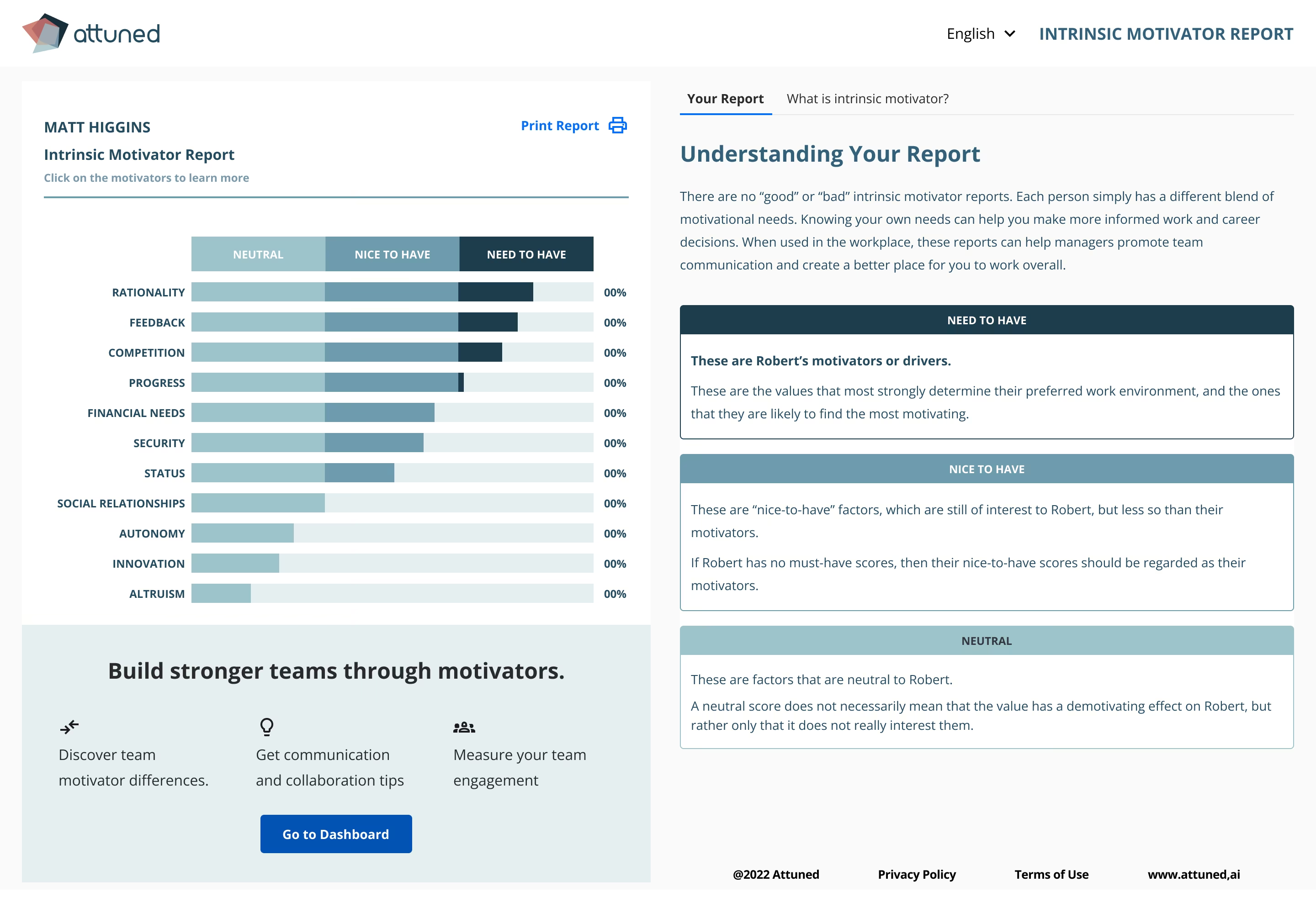
Attuned mapped each member across 11 intrinsic motivators, so managers could see the gap between what someone valued and what their role delivered, and act on the slide while it was still a conversation rather than a resignation.
"A dramatic increase in the numbers of people we hire that we feel we've gotten right," reports Kevin Halligan, Associate Director. "We have really seen that benefit translating to earnings for our business."
From guessing to seeing: Azon's managers stopped mistaking quiet for content, and caught the slide while there was still time to reverse it. Read the full story →
Disengagement is now the default state of the modern workforce, which is why the signs are so easy to normalize. Here is what the research says about the problem hiding behind "everything's fine."
Anyone can list the signs of quiet quitting. The hard part is noticing them on your own team, in someone who still shows up and still delivers. Here is how it usually goes unseen, from two very different chairs.
The work kept shipping, so you assumed the person behind it was fine. The initiative had quietly gone, the ideas had dried up, and the camera stayed off, but none of it tripped an alarm because nothing was on fire. By the time you noticed, they had already been checked out for two quarters.
You can see disengagement in the aggregate, but the annual survey is anonymous and three months stale, so it tells you the temperature of the building without pointing at a single door. Managers ask what to do, and the honest answer is that nobody knows which individuals the numbers are made of.
No single item on this list is proof of anything: everyone has a quiet week. The pattern to watch for is several of these appearing together, in someone where they were not there before. Each sign below comes with what it usually means underneath, because the behavior is the symptom and the unmet motivator is the cause. Fix the cause and the sign fades on its own.
Work that used to arrive with a bit of extra thought now lands at exactly spec, on time, and stops. The tasks get done; the ownership does not.
Underneath
Often an unmet Progress or Autonomy motivator: the role stopped offering room to grow or to own things, so effort contracts to the letter of the contract. Ask what part of the work they would want more control over.
Someone who used to challenge ideas now nods along. Fewer questions, no pushback, a camera that stays off in the calls where it used to be on.
Underneath
Usually a drop in psychological safety, or an unmet Feedback or Status motivator: speaking up stopped feeling worth the risk or getting noticed. Invite their view directly, then react to it in a way that rewards the candor.
Skipping the optional coffee, the lunch, the team celebration. Still polite, still delivering, but socially somewhere else.
Underneath
Often an unmet Social Relationships motivator, or an early sign the person has begun to picture themselves elsewhere. Rebuild one genuine connection rather than mandating another round of team fun.
More small errors, later drafts, less polish. Nothing dramatic enough to raise on its own, just a steady fade in the care that used to show.
Underneath
Disengagement shows up first as the care coming out of the work, often an unmet Progress or Rationality motivator. Name what you have noticed without accusation, and ask what has changed for them lately.
No volunteering for the stretch project, no staying to help a colleague, no ideas dropped in the channel. They give what the role requires and reclaim the rest.
Underneath
The psychological contract feels one-sided: effort given did not come back as something the person values. Find what a fair return looks like for them specifically, whether that is recognition, growth, or flexibility.
No more questions about the next role, the promotion, the skill they wanted to build. The forward-looking conversations simply go silent.
Underneath
People stop investing in a future they no longer expect to have here, often an unmet Progress or Autonomy motivator. Have a real career conversation now, while it is still a two-way one and not an exit interview.
Logging on at 9:00 exactly and off at 5:00 exactly, more sick days with no clear reason, a sudden strictness about hours that used to be flexible in both directions.
Underneath
This is minimum-viable presence, the schedule that follows checked-out attention. Treat the pattern as information rather than a discipline problem, and look for the motivator that stopped being met.
The flattest sign, and the easiest to miss: a frictionless, unvarying "all good" that never changes week to week and never opens into anything.
Underneath
A ritual answer to a ritual question. The conversation has become a performance of a check-in rather than a real one. Ask something specific enough that it cannot be answered on autopilot.
The trap is treating these signs as a checklist you tick to a verdict. The same behavior means different things in different people: the quiet employee high in Social Relationships may be pulling back because something hurt, while the quiet employee high in Autonomy may just be heads-down and perfectly content. The sign tells you where to look. What it means depends on the person, and that is the part a generic list, including this one, cannot do for you.
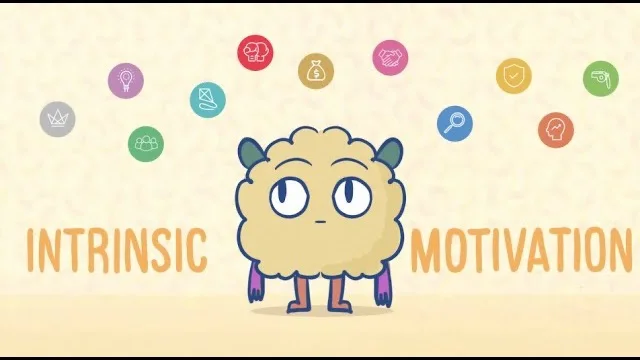
Quiet quitting is what disengagement looks like from the outside, and disengagement starts when the things a person is genuinely driven by go unmet for long enough. This 5-minute video explains the difference between intrinsic and extrinsic motivation, and why knowing which is which tells you why someone has gone flat.
By the time quiet quitting is visible in someone's behavior, the disengagement that caused it has usually been building for months. A motivator that mattered went unmet, then another, and the effort quietly recalibrated to match. The signs are the last chapter of that story, not the first.
Quiet quitting is the carbon monoxide of team health. No smoke, no smell, no dramatic exit, just a slow drop in everyone's energy that you tend to notice only once someone is already at an open window. Every workplace has an alarm for the loud failures, the missed deadline, the blowup in the meeting. Almost none has a detector for the quiet one, which is exactly why it does the most damage.
Attuned People Science TeamA sign only tells you something has changed. It does not tell you which motivator went unmet, and that is the part that decides what to do next. The employee high in Progress who has gone quiet needs a different response from the one high in Security who has gone quiet, even though the sign is identical. Attuned shows you which is which, so you act on the cause instead of guessing at the symptom.
It puts each person's motivators in front of the manager with specific prompts, and pairs naturally with our 1-on-1 coaching software, our approach to stay interview questions, and our guide to running better one-on-one meetings, so a flat check-in becomes a real conversation well before notice day.
Psychologist Adam Mastroianni has pointed out that "How are you?" is a ritual question that expects a ritual answer: what gets exchanged is a performance of connection, not connection itself. Most check-ins with a quiet quitter run on exactly that script, which is why "I'm fine" survives right up to the notice period.
Most managers are not careless. Quiet quitting is genuinely hard to see, and it is engineered by the situation to stay that way. It usually slips through in one of these four places.
A quiet quitter is not underperforming in a way that trips a review. They meet the bar and stop there, so the one signal managers are trained to watch, output, stays green while everything behind it fades.
Disengagement arrives one degree at a time. No single week looks different from the last, so there is never an obvious moment to react, and the new normal is quietly lower than the old one.
"Everything okay?" gets a "yeah, fine" from anyone who does not feel safe saying otherwise. Without psychological safety, the check-in produces the reassuring answer instead of the true one.
Annual engagement surveys are anonymous and months apart, so they describe the weather without naming who is caught in it. By the time the score moves, the person has usually already decided.
Spotting a sign is the easy half. Reversing it means treating quiet quitting as a signal to act on rather than a performance issue to manage, and aiming your response at the specific thing that went unmet. Six habits that turn a flat check-in back into an engaged one.
Say what you have noticed without accusation: "You have seemed a bit less in it lately, and I wanted to check in properly." Then stop talking. The goal is the honest answer, and it only arrives if the question is safe to answer.
The fix for a Progress-driven person differs from the fix for a Security-driven one. Aim at what that individual actually values, which is exactly what Attuned's intrinsic motivation assessment is built to tell you.
No conversation about disengagement works without psychological safety. Respond to a hard answer with curiosity, not defense, and never punish candor. The first time someone regrets being honest, every future answer gets shorter.
Re-engagement is a promise that something will move. Pick one thing the person raised, act on it where they can see it, and refer back next time. Nothing rebuilds discretionary effort faster than being heard and then answered.
A regular, well-aimed one-on-one is the single best defense against quiet quitting, and our guide to one-on-one meetings covers how to run one that surfaces the truth instead of the ritual "all good."
Sometimes a check-in surfaces a harder conversation than a single question invites. When it does, our guide to giving difficult feedback covers how to have it without breaking the trust you just rebuilt.
If you want a container for the conversation, set aside 30 minutes away from any review or rating. Open by naming what you have seen and why you are asking: you want them here, and you want to understand what changed. Spend most of the time listening for the motivator underneath, not defending the status quo. Close by agreeing on one concrete thing you will change and a date to revisit it. The point is not to talk someone out of leaving. It is to notice, early enough, that a quiet stretch has become a quiet exit in progress, and to give them a reason to reinvest before it does.
Attuned People Science TeamHere is how a manager goes from finding out someone had checked out in the exit interview to seeing which motivators are going unmet, who is drifting, and what to change to re-engage them, without adding hours of admin.
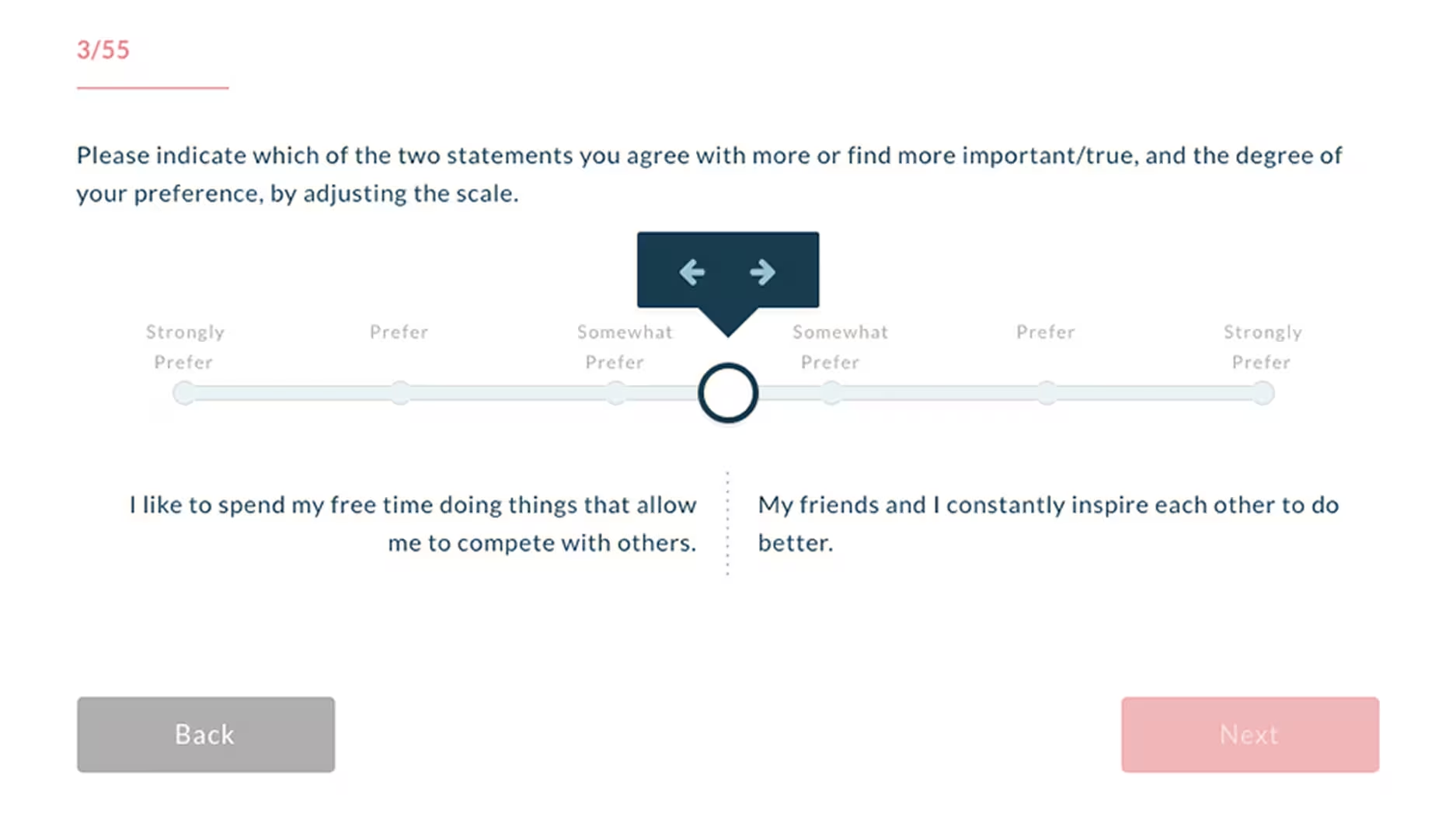
No rollout plan. No IT project. Each member answers a simple set of questions, and Attuned automatically calculates their profile across 11 intrinsic motivators. Most teams are up and running within a week of signing up.
Slider-based questions, ~10 min
Motivator profile generated immediately
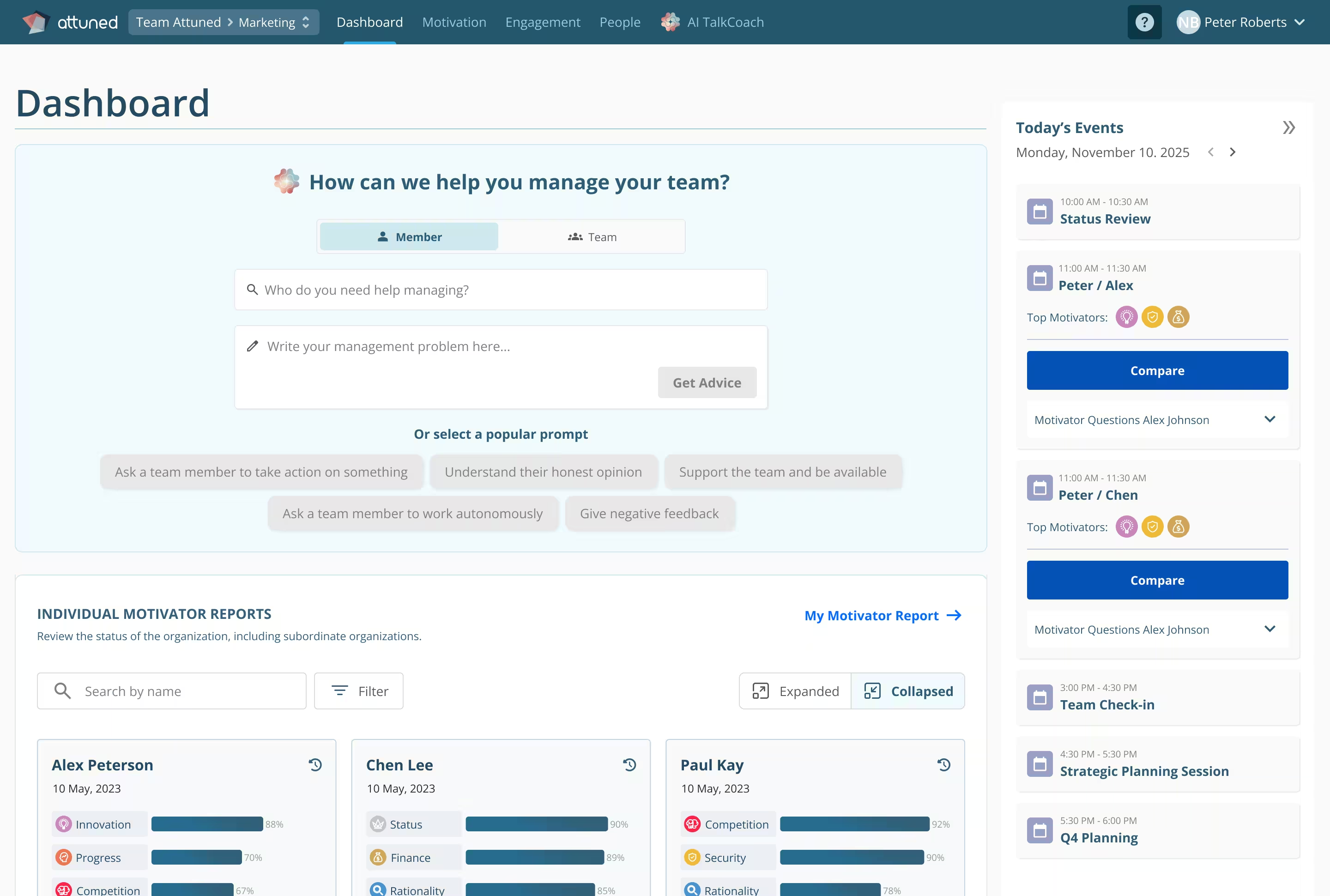
Every member gets a profile across 11 motivators. Before you read anything into a quiet stretch, you can see whether they lead with Progress, Autonomy, Security or Feedback, so you know which unmet need a sign is most likely pointing at.
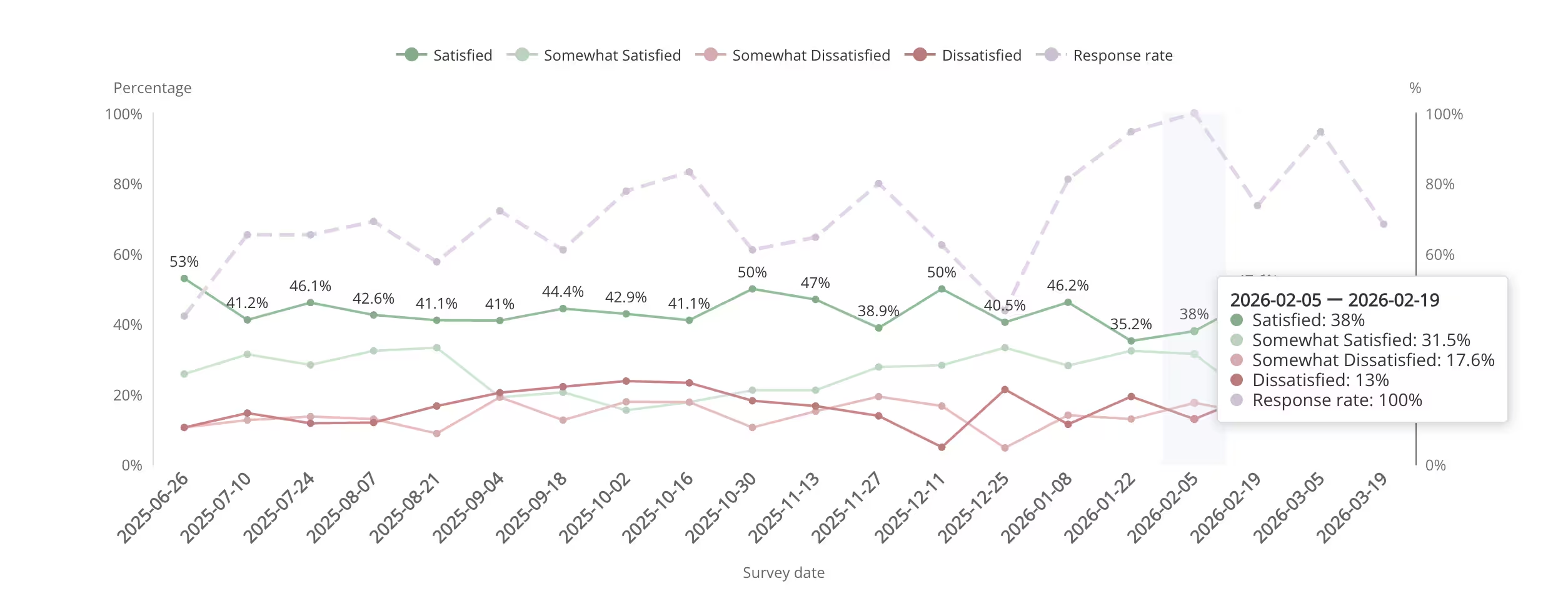
Quiet quitting is the gap between what someone values and what their role currently gives them, widening over time. Attuned makes that gap visible per motivator and tracks it, so the drift shows up as a trend line rather than a resignation.
The AI TalkCoach turns each profile into what to ask, how to frame it, and what to steer around for that person. A first-time manager walks into a hard check-in with the instincts a seasoned coach would give, without the seasoned coach.
Re-engagement lives or dies on a handful of conversations. Attuned turns a vague "everything okay?" into a question aimed at what the person cares about, and pairs with our approach to giving difficult feedback when a check-in needs to go deeper.
Attuned tracks motivator satisfaction over time and flags the gap between what someone values and what their role delivers, before the signs show up in the work. Most quiet quitting starts as a bit of recognition or growth you could have offered two months before they started interviewing.
Azon Recruitment Group grew from a small team into an award-winning business by reading what drives its people, so managers could see the drift instead of guessing from the surface. The conversations got honest, retention improved, and earnings followed.
An award-winning Irish firm that scaled from a handful of people to multiple specialist teams.
Azon was solving the problem every growing company eventually hits: how do you know who is genuinely engaged once there are too many people to just read the mood of the room? Their read on morale relied on instinct, until a resignation proved the instinct wrong. Attuned gave managers a shared, individual view of what each member valued, so they could catch a quiet quitter while it was still fixable.
"Being able to get to the nub of people's underlying motivations at the start of a process and see what really drives and motivates people in the workplace has been very helpful, and we've seen a dramatic increase in the numbers of people we hire that we feel we've gotten right, and that are a right fit for the business." Kevin Halligan, Associate Director, Azon
"Since beginning to use the software, we have really seen that benefit translating to earnings for our business." Kevin Halligan, Azon
"I would recommend Attuned to any company that is fast-growing, wants to make the right decisions from the outset, wants a harmonious work environment, and is bringing in the best talent, as well as retaining and developing their existing team." Ronan Colleran, CEO, Azon Recruitment Group
Reading from the Attuned team, starting with the State of Motivation Report most leaders open first, plus practical pieces on quiet quitting, turnover, psychological safety, and what actually keeps people engaged.
What actually drives people at work right now, drawn from more than 10,000 assessments across four generations. The data behind everything on this page.
Read the report Blog · Quiet QuittingWhy quiet quitting is a motivation problem more than a work-ethic one, and the manager moves that actually re-engage a checked-out team.
Read the post Blog · RetentionThe signals that show up before someone quits, and the moves that keep good people, which is where the signs of quiet quitting usually lead if ignored.
Read the post Blog · Psychological SafetyThe reason a check-in still gets a careful "I'm fine," and how to build the safety that lets people tell you the truth while you can still act on it.
Read the post Blog · MotivationThe well-meant management habits that quietly push your best people toward doing the minimum, and what to do instead.
Read the post Blog · MotivationPractical, evidence-based ways to rebuild engagement, and why the same tactic lands differently depending on what each person values.
Read the postYou can bookmark a hundred articles on quiet quitting for free. What you cannot Google is which person on your team is drifting right now, or which unmet motivator is behind it. That is the part Attuned does, quietly, before the signs are obvious.
A ~10-minute assessment. No IT project, no manager training required. Your whole team can be profiled within days of signing up.
11 intrinsic motivators mapped per person. Managers stop reading the same signs the same way and start seeing what is actually unmet for whom.
The AI TalkCoach preps the hard conversation with what to ask, so a first-time manager gets guidance a seasoned coach would give.
Lawful basis, data minimization, individual access rights, and the right to be forgotten. Your people own their motivator data.
We have spent years studying what drives people at work, and helping the managers who lead them catch disengagement while it is still a conversation rather than a resignation. It fits into your week rather than adding to it.
Our expertise is people science: what quietly pulls someone out of a role, how the wrong question keeps "I'm fine" alive, and what a manager needs to see to re-engage the people they want to keep, before the signs become a decision. We have brought it to fast-growing firms like Azon, and we would like to bring it to yours.