People Science · For Managers Who Run 1-on-1s

One-on-One Meeting Questions That Get Real Answers

The same question that opens one person up gets a shrug from the next. Below are 40 one-on-one meeting questions, grouped by what each one reveals, so you can pick the two or three that fit the person across the table. Then see how Attuned tells you which questions land for whom, before you walk into the meeting.

Jump to the 40 Questions ↓ Book a Call Directly →
Trusted by
Azon Recruitment Group
Growing Firms & Startups
Managers in 4+ Generations
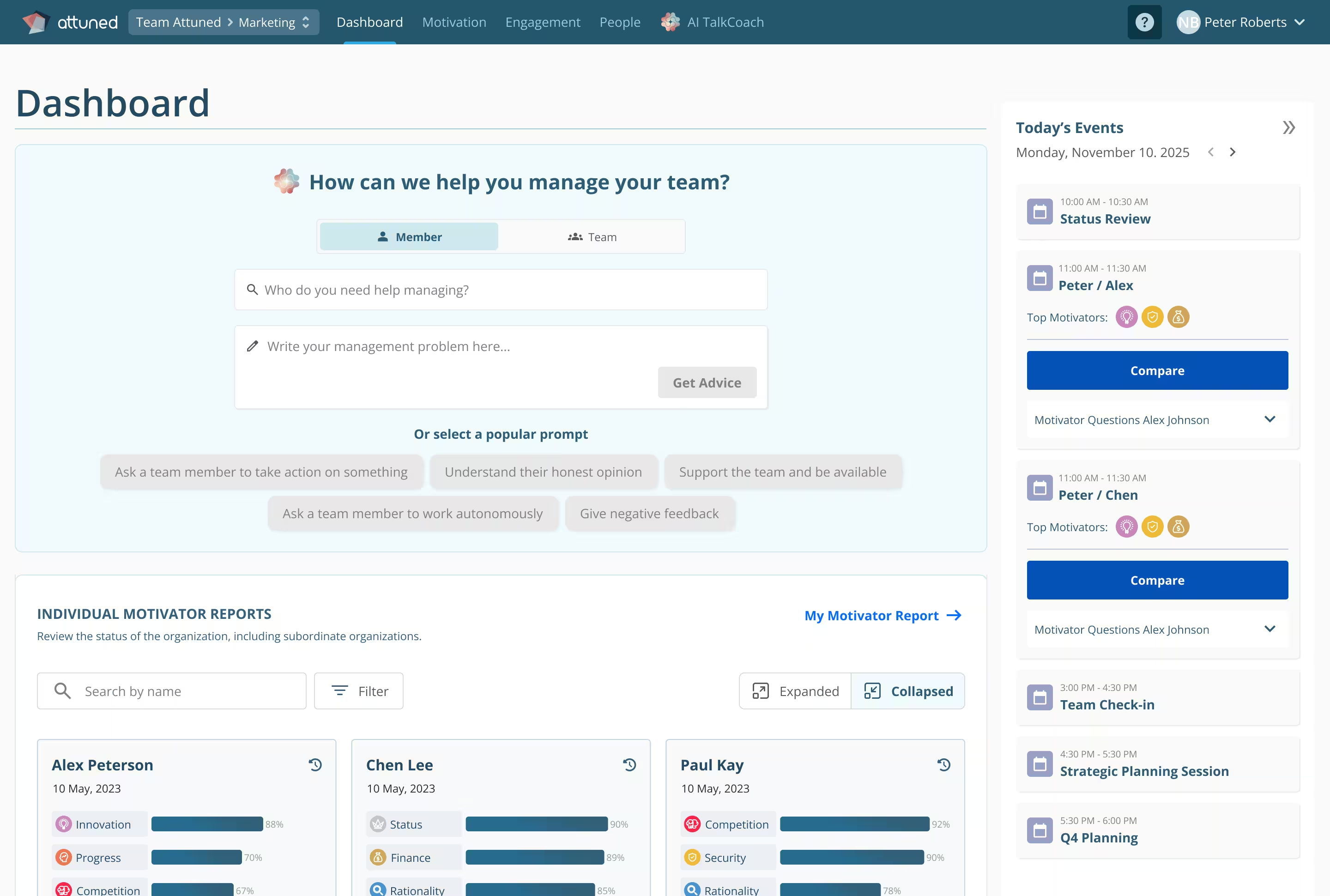
attuned.ai · 1-on-1 Prep & Motivator Dashboard
Attuned dashboard showing a person's motivator profile and suggested one-on-one meeting questions for their next 1-on-1

Case Study · Azon Recruitment Group · Ireland

"Being able to get to the nub of people's underlying motivations has been very helpful."

Kevin Halligan, Associate Director, Azon Recruitment Group

A fast-growing firm that lives on conversations

Azon grew from a handful of people into an award-winning talent business. Its managers ran regular one-on-ones, but the meetings often ran on the same questions for everyone, and the answers stayed on the surface.

Good questions, generic answers

"If an employee was engaged and looked happy, the assumption was they were fine, until you got the resignation," their HR team noted. A 1-on-1 that asks everyone the same thing tends to get everyone's safest answer.

Aimed each conversation at what drives the person

Attuned mapped each person across 11 intrinsic motivators, so managers walked into a 1-on-1 knowing which questions would open that individual up, instead of reading the same list to the whole team.

Better conversations. Retention followed.

"A dramatic increase in the numbers of people we hire that we feel we've gotten right," reports Kevin Halligan, Associate Director. "We have really seen that benefit translating to earnings for our business."

From a script to a conversation: Azon's managers now ask the questions that fit each person, and hear the answer before it becomes a resignation letter. Read the full story →
The 1-on-1 Is the Highest-Leverage Half Hour You Run

A one-on-one is where engagement is won or quietly lost. The questions you ask, and whether they fit the person, decide which of those two you get. Here is what the research says about that half hour.

3×
More likely to be engaged when employees have regular one-on-ones with their manager, compared with those who do not.
Gallup
70%
Of the variance in team engagement traces back to the manager, and most of that influence is spent one conversation at a time.
Gallup, State of the American Manager
1 in 4
Employees strongly agree they receive the right amount of recognition for their work. A good 1-on-1 question is often where the other three finally get heard.
Gallup / Workhuman
1.7M
Possible combinations of the 11 intrinsic motivators. It is the reason one fixed question list cannot fit every person on your team.
Attuned motivator model

Sound familiar?

A stack of one-on-one questions does not fix a flat 1-on-1. Here is how it usually goes sideways, from two very different chairs.

The Manager Running a Status Meeting

"I have a great list of questions. Somehow every answer is still 'yeah, good, all on track.'"

You prep. You bring thoughtful questions. But the meeting keeps turning into a project update: what shipped, what is blocked, see you next week. You leave knowing what your report is doing and almost nothing about how they are actually doing.

  • Questions that get a polite, one-word answer
  • The same fifteen-question list read to everyone on the team
  • No idea which questions matter to this particular person
  • A 1-on-1 that feels like a stand-up with a door closed
  • A quiet suspicion you are missing what is really going on
"I asked my most reliable engineer 'anything on your mind?' every week for a year. He said no every week. Then he resigned, and it turned out there was quite a lot on his mind."

The First-Time Manager

"I ask everyone the questions I would want to be asked. It works on about half the team."

You lead by what works for you. But the teammate who lights up when you ask about the big vision goes quiet when you push for detail, and the one who wants clear scope finds your open-ended questions vaguely stressful. Everyone is trying, and half the conversations still stall.

  • An opening question that clicks with some people and freezes others
  • Reports who clearly want different things from the same 30 minutes
  • Career questions that land as pressure for the person who just wants stability
  • A strong performer who has gone quiet, and you cannot say why
  • You can feel the mismatch, but you cannot name it
"I asked my most independent designer 'how can I support you more?' and watched her physically brace. She did not want more support. She wanted me to get out of the way."

40 One-on-One Meeting Questions, Grouped by What They Reveal

You do not need to ask all forty. Pick two or three that fit where the person is this week, and leave room for the answers. Each group notes the intrinsic motivator it tends to surface, so you can steer toward what actually drives the individual in front of you rather than reading the list top to bottom.

Check-in & wellbeing

Opens the door · reveals Security, Social Relationships

  • What has had most of your attention this week, work or otherwise?
  • On a scale you would actually use, how full is your tank right now?
  • What is one thing you are not looking forward to this week?
  • Is there anything you have been meaning to raise but keep skipping?
  • What would make this a good week for you?

Priorities & obstacles

Reveals Progress, Rationality

  • What is the most important thing you are working on right now?
  • What is slowing you down that I could clear this week?
  • Where are you spending time that does not feel worth it?
  • What decision are you waiting on that I can help unblock?
  • If you could only finish one thing before we next meet, what would it be?

Growth & career

Reveals Progress, Autonomy

  • What are you learning right now that you want more of?
  • Which part of your role would you keep if you could drop the rest?
  • What skill do you want to be noticeably better at in six months?
  • Is there a project you wish you were on but have not asked about?
  • What does the next step up look like from where you sit?

Feedback (both directions)

Reveals the Feedback motivator

  • What is one thing I could do differently that would help you?
  • Where would you like more feedback from me than you are getting?
  • Is there feedback you have been sitting on because the moment never came?
  • How do you prefer to hear hard feedback, and how often?
  • What did I miss in how I handled that last piece of work?

Recognition & motivation

Reveals Status, Altruism, Competitiveness

  • What is a recent win you do not think got enough notice?
  • When you do great work, how do you like it acknowledged?
  • What part of the work makes you lose track of time?
  • Whose work on the team do you think deserves more credit?
  • What would make you proud to talk about this quarter?

Autonomy & workload

Reveals Autonomy, Security

  • Where do you want more room to run without checking in?
  • Where would you actually welcome more direction from me?
  • Is your current workload sustainable, honestly?
  • What is one rule or process that gets in your way?
  • What would let you make more decisions on your own?

Team & relationships

Reveals Social Relationships, Altruism

  • Who on the team do you most enjoy working with, and why?
  • Is there any friction with a teammate I should know about?
  • Where could the team collaborate better than it does now?
  • Do you feel like you belong here? What would make that stronger?
  • Who could use a hand right now that you have noticed?

The bigger picture

Reveals Innovation, Financial Needs, purpose

  • Does the work still feel like it is going somewhere you want to go?
  • What would make you seriously consider leaving, if anything?
  • Where do you think we are getting it wrong as a company?
  • If you ran the team, what is the first thing you would change?
  • A year from now, what do you want to be able to say you did?
How to use this list

The last group is where the quiet resignations get caught. Ask "what would make you consider leaving?" of the person who values Security and you will get a careful, honest answer. Ask it of the person who values Autonomy and you may hear about the process that is boxing them in. The question is the same; what it unlocks depends entirely on the person. That is the whole game, and it is the part a fixed list cannot do for you.

The Science Behind a Question That Actually Lands

A one-on-one question works when it touches what the person is genuinely driven by. This 5-minute video explains the difference between intrinsic and extrinsic motivation, and why knowing which is which changes the answers you get across the table.

Attuned · YouTube
Intrinsic vs. Extrinsic Motivation, and Why It Changes the Answers You Get
Click to play, loads YouTube only after you click

A generic question gets a generic answer.
Aim it at the right person and the same question lands.

There is no shortage of one-on-one question lists on the internet, and yet most 1-on-1s still stall. The reason is that a question only works when it touches something the person genuinely cares about. Ask the same thing of everyone and you get everyone's safest answer.

How a conversation goes quiet, and where the right question intervenes
Diagram showing how a one-on-one conversation goes quiet when questions miss what a person values, and where Attuned intervenes
more likely to be engaged when employees have regular one-on-ones with their manager. The half hour only pays off if the questions reach the person. Gallup
Research Insight

Psychologist Adam Mastroianni has written that "How are you?" is a ritual question that expects a ritual answer. Both parties understand: what is being exchanged is a performance of connection, not connection itself. Half the questions on a standard 1-on-1 list work exactly the same way. The report answers on autopilot, you tick the box, and the actual thing on their mind never comes up.

Adam Mastroianni, Experimental History

Aim the question at the person, not the average

A question lands when it matches what someone is driven by. Ask the person high in Progress "what is next for you?" and they will talk for ten minutes. Ask the person high in Security the same thing and they may hear a warning that their role is about to change. Attuned shows you which is which, so you choose the question that opens the person up instead of the one that shuts them down.

It puts each person's motivators in front of the manager with specific prompts for the next meeting, and pairs naturally with our 1-on-1 coaching software and our guide to running better one-on-one meetings, so the 1-on-1 becomes a real conversation rather than a form you fill in together.

  • See which motivators each person leads with, before you meet
  • Get questions aimed at what that individual cares about
  • Know which topics to tread carefully around for that person
  • Catch the report who has quietly checked out before they say so

Every conference badge lanyard promises "networking" and delivers two people reading each other's job titles while scanning the room for someone more useful. A 1-on-1 run off a stock question list has the same energy: two people performing a conversation that neither is quite having.

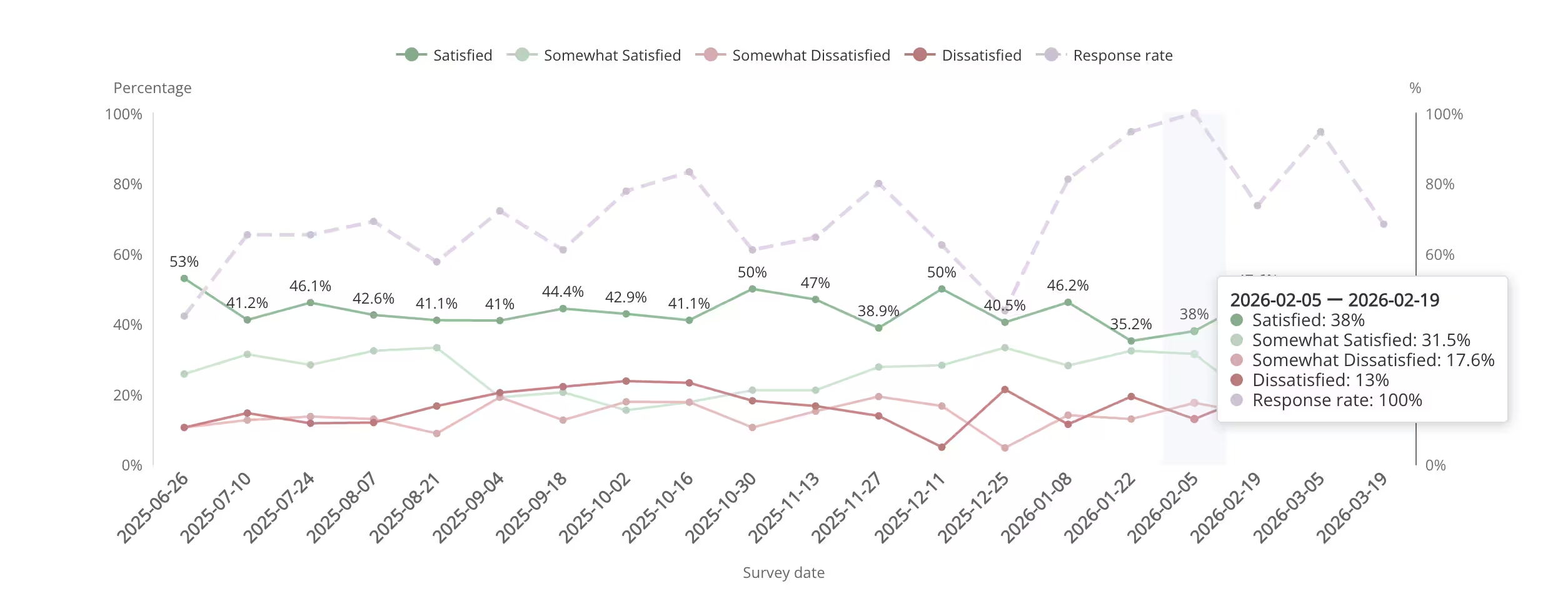
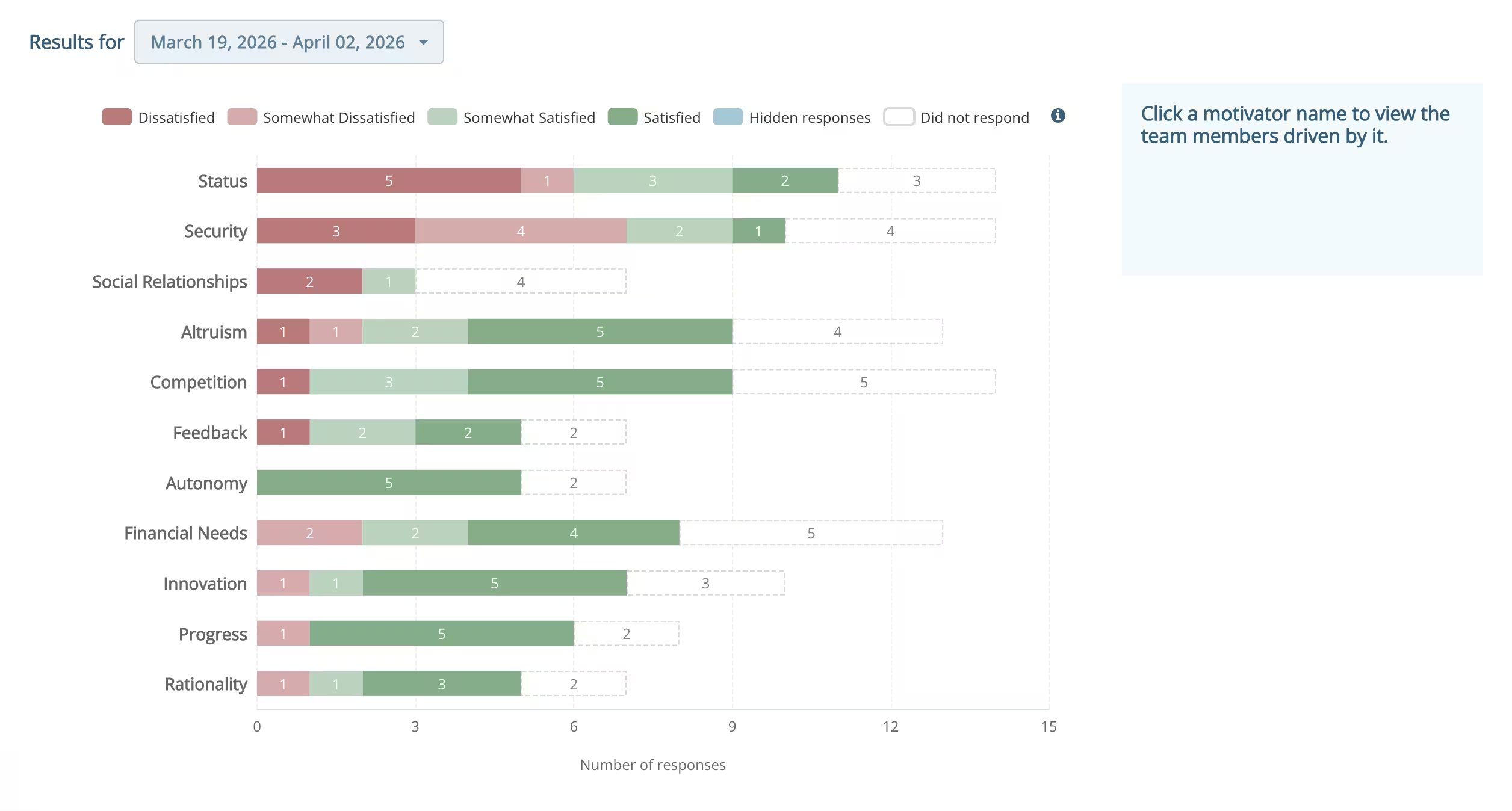
Motivator satisfaction over time, how Attuned flags the report a question should reach next
Motivator satisfaction trend dashboard showing how Attuned flags a team member whose 1-on-1s are missing what they value

4 Reasons Your One-on-One Questions Get Nothing Back

A stalled 1-on-1 is rarely about a bad list of questions. It is usually one of these four, and every one of them is fixable once you know the person.

01

The same list for everyone

One fixed script cannot fit a Progress-driven person and a Security-driven person equally. Read to the whole team, it lands for a couple of people and glances off the rest, who quietly learn to give you the short answer.

02

It became a status update

When every question is about tasks and deadlines, the 1-on-1 turns into a stand-up with the door shut. The person leaves having reported their work and shared nothing about how the work is really going for them.

03

Not enough safety to answer honestly

A good question aimed at a person who does not feel safe still gets the careful answer. Without psychological safety, "anything on your mind?" will get a "no" right up until the resignation.

04

Right question, wrong moment

The moments that matter most are quiet: a milestone hit, a hard call made well, the week someone starts wondering whether to stay. Ask the right thing a month too late and you are reading a leaving card. Attuned flags the drift early.

How to Ask Better One-on-One Questions

The best question in the world falls flat if it is asked the wrong way, at the wrong moment, of the wrong person. A one-on-one meeting question is only the opening move; how you ask and what you do with the answer is the rest of it. Here are seven habits that turn a question list into a real conversation.

A stock question list vs. questions aimed at the person
In the 1-on-1 Stock question list Questions aimed with Attuned
Which questions you ask The same fifteen for everyone The two or three that fit this person's top motivators
The answers you get Short, safe, "all on track" Honest, because the question hit something they care about
Career talk Pressure for some, motivating for others Framed to fit whether they value Progress or Security
Prep time Rereading last week's notes Prompts ready from each person's profile
Grounded in A blog post you found this morning Validated science: 11 intrinsic motivators, 1.7M possible profile combinations

1. Ask fewer questions

Two or three questions with room to breathe beat fifteen fired off in sequence. A long list turns the 1-on-1 into an interview and teaches your report to give short answers. Choose the few that fit this week and follow the threads that open.

2. Leave the silence alone

The honest answer often arrives three seconds after the polite one. Ask, then wait. Companies like Google and Amazon are known to build deliberate periods of silence into their meetings so people have room to think and no one talks over the quiet ones. Most managers rescue the pause by adding a second question, and in doing so they talk their report out of the real answer.

3. Aim at what drives the person

The same question means different things to different people. Match it to the individual's motivators and the answers get longer on their own. This is exactly what Attuned's intrinsic motivation assessment is built to tell you.

4. Build the safety first

No question works without psychological safety. Respond to a hard answer with curiosity, not defense, and never punish honesty. The first time you do, every future answer gets shorter.

5. Close the loop next time

If someone raises something and nothing changes, they stop raising things. Note the action, do it, and open the next 1-on-1 by referring back. A question only earns honest answers when the last one led somewhere.

6. Let them drive half of it

The 1-on-1 belongs to your report, not your agenda. Share the questions ahead of time, and let them set part of the list. The topics they add are usually the ones worth the most.

7. Know when it needs to go deeper

Some 1-on-1s call for a harder conversation than any check-in question invites. When that moment comes, our guide to giving difficult feedback covers how to have it without breaking the trust you built.

A Structure Worth Stealing: the Mastermind 1-on-1

If you want a container for these questions, the "Mastermind" format Buffer uses is a good one. In a 60-minute weekly or biweekly 1-on-1: 10 minutes for the report to share their wins, 40 minutes on their current top challenges, 10 minutes for you to give feedback, and 10 minutes for them to give feedback to you. The split makes the point: the meeting belongs to the report. Your job is to listen, ask, and share your own experience, not to hand down solutions. Research on feedback backs the ratio too, teams where positive feedback outnumbers the negative by about five to one tend to perform best, so weight the conversation toward what is working before you get to what is not.

Attuned Motivator Cards, Feedback best practices

From a stock question list to a 1-on-1 aimed at the person, in under a week

Here is how a manager goes from reading the same questions to everyone to walking into each 1-on-1 knowing which questions will reach that person, without adding hours of prep.

Step 0 · Start Here

Everyone completes a ~10-minute assessment. That's the whole setup.

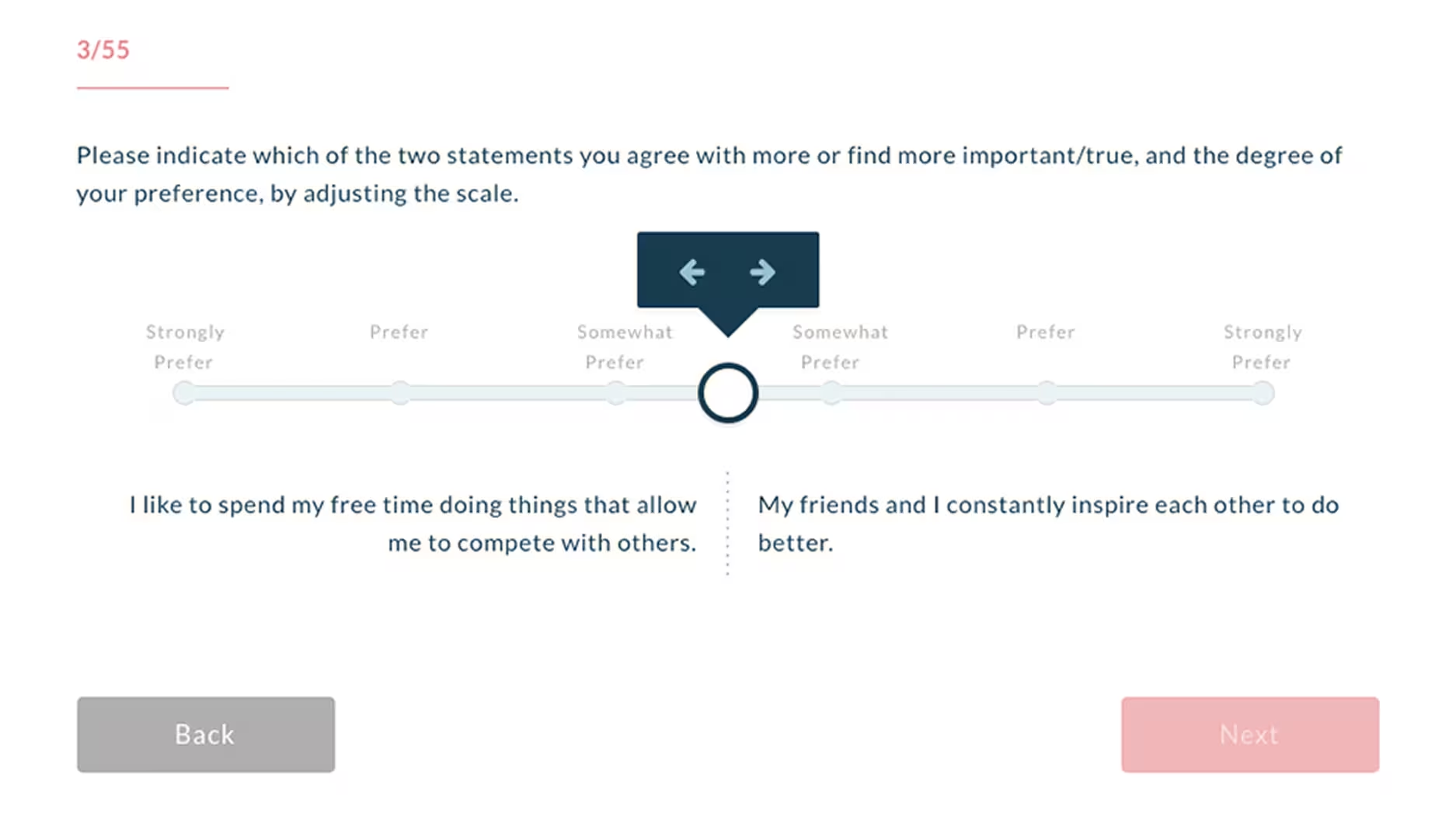
No rollout plan. No IT project. Each person answers a simple set of questions, and Attuned automatically calculates their profile across 11 intrinsic motivators. Most teams are up and running within a week of signing up.

~10 minper person
11motivators mapped
1.7Mpossible profiles
Week 1ready to go

Slider-based questions, ~10 min

Attuned motivator assessment screen with slider-based questions

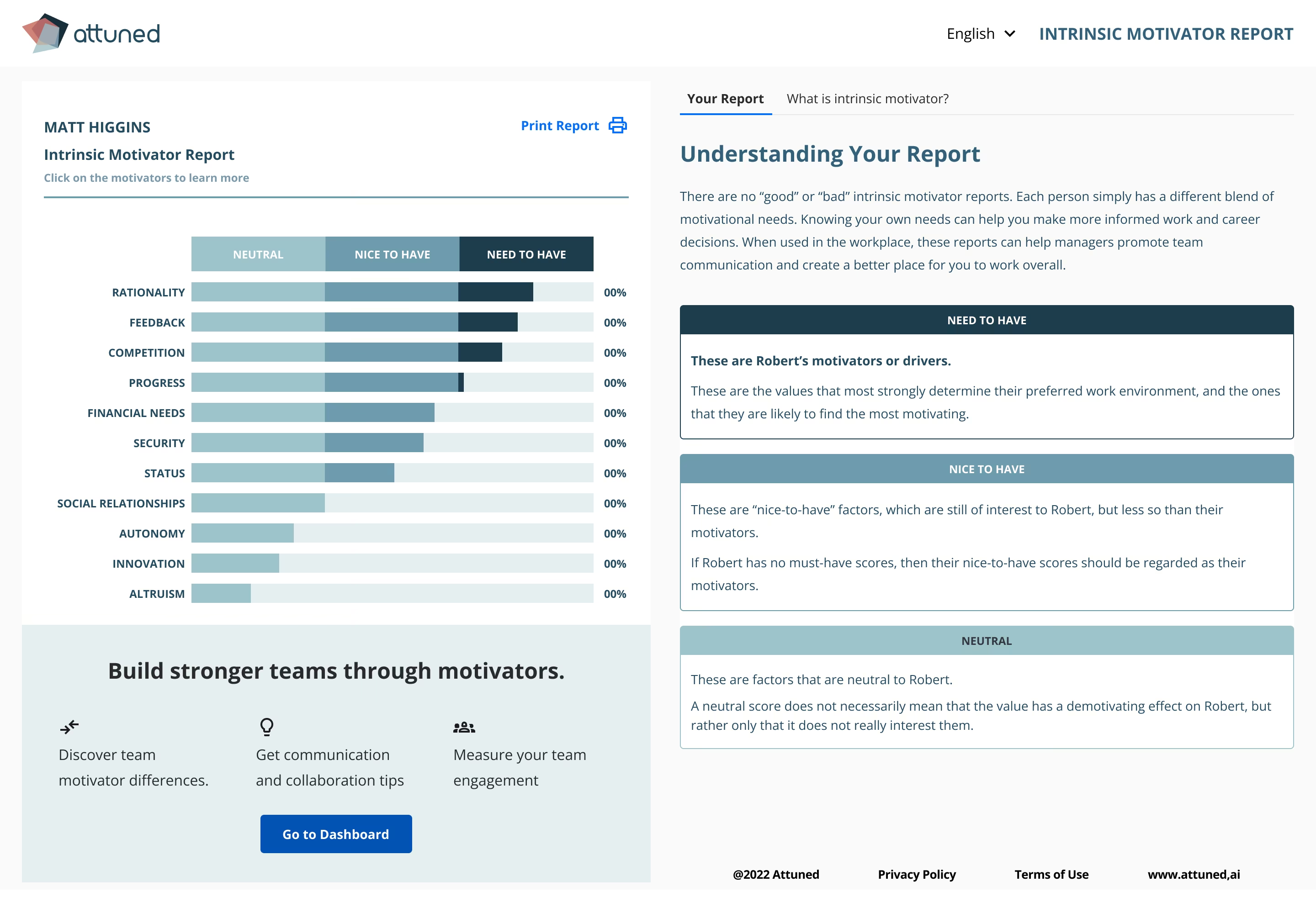
Motivator profile generated immediately

Attuned motivator breakdown showing an individual's intrinsic motivator profile and which 1-on-1 questions will land for them
01
See What Drives Each Person

Turn a hunch into a map

Every person gets a profile across 11 motivators. Before a 1-on-1 you can see whether they lead with Progress, Autonomy, Security or Feedback, so you already know which questions will open them up and which will get a shrug.

11 motivator dimensions One profile per person
02
Coach Your Managers

Give whoever leads the right questions

The AI TalkCoach turns each profile into which questions to ask, how to frame them, and what to steer around. A first-time manager walks into the 1-on-1 with the instincts a seasoned coach would give, without the seasoned coach.

AI coaching per person Ready-to-use 1-on-1 prompts
03
Close the Gaps

See where you and your team don't line up

A 1-on-1 blindspot is the gap between the questions a manager naturally asks and what the report most wants to talk about. Attuned makes both visible, so a leader adapts the conversation instead of wondering why it keeps stalling.

Manager-report gap map Guidance on what to change
04
Better 1-on-1s

Make every check-in actually count

Teams live or die on a handful of conversations. Attuned turns a vague "how's it going?" into a question aimed at what the person cares about, and pairs with our approach to giving difficult feedback when a check-in needs to go deeper.

Prepped 1-on-1s Harder conversations, handled
05
Keep Your People

Catch the overlooked before they leave

Attuned tracks motivator satisfaction over time and flags the gap between what someone values and what their role currently delivers, before the symptoms show up in the work. Most departures start as a bit of recognition you could have given two months earlier.

Early-warning drift alerts Continuous tracking
Ready to stop reading the same list?
Walk into every 1-on-1 knowing which questions will land, in under a week.
No IT project. Your team is profiled and your managers have AI-suggested prompts for each person before Friday.
Book a Call Directly →
Book a time that works for you · No callback queue

How a Growing Firm Turned Its 1-on-1s Into Real Conversations

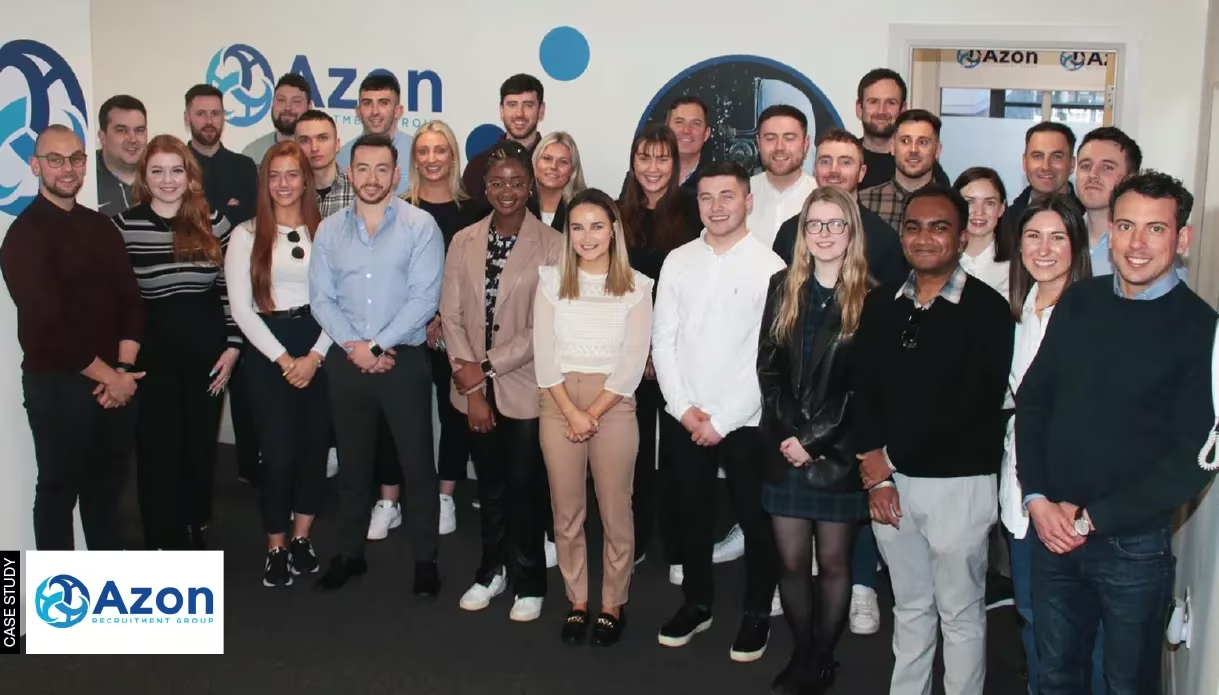
Azon Recruitment Group grew from a small team into an award-winning business by reading what drives its people, so managers asked the questions that fit each person instead of running the same script. The conversations got honest, retention improved, and earnings followed.

Azon Recruitment Group team, a fast-growing firm that improved its one-on-ones and retention with Attuned

More on Running One-on-Ones That Count

Reading from the Attuned team, starting with the State of Motivation Report most leaders open first, plus practical pieces on 1-on-1s, feedback, safety, and what actually makes a manager good in the room.

A question list any manager can find. The aim is the hard part.

You can bookmark a hundred one-on-one questions for free. What you cannot Google is which of them will reach the specific person you are meeting on Tuesday. That is the part Attuned does, quietly, before you sit down.

Up and running in a week

A ~10-minute assessment. No IT project, no manager training required. Your whole team can be profiled within days of signing up.

Aimed, not generic

11 intrinsic motivators mapped per person. Managers stop reading the same list and start asking each individual what matters to them.

AI coaching for whoever leads

The AI TalkCoach preps every 1-on-1 with what to ask, so a first-time manager gets guidance a seasoned coach would give.

GDPR-compliant by design

Lawful basis, data minimization, individual access rights, and the right to be forgotten. Your people own their motivator data.

One-on-One Meeting Questions: Common Questions

What questions should I ask in a one-on-one meeting?
Ask a small number of questions that fit the person in front of you, not a script read top to bottom. A useful one-on-one usually covers four things: how they are doing, what they are working on and what is in the way, how they are growing, and what they need from you. Pick two or three questions across those areas and go deep rather than wide. Someone driven by Progress wants to talk about momentum and what is next; someone driven by Autonomy wants to talk about scope and trust. The list above is grouped by what each question reveals so you can choose the two or three that matter to that person this week.
How many questions should a one-on-one meeting have?
Fewer than most managers think. A 30-minute one-on-one has room for two or three real questions once you leave space for the answers and the follow-ups. A list of fifteen questions turns the meeting into a status interview and trains your report to give short, safe answers. Choose a couple that fit where the person is right now, and let the conversation follow the threads that open up.
What is a good opening question for a one-on-one?
Open with something specific enough that it cannot be answered on autopilot. "How are you?" invites the ritual answer, "fine". "What has had most of your attention this week, work or otherwise?" or "What is the thing you are least looking forward to right now?" gives the person a real door to walk through. The goal of the first question is to signal that this is a conversation, not a check-the-box update.
How do I get past one-word answers in a one-on-one?
One-word answers usually mean the question missed what the person cares about, or the person does not yet feel safe being honest. Fix the aim first: ask about the thing that drives them, and the answers get longer on their own. Then build psychological safety by responding to hard answers with curiosity instead of defensiveness. Attuned shows a manager what each report values, so the questions land on live wires rather than dead ones, which is the fastest way past the one-word answer.
What one-on-one questions build trust with a new report?
With a new report, trust comes from questions that show you want to manage them as an individual: "How do you prefer to receive feedback?", "What does great support from a manager look like to you?", and "What is something a past manager did that you want me to keep doing, or never do?". These surface working preferences early, before a mismatch turns into friction. Attuned's motivator profiles give you a head start on the same information from day one, which is why many managers pair this page with our guide to first 1-on-1s with a new team.
How does Attuned personalize one-on-one meeting questions?
Each person completes a roughly 10-minute assessment that maps them across 11 intrinsic motivators. Attuned then turns that profile into specific one-on-one prompts: what to ask, what to acknowledge, and what to avoid with that individual. A manager preparing for a 1-on-1 sees questions aimed at that person's top motivators rather than a generic list, which is why the same 30 minutes produces a very different conversation.
How often should managers hold one-on-one meetings?
For most teams, weekly is the sweet spot, dropping to every other week only for very senior or very independent reports. Research summarized by Quantum Workplace found employees generally prefer weekly one-on-ones, and Gallup has found that employees who meet regularly with their manager are far more likely to be engaged. Consistency matters more than length: a reliable 25 minutes every week beats a sprawling hour that keeps getting cancelled.
How should I structure a one-on-one meeting?
A simple, proven structure is the "Mastermind" 1-on-1 that Buffer uses. In a 60-minute weekly or biweekly meeting: 10 minutes for the report to share their wins, 40 minutes on their current top challenges, 10 minutes for you to give feedback, and 10 minutes for them to give feedback to you. The split makes the priority clear: the meeting belongs to the report, and the manager's job is to listen and ask questions rather than hand down solutions. Keep the balance tilted toward what is going well, since teams whose positive feedback outnumbers the negative by about five to one tend to perform best.
Is Attuned GDPR-compliant?
Yes. Attuned operates under GDPR principles for any EU or UK data subject: lawful basis, data minimization, individual access rights, and the right to be forgotten. Users own their motivator data and choose what is shared with their organization. This landing page itself uses consent-gated cookies, so analytics and marketing scripts only load after you accept them. See our Privacy Policy for full details.
People Science for Managers

A better question list is a start.
Knowing who to ask what is the edge.

We have spent years studying what drives people at work, and helping the managers who lead them turn the 1-on-1 from a status update into the conversation that keeps their best people. It fits into your week rather than adding to it.

Our expertise is people science: what drives individuals, how the wrong question quietly shuts a conversation down, and what a manager needs to ask to reach the people they want to keep. We have brought it to fast-growing firms like Azon, and we would like to bring it to yours.

No pitch deck
No callback queue
Real conversation
Proven with Azon Recruitment Group
A fast-growing firm whose managers had better conversations, lifted retention, and saw it translate to earnings.
Book a Call Directly
Pick a time that works for you. No waiting for a callback. No sales queue.
Book a Time → Read the State of Motivation Report Or read the full Azon case study →
Book a time that works for you. No callback queue.
Ask the questions that fit each person. See which 1-on-1 questions land for whom.
Book a Call →