On a small team, one disengaged person is a big fraction of the payroll, and one quiet resignation can undo a whole quarter. Attuned maps what actually drives each of your people, coaches your managers on what to do about it, and flags the person who is drifting before they hand in their notice. No HR department required.
Case Study · Azon Recruitment Group · Ireland
Ronan Colleran, CEO, Azon Recruitment Group
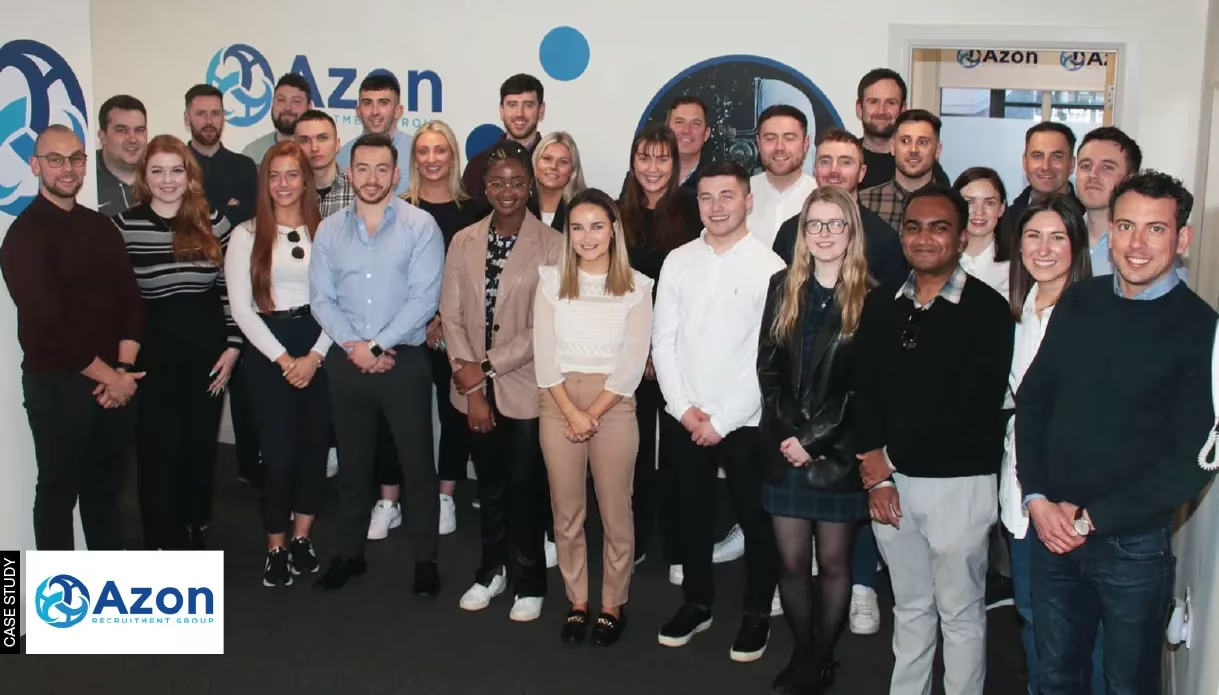
Azon started with a handful of people and grew into an award-winning talent business. Like most small companies, they had no room for a disengaged hire and no dedicated engagement team to catch one.
"If an employee was engaged and looked happy, the assumption was they were fine, until you got the resignation," says HR Manager Denise Grant. Quiet disengagement stayed invisible until it was a departure.
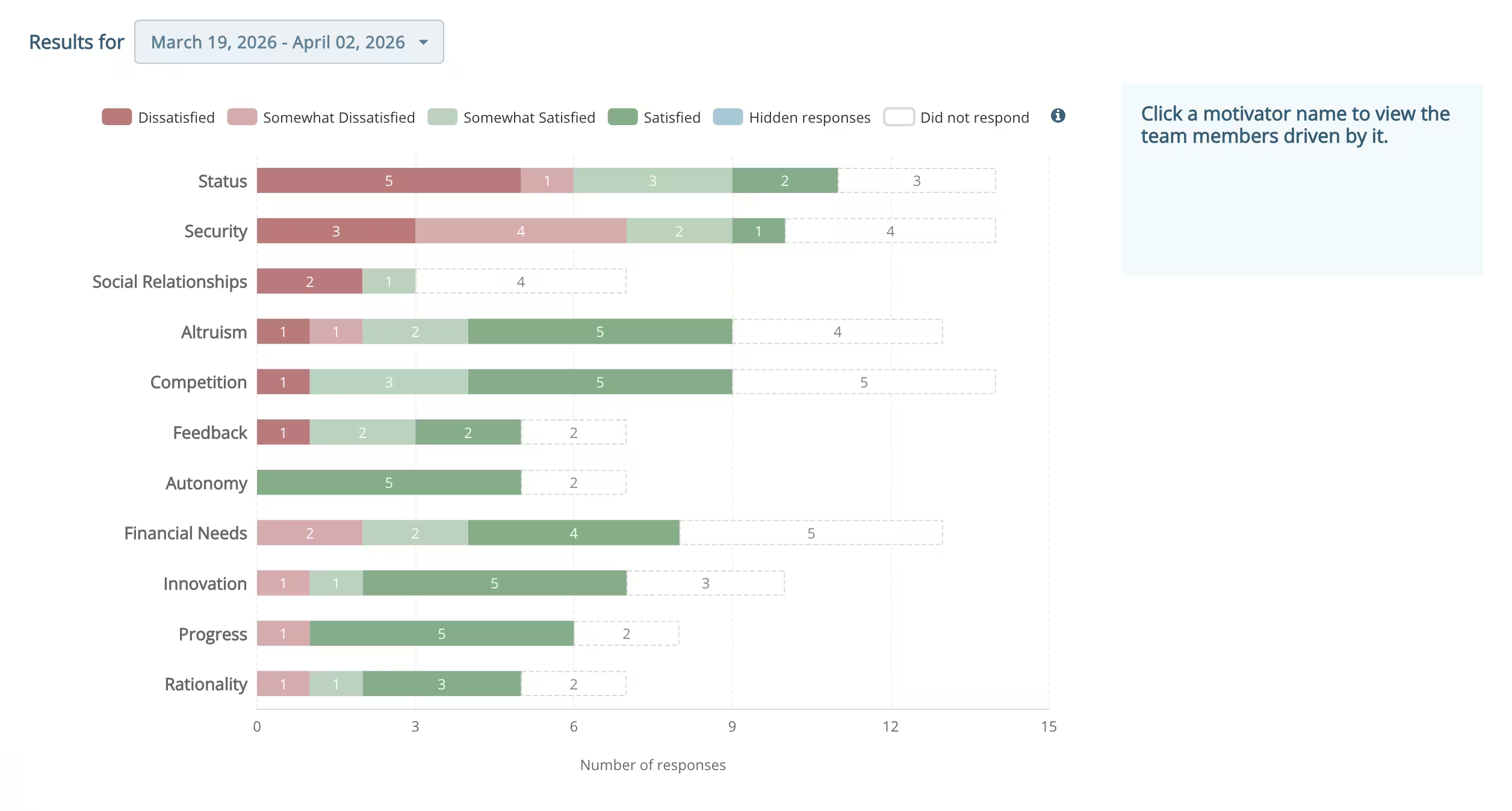
Attuned mapped each person across 11 intrinsic motivators. Managers learned what each individual actually needed, so engagement became a specific conversation rather than a guess from body language.
"A dramatic increase in the numbers of people we hire that we feel we've gotten right," reports Kevin Halligan, Associate Director. "We have really seen that benefit translating to earnings for our business."
From guesswork to clarity: Azon now reads what drives each person, and acts on disengagement before it becomes a resignation. Read the full story →
A big company can absorb a checked-out employee. A team of fifteen cannot. Here is what disengagement costs, and where the power to fix it actually sits.
Whether you own the business or you just got handed your first team, the people problem shows up the same way on a small team, from different chairs.
You wear every hat. You can name your slowest month and your best-selling product without checking, but you cannot see when a key person quietly stops caring, until the notice lands and you are back to interviewing on top of everything else.
You lead by what worked for you. But the teammate you are trying to fire up with public praise would rather have quiet autonomy, and the one you keep leaving alone is starving for feedback. Everyone is trying, and something still feels off.
Pay and perks matter, but they are not what keeps good people engaged year after year. This 5-minute video explains the difference between intrinsic and extrinsic motivation, and why it changes how a small business hires, leads, and holds on to its team.
Resignations are the last symptom. Motivational drift, the slow gap between what someone values and what their job actually gives them, is the disease. On a small team you feel the change before you can name it. By the time output slips, the decision is usually made.
Psychologist Adam Mastroianni has written that "How are you?" is a ritual question that expects a ritual answer. Both parties understand: what is being exchanged is a performance of connection, not connection itself. The employee who says "yeah, all good" at the Monday standup is not lying. They are doing exactly what the social script asks of them.
Adam Mastroianni, Experimental HistoryOn a small team, withdrawal is subtle: a bit less initiative, quieter in meetings, the person who used to stay late now watching the clock. It is easy to miss when you are also running the business.
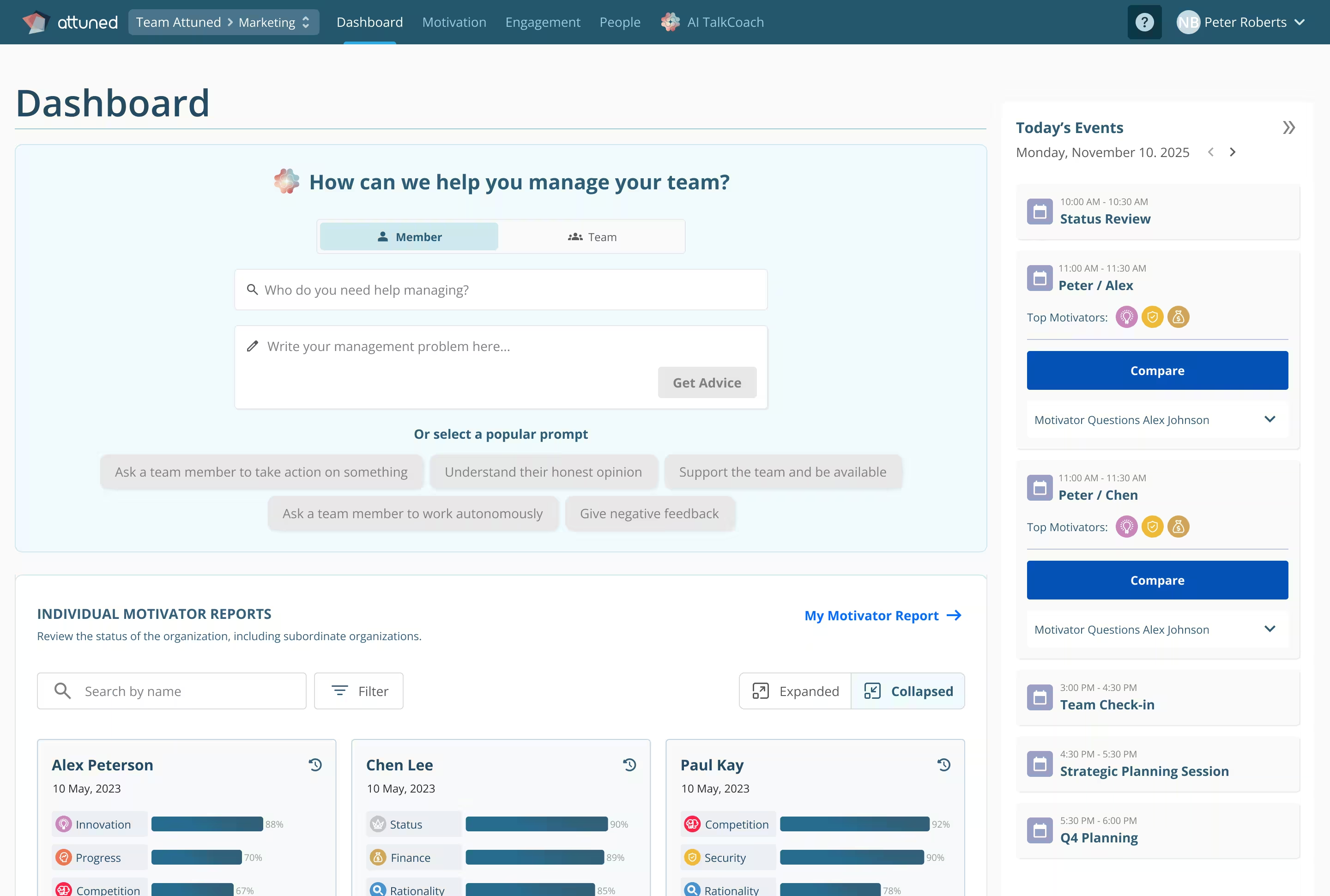
Attuned captures the early signals, the motivator gaps and the unmet expectations, and puts them in front of the manager with a specific next step. It pairs naturally with our 1-on-1 coaching software, so the fix is a better conversation, not another dashboard.
A small-business owner can tell you the exact reorder point for their best-selling product and the day the card reader last went down. Motivation is the one part of inventory with no low-stock alert. It runs out quietly, and you find out when the shelf is already empty.
None of these are pay problems at the root. They are motivation problems, and they respond to a people-first fix rather than a bigger budget.
At a big company, someone's whole job is engagement. At yours, it is the owner's ninth priority on a busy week. So it slips, and the drift goes unnoticed until it is a resignation letter.
The manager wired for recognition praises everyone in public. The teammate wired for Autonomy just wants to be left to do good work. Both are trying. Both are frustrated. Neither knows why.
Your steadiest employee is still hitting their numbers, but the spark is gone. By the time the gap shows up in the work, they have already decided. "I'm fine" is a script, not data.
The riskiest moments are the quiet wins: a promotion, a milestone hit, the point where someone reaches their own definition of enough. Conventional management misses these. Attuned flags them.
Most engagement tools are built for enterprises with a People Ops team to run them. On a small team you need something a busy owner can actually use. Here are the seven things that matter when the budget and the bandwidth are both tight.
If it needs an IT project or a rollout plan, it will sit unused. Look for a browser-based tool your team can complete in one sitting and a manager can act on the same week.
A single engagement number tells you the weather, not what to do. You want to see what each person is driven by, so you can act on the individual rather than the average.
Insight without a next step is homework. The best tools hand a manager the actual words for the next 1-on-1, which matters most when that manager has zero HR training.
People change. A tool that only measures once a year misses the person who cooled off in March. Look for continuous tracking that flags a gap before it becomes a resignation.
Enterprise seat minimums price small teams out. You want per-person pricing that scales down, so ten people costs what ten people should.
Your team is sharing honest data about how they feel. Look for GDPR-aligned handling, individual ownership of that data, and clear control over what gets shared.
Plenty of tools measure mood. Fewer are built on validated research into what drives people. Attuned's intrinsic motivation assessment maps 11 motivators with more than 1.7 million possible combinations, so the guidance is specific to the person, not a horoscope.
Here is how small teams go from guessing at morale to a clear, individual picture of what each person needs, without hiring an HR department to do it.
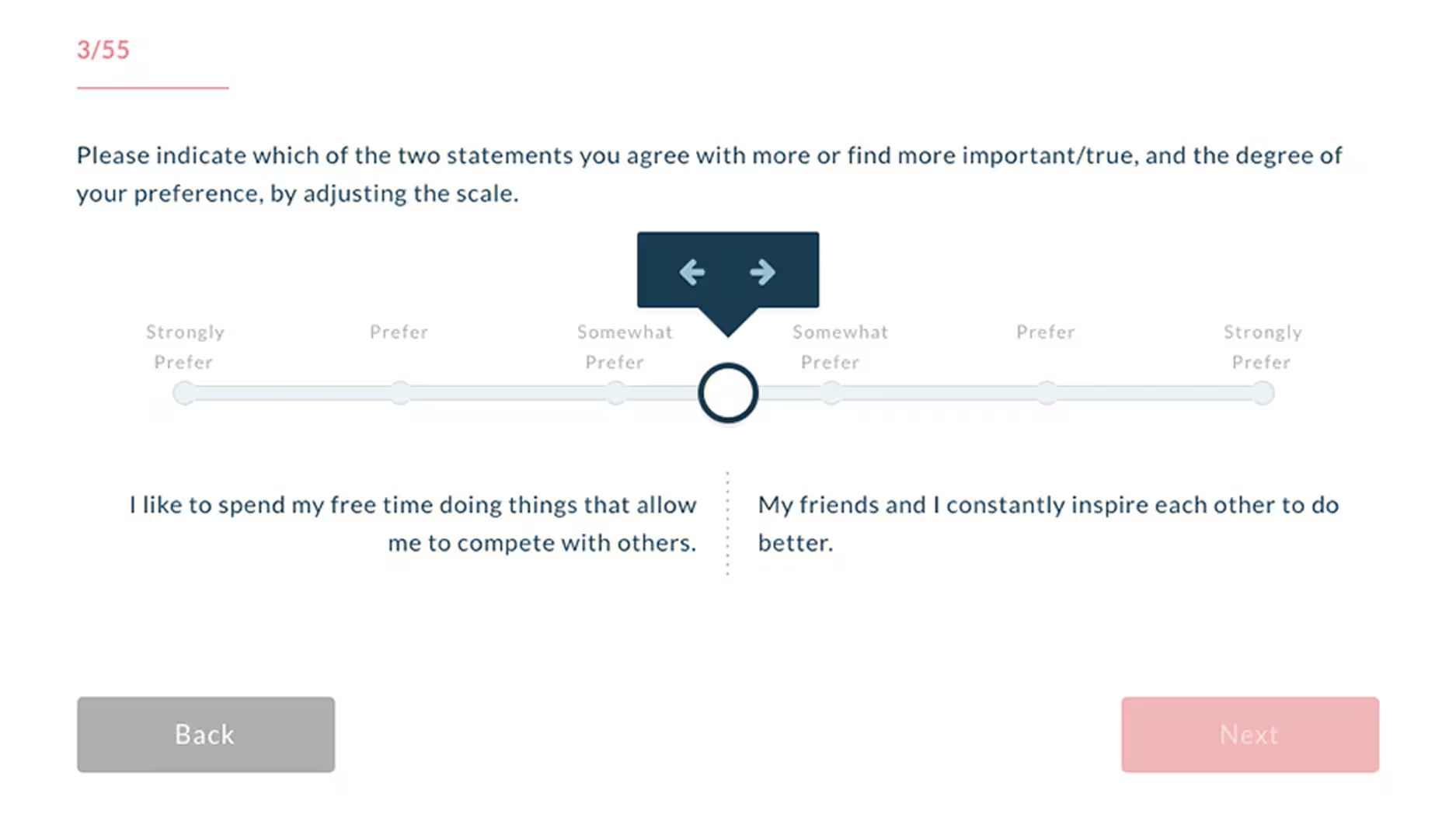
No rollout plan. No IT project. Each person answers a simple set of questions, and Attuned automatically calculates their profile across 11 intrinsic motivators. Most small teams are up and running within a week of signing up.
Slider-based questions, ~10 min
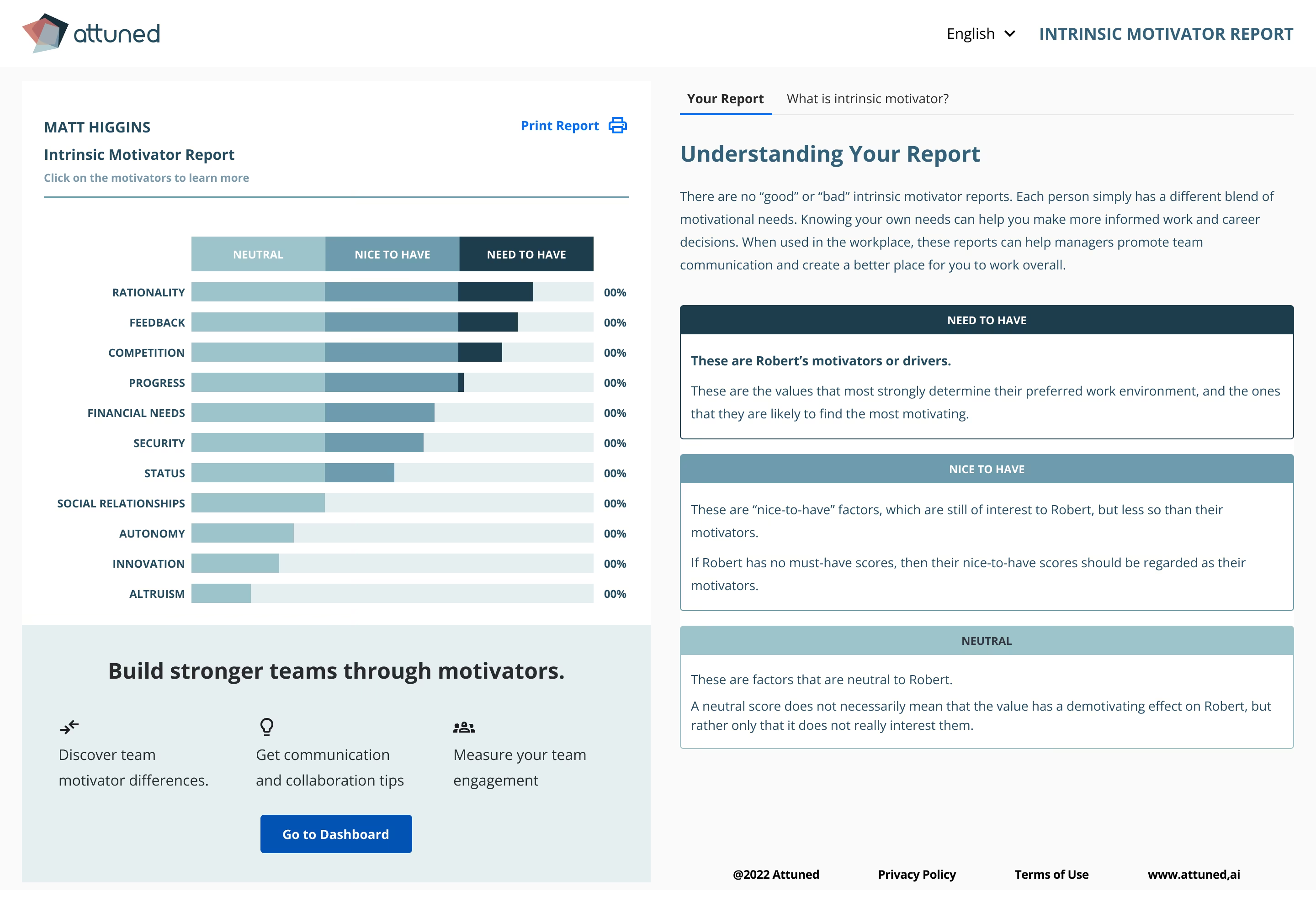
Motivator profile generated immediately
Every person gets a profile across 11 motivators. You stop guessing whether someone wants recognition or autonomy, money or meaning, and start with the answer in front of you.
The AI TalkCoach preps whoever runs your 1-on-1s, whether they have ten years of management behind them or ten days. It turns each profile into what to say, what to emphasize, and what to avoid.
A motivational blindspot is the gap between what drives the manager and what drives the report. Attuned makes both visible, so a leader adapts their approach instead of accidentally demotivating the people they mean to help.
Small teams live or die on the quality of a handful of conversations. Attuned turns a vague "how's it going?" into a specific, motivating discussion, and pairs with our approach to giving difficult feedback when a check-in needs to go deeper.
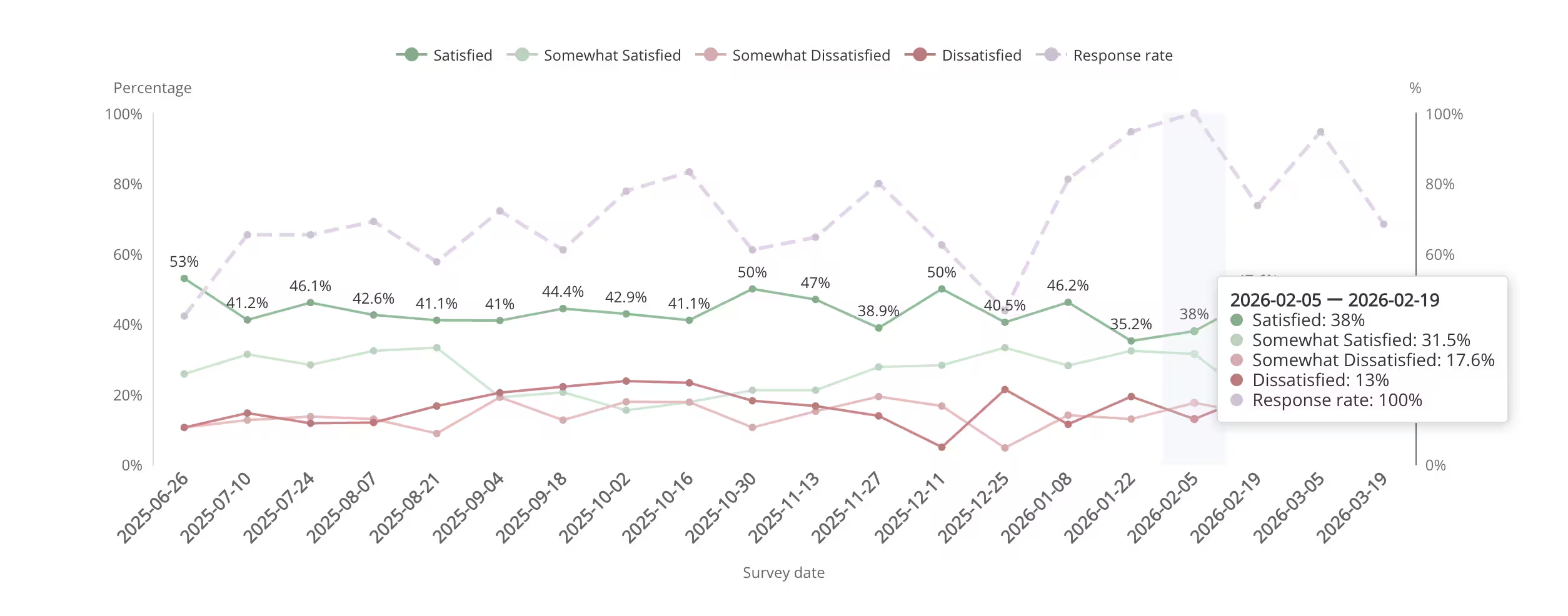
Attuned tracks motivator satisfaction over time and flags the gap between what someone values and what their role currently delivers, before the symptoms show up in the work. Most departures start as a conversation you could have had two months earlier.
Azon Recruitment Group grew from a small team into an award-winning business by reading what drives its people, instead of guessing from how happy they looked. Engagement improved, retention improved, and earnings followed.
An award-winning Irish firm that scaled from a handful of people to multiple specialist teams.
Azon was solving the problem every small business eventually hits: how do you keep good people happy and engaged once you are too busy to just feel the mood of the room? Engagement relied on reading body language, until a resignation proved the reading wrong. Attuned gave them a shared, individual view of what each person actually needed.
"Being able to get to the nub of people's underlying motivations at the start of a process and see what really drives and motivates people in the workplace has been very helpful, and we've seen a dramatic increase in the numbers of people we hire that we feel we've gotten right, and that are a right fit for the business." Kevin Halligan, Associate Director, Azon
"Since beginning to use the software, we have really seen that benefit translating to earnings for our business." Kevin Halligan, Azon
"I would recommend Attuned to any company that is fast-growing, wants to make the right decisions from the outset, wants a harmonious work environment, and is bringing in the best talent, as well as retaining and developing their existing team." Ronan Colleran, CEO, Azon Recruitment Group
Reading from the Attuned team, starting with the State of Motivation Report most leaders open first, plus practical pieces on 1-on-1s, feedback, psychological safety, and the day-to-day mechanics of an engaged team.
What actually drives people at work right now, drawn from more than 10,000 assessments across four generations. The data behind everything on this page.
Read the report Blog · Small TeamsHow a small startup kept engagement high while scaling fast, and what a candidate-short market taught them about holding on to good people.
Read the post Blog · 1-on-1sThe single highest-leverage habit for a small-team manager. What to ask, how often, and how to get past "everything's fine."
Read the post Blog · MotivationPractical, low-cost moves that lift engagement without a bigger budget, built for teams that cannot buy their way to it.
Read the post Blog · CultureWhy people stay quiet about what is wrong, and how a small team builds the kind of trust that surfaces problems early.
Read the post Blog · RetentionThe end-to-end playbook: how motivators connect hiring, coaching, and retention into one coherent system a small business can run.
Read the postAttuned runs quietly under the people who make your small business work: continuous, individual, and light enough for an owner to run between everything else. More useful than a personality quiz in a drawer or an annual survey that lands six months too late.
A ~10-minute assessment. No IT project, no manager training required. Your whole team can be profiled within days of signing up.
11 intrinsic motivators mapped per person. Managers stop guessing what to say and start leading each individual with precision.
The AI TalkCoach preps every 1-on-1, so a first-time manager gets guidance a seasoned HR director would give.
Lawful basis, data minimization, individual access rights, and the right to be forgotten. Your people own their motivator data.
We have spent years studying what drives people at work, and helping the leaders who employ them turn engagement from a guess into a system. On a small team, that system fits in your week rather than adding to it.
Our expertise is people science: what drives individuals, how disengagement builds quietly long before anyone resigns, and what a manager needs to lead people who actually stay. We have brought it to fast-growing firms like Azon, and we would like to bring it to yours.