People Science · Burnout Prevention for Tech & Finance

Prevent Employee Burnout Before It Shows Up in the Numbers

In tech and finance, employee burnout prevention keeps getting harder. By the time someone is visibly struggling, the disengagement, the mistakes, and the resignation are already underway. Attuned makes what motivates each person visible to their manager, so you can protect the welfare of your people and sustainable high performance at the same time, instead of waiting on a once-a-quarter survey to report what you already lost.

Book a Call Directly → See the Problem ↓
Built for
Azon Recruitment Group
Tech & Finance Teams
Managers in 4+ Generations
attuned.ai · Motivation & Burnout-Risk Dashboard
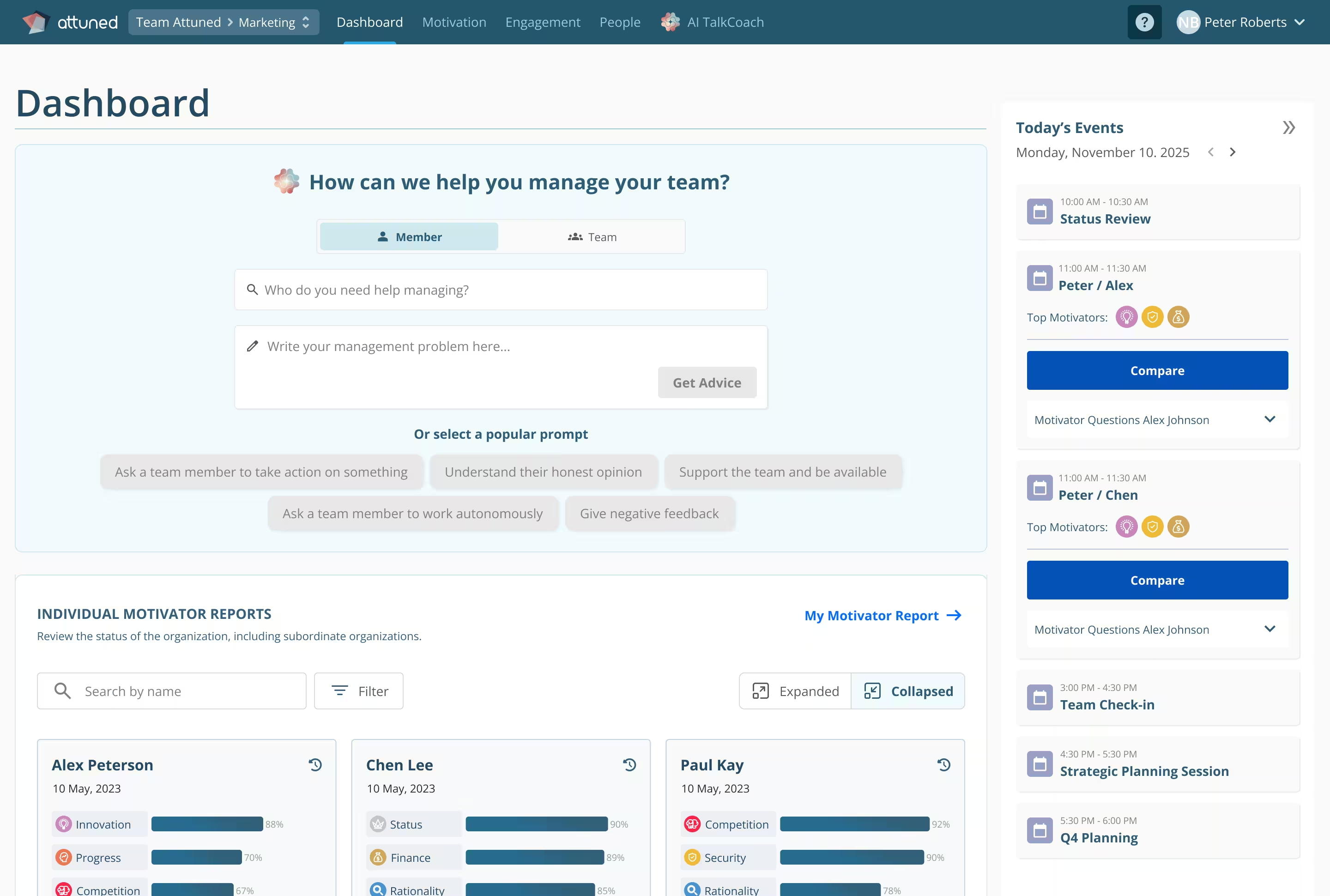
Attuned dashboard showing each team member's motivator profile and a burnout-risk flag that surfaces when the gap between what someone values and what their role gives them widens

From a conversation with a founder

"It was extremely difficult to even understand what people actually needed."

A founder describing what it took to run a 100-person team across four projects, and the signal he wished he had.

100 people, four projects

He was trying to keep the efficiency high while moving people around from one team to another as priorities shifted. At that scale, reading how each person was really doing became guesswork.

Who wants which kind of work

Some people like easier, steady tasks; some people like complex, ambiguous ones. Without a way to see that, he was assigning work by title and hoping the fit was right, which is how strain quietly builds.

People not in their full form

Some of his best people were not actually in their full form for weeks before anyone noticed. Performance held up on paper right until it did not, and by then a resignation was often already written.

Even a 20-30% signal would help

"Even if it worked only 20 to 30 percent, it's still a good signal," he said. Having some read on individual motivation beats having none, because it tells a manager where to look before the problem is visible to everyone.

That signal is the whole idea behind Attuned: make individual motivation visible so managers can see burnout risk and task-fit forming, while there is still time to act. See how it works →

Burnout Is Most Expensive Exactly Where It Is Most Common

Tech and finance run on scarce, expensive talent and relentless pressure, which is why their burnout rates sit near the top of every survey. The cost is not abstract. It shows up as lost output, higher healthcare spend, and the price of replacing people you never wanted to lose.

68%
Of tech workers report symptoms of employee burnout, up from 49% just three years earlier. Roughly two in three developers say the same.
Industry burnout surveys, 2024
~80%
Burnout among investment banking and trading teams, with about 68% across financial services overall. First-year finance turnover has climbed to roughly one in three.
Financial-services burnout research, 2024-25
$20.7K
Estimated annual cost of burnout for a single executive, and thousands more per hourly employee, most of it lost quietly through presenteeism rather than absence.
Cost-of-burnout estimates
1.7M
Possible combinations of the 11 intrinsic motivators. It is why the same workload energizes one person and burns out another, and why a single generic fix rarely lands.
Attuned motivator model

Sound familiar?

Burnout and disengagement are usually missed until it is too late, because the early signal is individual and quiet. Here is how it plays out from two chairs that see it coming and still cannot get ahead of it.

The Engineering Manager Keeping Efficiency High

"I move people between projects to keep delivery on track. I have no idea who I am quietly burning out."

You are optimizing for throughput across several teams, shifting people to where the work is. Some of them thrive on the complex, ambiguous problems; others just want a stretch of steady, shippable work. You cannot see which is which, so you assign by availability and hope, and the mismatch shows up months later as a resignation from someone you rated highly.

  • Assigning complex vs. steady work by guesswork, not fit
  • Strong engineers going quiet with no obvious cause
  • Reorgs and team moves that quietly overload the wrong people
  • "Everyone looks fine" right up until two-weeks' notice
  • No signal on who is running on empty this sprint
"My most reliable engineer said 'all good' in every one-on-one for a year. He had not been himself for the last three months of it, and I only understood that after he quit."

The Head of People Watching the Survey Say "Fine"

"Engagement scored well this quarter. Then two of our best analysts resigned, burned out."

You run the engagement survey, invest in wellbeing benefits and therapy access, and the aggregate numbers look healthy. But an average hides the individual who is close to the edge, and the survey cannot tell you who or what to do about it. You are spending real money on employee welfare with no way to aim it at the people who actually need it.

  • Healthy team averages hiding at-risk individuals
  • Wellbeing budget spent broadly, not where burnout is forming
  • Anonymous survey data you cannot act on per person
  • Regretted, burnout-driven attrition in your highest-cost roles
  • Managers who hear "I'm fine" and have no reason to dig
"We had a great engagement score and a great therapy benefit. What we did not have was any way to know which specific person was about to break."

Early Signs of Employee Burnout

The World Health Organization defines burnout by three dimensions: exhaustion, mental distance or cynicism about the job, and reduced professional efficacy. Long before those are obvious, the early signs are quiet and individual. In tech and finance teams, these are the ones worth watching, because each tends to show up months before a resignation.

01

A high performer goes quiet

Someone who used to speak up in reviews and standups pulls back. Disengagement often looks like silence before it looks like anything else.

02

Complex work starts getting avoided

A person who thrived on hard, ambiguous problems begins steering toward the safe and routine. A shift away from the work that once energized them is a classic early signal.

03

More mistakes, slower recovery

Small errors creep in and take longer to bounce back from. Exhaustion shows up in quality and pace well before anyone names it as burnout.

04

Withdrawal from the team

Cameras off, fewer messages, skipped optional catch-ups. Cynicism and mental distance from the job often read first as pulling away from people.

05

An uptick in sick days

Burned-out employees take more sick days and carry higher health costs. A pattern of short absences is often the body flagging what the calendar will not.

06

"Fine" that does not match the signals

The check-in says "all good" while everything else says otherwise. The gap between the words and the behavior is usually where the real answer is hiding.

Why these are easy to miss

Every one of these signs is individual, and the same behavior means different things for different people. A quiet week from a Security-driven analyst reads differently than a quiet week from a Status-driven one. That is exactly why a team-wide engagement average cannot catch them, and why understanding what drives each person is the difference between spotting employee burnout early and reading about it in a resignation letter.

A Survey of Averages Cannot See the Person Who Is Breaking

Most engagement surveys ask everyone the same questions, roll the answers into an aggregate score, and run once or twice a year. That design is built to describe a population, not to protect an individual. For burnout prevention, which is inherently personal, it fails in three specific ways. Attuned focuses instead on what matters most to each person, then tracks that over time.

Generic engagement survey vs. Attuned
The difference Generic engagement survey Attuned
What it asks The same questions for everyone What matters most to each person
What it reports An aggregate team or company score An individual motivator profile per person
How often Once or twice a year Tracked continuously over time
Who can act on it HR, at the aggregate level The direct manager, per individual
What you learn The department feels a little stretched Who is drifting, why, and what to change

The average hides the individual

A team can post a healthy engagement score while one key person is close to leaving. Burnout happens to individuals, and an average is designed to smooth exactly that person out of view.

Anonymous means unactionable

To feel safe, surveys are anonymous, so the results tell you a department is stretched but never who or what to do. A manager cannot act on a number that deliberately hides the name attached to it.

Once a year is too slow for burnout

Burnout builds over weeks. A snapshot taken twice a year misses the drift entirely, so the survey confirms a problem long after it was fixable rather than flagging it while there is still time.

Burnout is metal fatigue for people.
You cannot see the crack until it gives way.

Engineers know that a beam under repeated load does not fail in one dramatic moment. It accumulates microscopic cracks that stay invisible on the surface until the day it gives way, all at once. Burnout works the same way. The strain is individual and cumulative, the surface reading looks fine, and by the time the failure is obvious the damage has been building for months. Prevention means reading the load on each person before the crack, not inspecting the wreckage after.

46%
higher healthcare costs for people under sustained workplace stress, one of the many places the strain shows up on the balance sheet. Goh & Pfeffer, workplace-health research
A Note on Depreciation

A finance team will happily depreciate a laptop over three years, booking a little wear against it every quarter. The same organization expects a person to run at full load indefinitely, with no line item for fatigue and no scheduled maintenance. People are the only asset most companies still assume never depreciates, right up until they do, suddenly, and leave.

Attuned People Science Team

See the load on each person, before the crack

Burnout risk is really a persistent gap between what a person values and what their role currently gives them. A Progress-driven engineer starved of momentum, a Security-driven analyst kept in constant uncertainty, a Status-driven contributor whose work goes unseen: each is under load that a workload chart will never show. Attuned makes that gap visible per person, so a manager can rebalance the work and adjust the task-fit while someone is still running at full capacity.

It gives managers the individual read they need to protect their people and performance at the same time, and pairs with our work on 1-on-1 coaching, giving difficult feedback, and the psychological safety that lets people say they are struggling before they break.

  • See which motivators each person leads with, and which are going unmet
  • Match complex or steady work to who is actually energized by it
  • Spot the widening gap that precedes burnout, weeks earlier
  • Aim your wellbeing investment at the people who need it now

The founder who wanted a signal that was right only 20 to 30 percent of the time had the maths exactly right. A smoke detector that catches most fires early is worth far more than a perfectly accurate report on the ones that already burned the building down.

How Attuned surfaces burnout risk before it becomes a resignation
The person's motivator profile
RK
Riya K.
Staff Engineer · on the team 4 years
Progress 93
Autonomy 84
Competition 70
Security 26
Feedback 21
The burnout-risk alert, weeks early
“Riya's Progress motivator has flattened for two months on repetitive maintenance work. High burnout risk. Rebalance toward a complex project and name a clear next step.”

High Progress and Autonomy mean Riya is energized by complex, self-directed work and drained by a long run of steady maintenance. That is a task-fit gap, and left alone it is exactly how a top engineer quietly starts running on empty. Attuned flags it while you can still act.

With Security low, avoid framing the change as "we need someone to firefight." Riya will read that as more instability. Offer the complex project as owned, protected work instead.

From guessing who is at risk to seeing it, in under a week

Here is how a manager goes from reading the mood of the room to seeing what drives each person, how satisfied those drivers are over time, and who is drifting toward burnout, without adding hours of admin.

Step 0 · Start Here

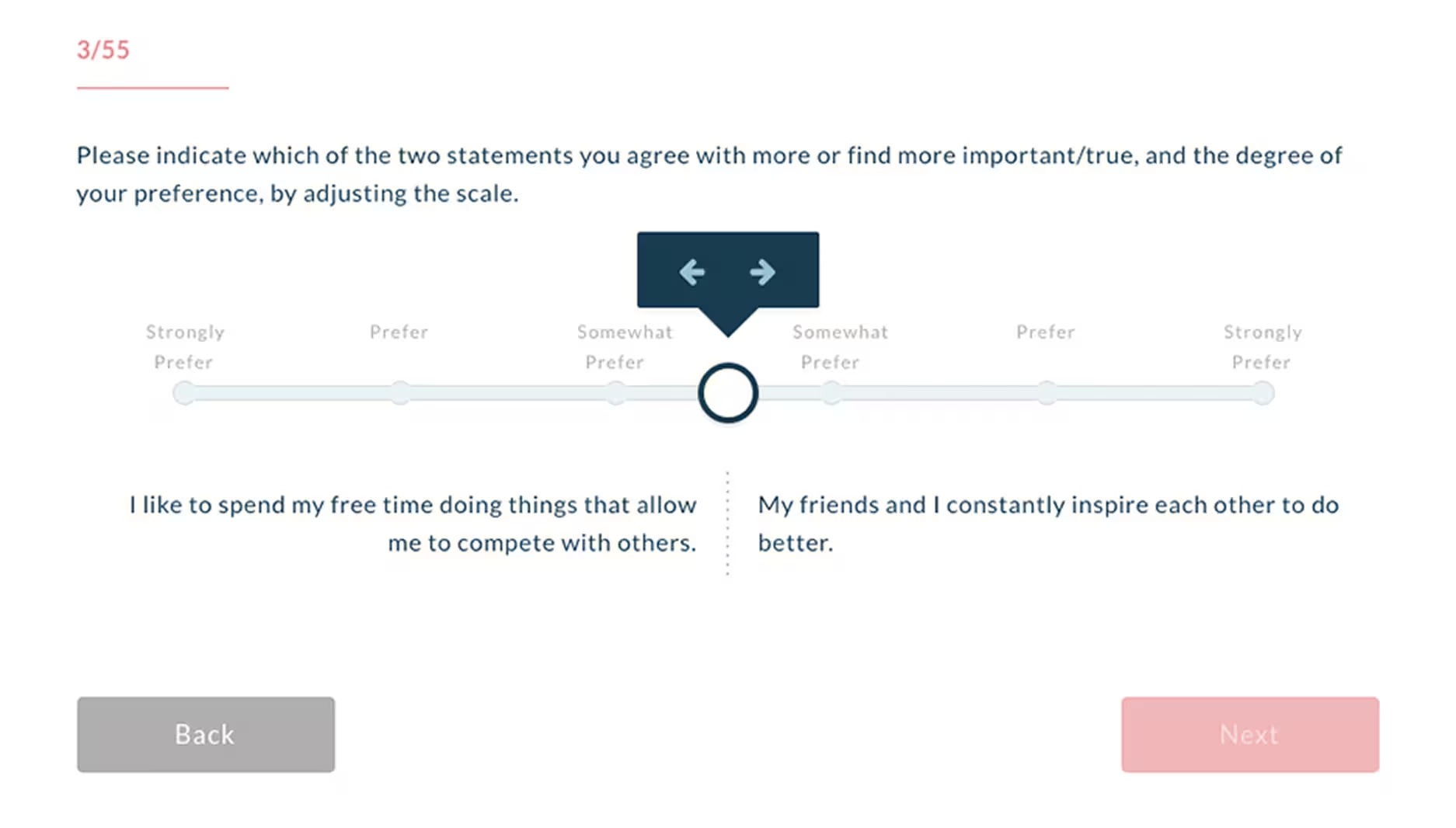
Everyone completes a ~10-minute assessment. That's the whole setup.

No rollout plan. No IT project. Each person answers a simple set of questions, and Attuned automatically calculates their profile across 11 intrinsic motivators. Most teams are up and running within a week of signing up.

Slider-based questions, ~10 min

Attuned motivator assessment screen with slider-based questions
~10 minper person
11motivators mapped
1.7Mpossible profiles
Week 1ready to go
01
Make Motivation Visible

Turn a hunch into a map

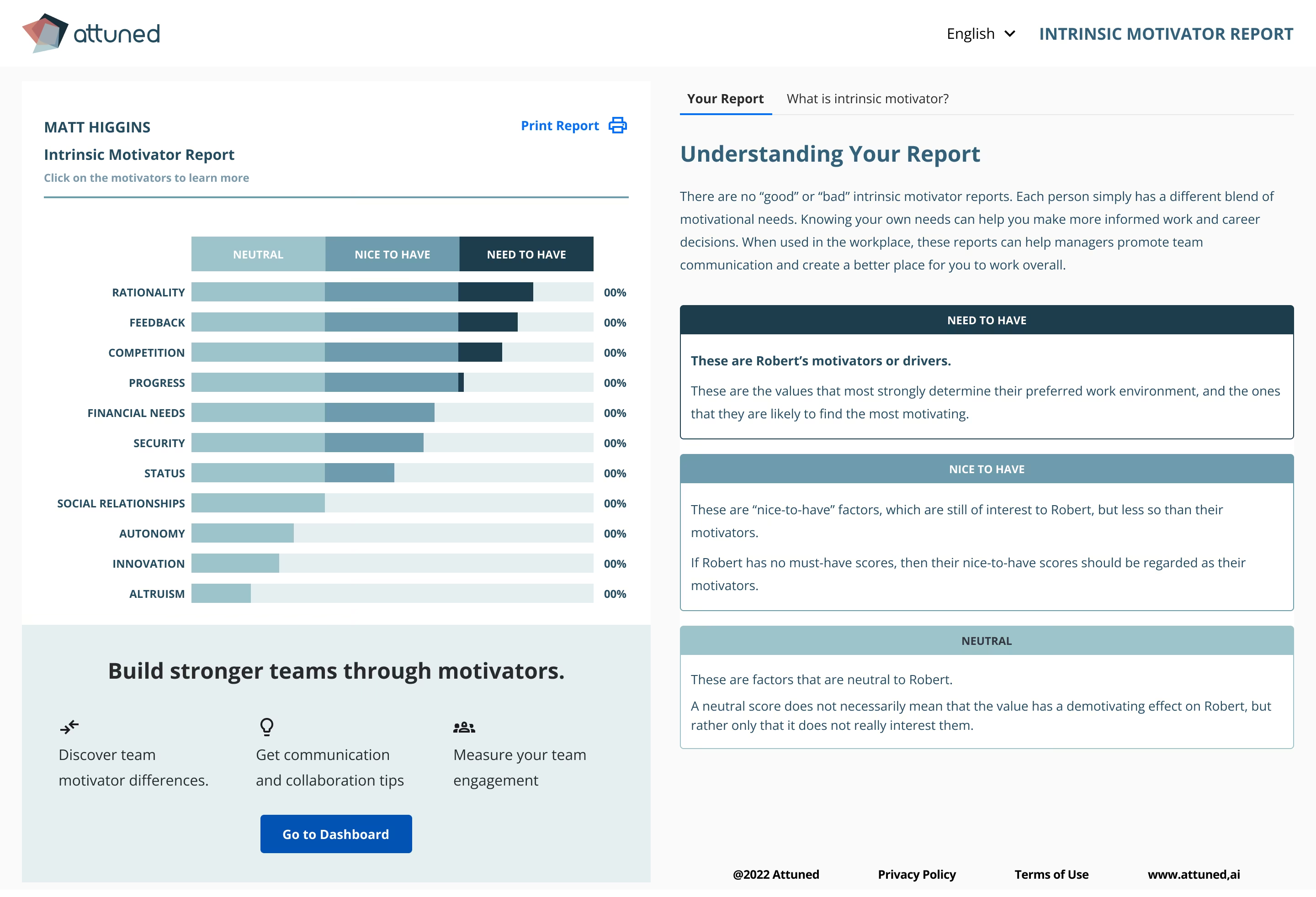
Every person gets a profile across 11 motivators, visible to them and their manager. You can finally see whether someone leads with Progress, Autonomy, Security or Feedback, which is what actually determines whether a given workload energizes them or wears them down.

11 motivator dimensions One profile per person
Motivator profile generated immediately
Attuned motivator breakdown showing a team member's intrinsic motivator profile and which drivers are going unmet
02
Fix the Task-Fit

Match the work to who is energized by it

Attuned highlights the motivational gaps between a manager and an employee, and between teammates, so you can assign the complex project to the person who thrives on it and give steadier work to someone running low. Better task-fit is the most direct lever you have on burnout risk.

Task-fit guidance Manager-employee gap map
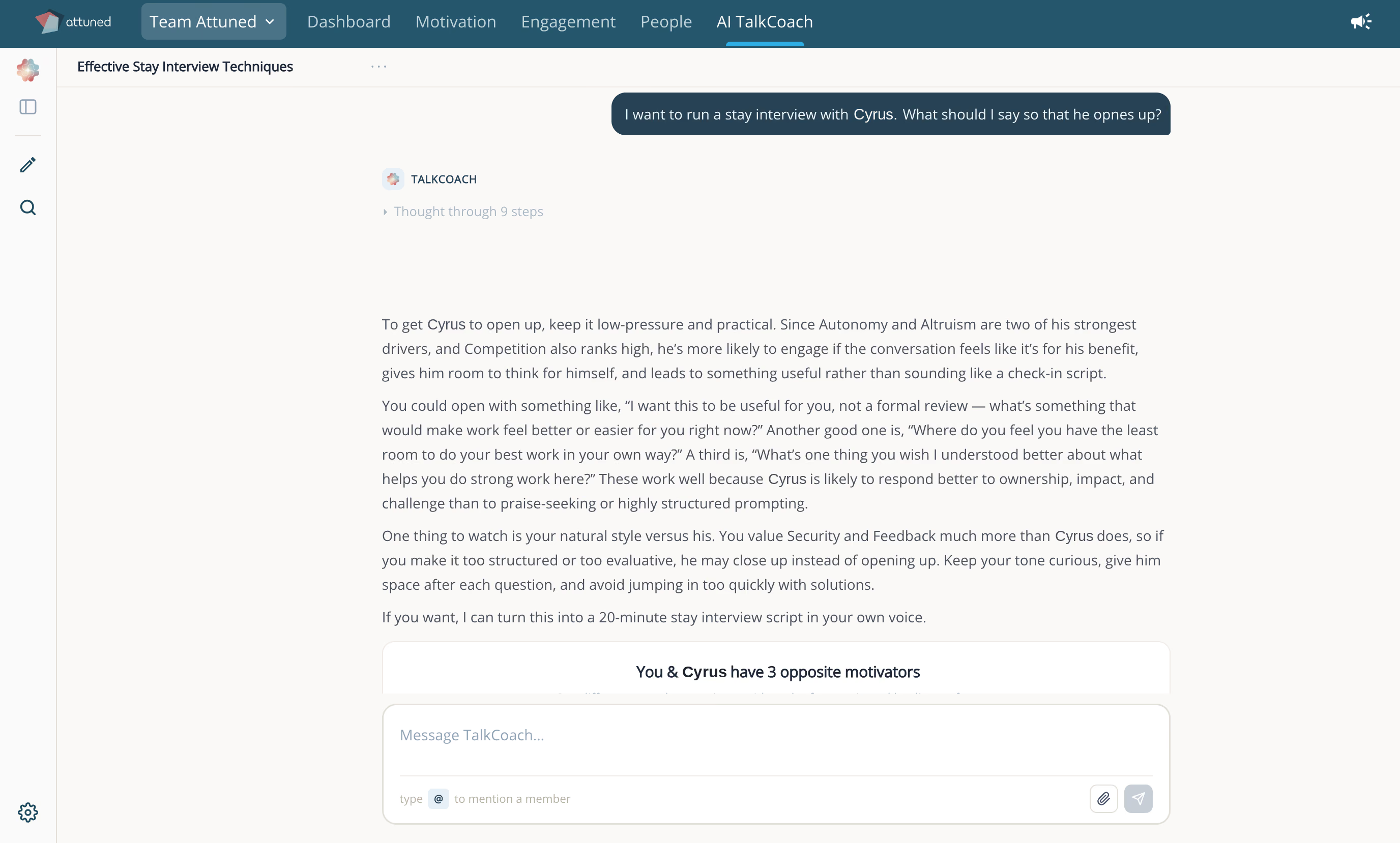
AI TalkCoach · suggested conversation prompts
Attuned AI TalkCoach turning a team member's motivator profile into a suggested prompt a manager can use to check in on workload and task-fit
03
Coach Every Manager

Give whoever leads the right words

The AI TalkCoach turns each profile into what to ask and how to frame it, so a manager can raise workload and wellbeing early. It also supports the difficult feedback conversations that burnout usually needs, so a first-time manager gets the instincts of a seasoned one.

AI coaching per person Hard conversations, handled
04
Build Psychological Safety

Make it safe to say "I'm struggling"

When a manager understands what drives someone, the conversation shifts from performance policing to genuine support. That is the ground psychological safety grows in, and it is what lets people tell you they are close to the edge while you can still help.

Trust-building prompts Support, not surveillance
05
Track It Over Time

Catch the drift before it becomes burnout

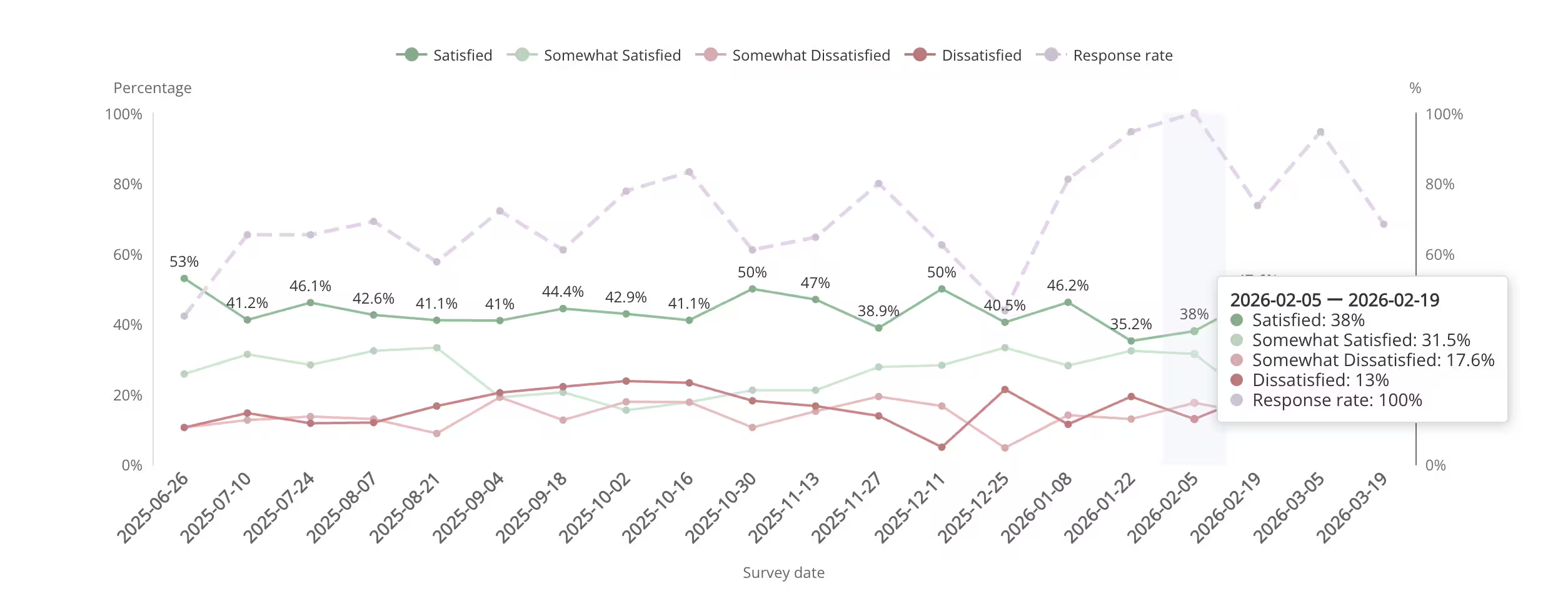
Attuned tracks motivation and satisfaction over time and flags the widening gap between what someone values and what their role delivers, before it shows up in the work. Most burnout starts as a bit of unmet motivation you could have addressed two months earlier.

Early-warning drift alerts Continuous tracking
Motivation & satisfaction tracked over time
Attuned dashboard tracking motivation and satisfaction over time and flagging the person whose motivators are going unmet before they burn out
Ready to see burnout risk before it costs you?
Give every manager an individual read on motivation and burnout risk, in under a week.
No IT project. Your team is profiled and your managers can see who is drifting, and why, before their next one-on-one.
Book a Call Directly →
Book a time that works for you · No callback queue

You Are Already Paying for Burnout. The Question Is Whether You Can See It Coming.

Tech and finance companies already spend heavily on employee welfare: therapy and mental-health benefits, wellbeing stipends, and burnout-prevention programs. The intent is right. What has been missing is the individual-level signal that tells you where to aim it. Without that, welfare spend is a broad safety net; with it, it becomes targeted support for the specific people at risk.

The spend is real. The signal has been missing.

The U.S. corporate wellness market is worth around $22 billion a year, and disengagement costs the global economy an estimated $8.8 trillion in lost productivity. Companies are clearly willing to invest in the welfare of humans and in performance without burnout. Attuned is how that investment finds the individual who needs it, this month, rather than being spread evenly across people who mostly do not.

In high-cost tech and finance roles, keeping one talented person from burning out and quitting can pay for the whole program on its own.

$8.8T
Global cost of disengagement in lost productivity.Gallup
$22B
U.S. corporate wellness spend per year.Market research, 2024
0.5-2x
Annual salary to replace one departed employee.Gallup
~1 in 3
First-year finance hires who now leave within a year.Industry data, 2024
You are already funding wellbeing. The missing piece is aiming it. Attuned turns a broad welfare spend into targeted support for the specific people whose motivation is slipping, so employee satisfaction and retention move where it counts.

Built on People Science, Proven With Real Teams

Attuned is grounded in more than 10,000 assessments across four generations of the workforce, and it is already helping fast-growing teams understand what drives their people. Azon Recruitment Group used it to read motivation at the individual level, so managers could act on what people needed before it turned into a resignation.

Azon Recruitment Group team, a fast-growing firm that improved retention by understanding what motivated each person, with Attuned

Reading on Burnout, Motivation, and Psychological Safety

Practical writing from the Attuned team, starting with the State of Motivation Report most leaders open first, plus pieces on psychological safety in high-pressure teams, protecting top performers, and what actually keeps people engaged and well.

A wellbeing budget any company can buy. The individual signal is the hard part.

You can fund therapy access and wellness perks for the whole company. What you cannot buy off the shelf is a read on which specific person is drifting toward burnout, and what would actually help them. That is the part Attuned provides, and it is what turns a broad welfare spend into support for the people who need it while there is still time to help.

Up and running in a week

A ~10-minute assessment. No IT project, no heavy rollout. Your whole team can be profiled within days of signing up.

Individual, not aggregate

11 intrinsic motivators mapped per person and tracked over time, so you see the individual at risk rather than a team average that hides them.

AI coaching for every manager

The AI TalkCoach preps the conversation with what to ask, so a first-time manager can support someone through strain like a seasoned one.

GDPR-compliant by design

Lawful basis, data minimization, individual access rights, and the right to be forgotten. Your people own their motivator data.

Employee Burnout Prevention: Common Questions

What is employee burnout prevention?
Employee burnout prevention is the set of practices a company uses to stop chronic workplace stress from building into exhaustion, cynicism, and dropping performance. It covers workload management, psychological safety, recognition, and matching people to work that fits them, known as task-fit. The hard part is timing: burnout is a slow process, and by the time someone is visibly struggling the disengagement is already well underway. Effective prevention depends on catching the early signal, which means understanding what motivates each person and noticing when the gap between what they need and what the job gives them starts to widen.
How can managers spot employee burnout early?
The early signs are rarely dramatic. A high performer goes quiet, a normally curious engineer stops asking questions, someone who thrived on complex work starts avoiding it. These are signals that a person is no longer in their full form, and they usually appear months before a resignation. The problem is that they are individual: the same workload energizes one person and drains another. Managers spot burnout early when they know what drives each person and can watch the gap between what someone values and what their role delivers, rather than waiting for an annual review or a broad engagement score to flag a problem that is already advanced.
Why do generic engagement surveys miss burnout?
Standard engagement surveys ask everyone the same questions, report an aggregate score, and run once or twice a year. That design hides burnout in two ways. First, an average smooths over the individual who is quietly at risk, so a team can post a healthy score while a key person is close to leaving. Second, the results are anonymous and broad, which tells you the department feels a little stretched but not who is struggling or what to do about it. Burnout is individual, so a tool that focuses on what matters most to each person and tracks it over time gives managers something they can act on, rather than another dashboard of averages.
How does Attuned reduce burnout risk?
Attuned maps each employee across 11 intrinsic motivators, then makes that visible to their manager alongside a live read on how satisfied each motivator is over time. It highlights the gap between what a person values and what their role currently gives them, which is where burnout risk lives, and turns that into specific guidance: how to assign work, give feedback, and hold a check-in that fits the individual. Instead of a once-a-year survey, managers get an ongoing, individual-level signal they can act on while a person is still in their full form, supporting healthier performance without waiting for the resignation.
Does Attuned work for tech and finance teams?
Yes, and those are exactly the environments where the case is strongest. Tech and finance carry some of the highest burnout rates of any sector, with roughly two in three tech workers and a similar or higher share in financial services reporting symptoms, and the roles are expensive to replace. Companies in these sectors already invest heavily in employee welfare, therapy and wellbeing benefits, and burnout prevention. Attuned adds the individual-level signal that makes that investment land: it shows managers who is drifting, why, and what to change, so the spend on welfare actually translates into people performing well without being burned out.
What is task-fit and how does it help prevent burnout?
Task-fit is how well the work a person is given matches what actually drives and energizes them. Some people like easier, steady tasks; some people like complex, ambiguous ones; some need autonomy, others need structure and feedback. When there is a persistent mismatch between the person and the work, effort turns into strain, and strain sustained long enough becomes burnout. Attuned makes task-fit visible by mapping each person's motivators, so a leader can assign the complex project to the person who is energized by it and rebalance the workload of someone running on empty, which is one of the most direct levers a manager has to prevent burnout.
Is Attuned GDPR-compliant?
Yes. Attuned operates under GDPR principles for any EU or UK data subject: lawful basis, data minimization, individual access rights, and the right to be forgotten. Users own their motivator data and choose what is shared with their organization. This landing page itself uses consent-gated cookies, so analytics and marketing scripts only load after you accept them. See our Privacy Policy for full details.
People Science for Managers

Protect your people
and your performance.

We have spent years studying what drives people at work, and helping the managers who lead them see burnout risk and task-fit while there is still time to act. It fits into your week rather than adding to it.

Our expertise is people science: what motivates each person, why the same workload burns out one and energizes another, and what a manager needs to see to keep someone in their full form. We have brought it to fast-growing firms, and we would like to bring it to your tech or finance team.

No pitch deck
No callback queue
Real conversation
Grounded in 10,000+ assessments
Across four generations of the workforce, and proven with fast-growing teams like Azon Recruitment Group.
Book a Call Directly
Pick a time that works for you. No waiting for a callback. No sales queue.
Book a Time → Read the State of Motivation Report Or read the full Azon case study →
Book a time that works for you. No callback queue.
See burnout coming. Make each person's motivation visible to their manager.
Book a Call →